
Sign up to Flash News
Your info will be used in accordance with our Privacy Policy
The Independent Electoral and Boundaries Commission (IEBC) has dismissed reports claiming it cleared former Deputy President Rigathi Gachagua to contest the 2027 presidential election, insisting that it has not made any determination on his eligibility.

In a statement issued on Wednesday, November 25, 2026, IEBC Chairperson Erastus Edung Ethekon said reports suggesting that the commission had given Gachagua the green light to enter the presidential race were misleading.
The clarification followed public debate sparked by remarks made by the commission's Director of Legal Services, Chrispine Owiye, during an engagement with political reporters in Nairobi on Tuesday, November 24.
IEBC said Owiye was explaining constitutional provisions governing qualifications and disqualifications for election but was not making an official determination concerning Gachagua's political future.
The commission further warned media organisations against reporting sensitive constitutional and electoral matters without proper context.
"For the avoidance of doubt, the Commission has neither cleared nor made any determination regarding Hon. Rigathi Gachagua's eligibility to contest the 2027 Presidential Election," Ethekon stated.
What IEBC said about Gachagua's eligibility
The controversy emerged after Owiye reportedly told journalists that a person challenging a decision affecting their eligibility through an ongoing appeal could remain qualified to contest an election until the available legal processes had been exhausted.
He explained that where an individual had been impeached but was pursuing an appeal, the legal position regarding their eligibility required consideration of the relevant constitutional provisions.
His remarks were interpreted in some media reports as suggesting that Gachagua had been cleared to seek the presidency in 2027 despite his removal from office in October 2024.
However, IEBC subsequently clarified that the presentation focused on Articles 99 and 193 of the Constitution, which address qualifications and disqualifications for membership of Parliament and county assemblies.
The commission specifically referred to Articles 99(3) and 193(3), which provide safeguards against disqualification in certain circumstances before all avenues of appeal or review have been exhausted.
IEBC insisted that Owiye's presentation did not address removal from office under Article 75, impeachment or the eligibility of a person who had been impeached to contest a future election.

The commission therefore rejected attempts to interpret the legal director's explanation as an official position on Gachagua's eligibility.
IEBC explains when it will determine presidential eligibility
The electoral agency maintained that the constitutional requirements for nomination as a presidential candidate are outlined under Article 137 of the Constitution, alongside other applicable provisions governing eligibility to stand for election.
Under Article 137, a presidential candidate must be a Kenyan citizen by birth, qualify to stand for election as a Member of Parliament, be nominated by a political party or present an independent candidature, and secure the required support from voters across a majority of counties.
The Constitution also outlines circumstances under which a person cannot be nominated for the presidency.
IEBC said any assessment of a prospective candidate's eligibility would be conducted at the appropriate stage of the electoral process and in accordance with the Constitution and election laws.
It also noted that registration of candidates for the 2027 General Election had not commenced.
This means the commission has not yet undertaken the formal nomination assessment through which prospective presidential candidates will have their qualifications examined.
IEBC urged Kenyans to rely on official communication from the commission when seeking clarification on electoral procedures and candidate requirements.
Commission faults media over reports on Gachagua
In its statement, IEBC expressed concern that remarks made during the meeting with political reporters had been presented in a manner that suggested the commission had issued a formal clearance.
The commission said the reports misrepresented the scope of Owiye's presentation and could mislead members of the public on an important constitutional question.
It called on media houses to uphold accuracy, fairness and due diligence when reporting on election-related matters.
The agency emphasised that constitutional issues require proper interpretation and context, particularly where they concern the qualifications of individuals seeking public office.
The clarification also comes as political parties and prospective candidates begin positioning themselves ahead of the August 2027 General Election.
Gachagua, who leads the Democracy for Citizens Party (DCP), has indicated his intention to challenge President William Ruto in the next presidential election.
How Gachagua's impeachment case complicates the debate
Gachagua was removed from office in October 2024 after the Senate upheld five of the 11 charges brought against him through the impeachment process.
He became the first Deputy President in Kenya's history to be removed through impeachment, paving the way for the appointment of Kithure Kindiki as his successor.
The former Deputy President subsequently challenged his removal in court, arguing that the parliamentary process had violated constitutional requirements and denied him a fair hearing.
On June 8, 2026, a three-judge High Court bench upheld the Senate's impeachment decision, declining to overturn his removal from office.
However, the court found that his right to a fair hearing had been violated after the Senate declined to adjourn the proceedings despite his absence following his hospitalisation.
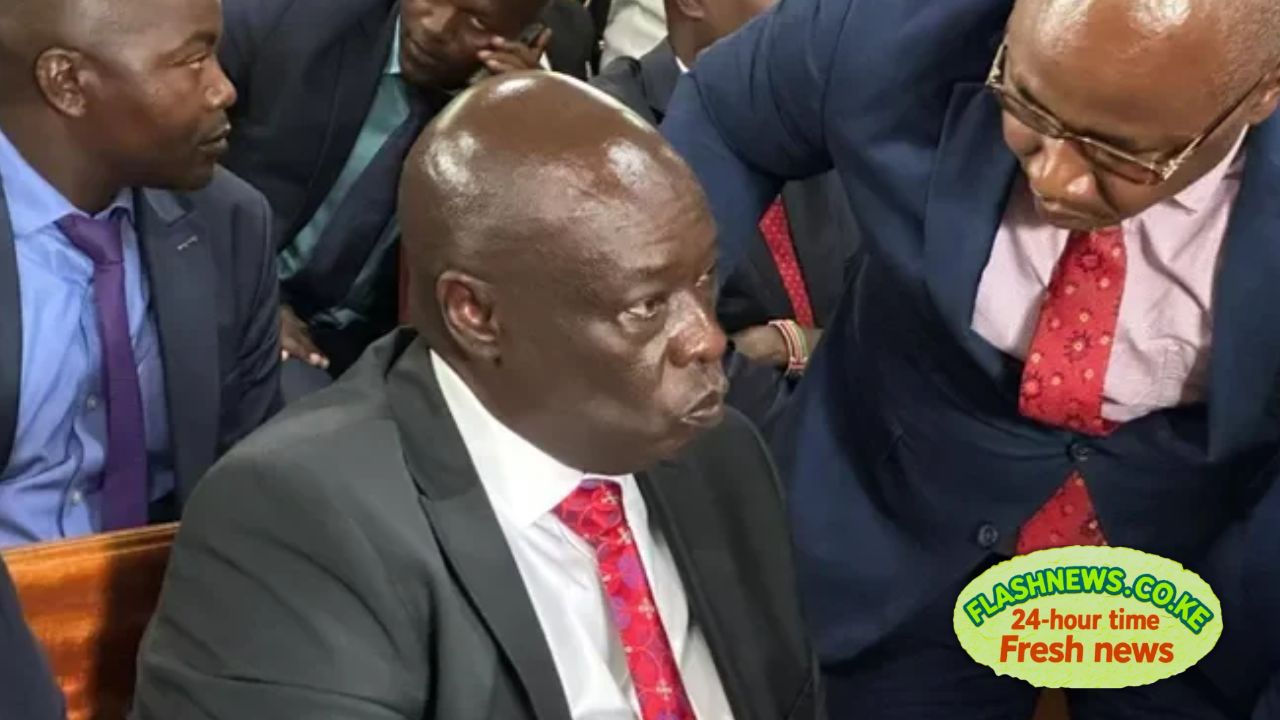
The judges awarded him KSh50 million in constitutional damages over the violation.
Gachagua subsequently filed an appeal challenging aspects of the judgment that upheld his removal, while seeking to preserve the favourable findings made in his case.
The Senate also indicated its intention to challenge the compensation award.
On November 4, 2026, Gachagua withdrew two related High Court petitions after his legal team argued that the substantive judgment had already addressed the issues raised in those cases.
The withdrawal did not amount to a reversal of the impeachment decision. His wider legal challenge remains centred on the appeal against the High Court judgment.
Will Gachagua be allowed to contest in 2027?
The question of whether Gachagua can appear on the 2027 presidential ballot remains unresolved by IEBC.
The commission has made it clear that it has neither approved nor rejected his eligibility and that any formal assessment will take place during the legally prescribed electoral process.
His impeachment, the ongoing legal proceedings and the constitutional requirements for presidential nomination are among the issues likely to feature in discussions about his political future.
For now, the electoral agency has urged the public not to interpret its legal director's general explanation of election qualifications as a final decision on the former Deputy President.
With the 2027 presidential race gradually taking shape, the question of Gachagua's eligibility is likely to remain a major subject of political and legal debate.