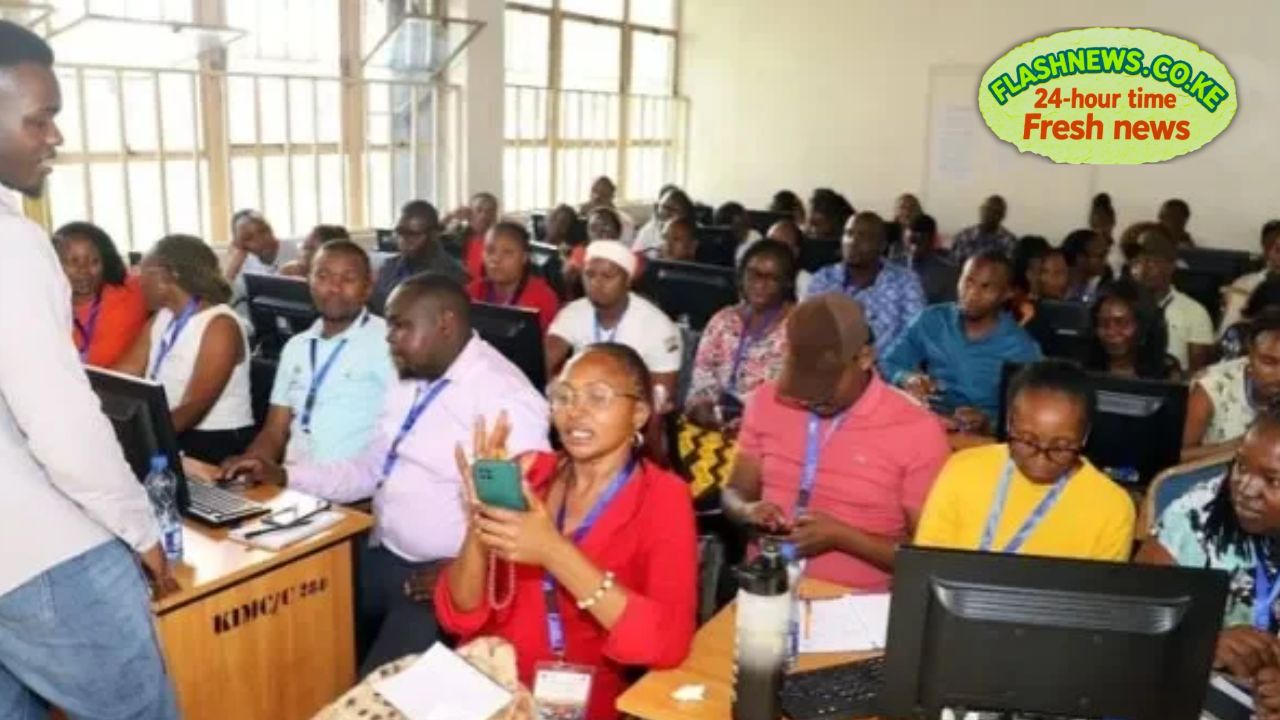
The Teachers Service Commission (TSC) has launched a specialised training programme targeting 1,600 senior school teachers handling Media Technology, Film and Theatre as part of efforts to strengthen the implementation of the Competency-Based Education (CBE) curriculum.TSC Begins Training 1,600 Teachers in Media Technology, Film and Theatre
Sign up to Flash News
Your info will be used in accordance with our Privacy Policy
The initiative is designed to equip teachers with practical skills, technical knowledge and teaching approaches needed to deliver the specialised subjects under the Sports and Creative Arts pathway.
The first phase began on Monday, November 23, 2026, with selected teachers attending residential training at designated institutions across the country. The first cohort is scheduled to train until December 12, while a second group is expected to undergo the programme in April 2027.
In a statement issued on Thursday, November 26, the Commission said the exercise would combine practical residential sessions, online learning and school-based projects to improve teachers' ability to deliver the new curriculum.
“As Competency-Based Education (CBE) rolls out, the Commission is running an intensive retooling programme for 1,600 Senior School teachers in Media Technology, Theatre and Film,” TSC announced.
The Commission said the programme would involve 18 days of hands-on residential training, two weeks of online modules and a four-week school project.
What the TSC training programme involves
The retooling exercise is structured to combine technical training with teaching skills, ensuring that participants understand both the subjects and how to deliver them to learners.
During the residential phase, teachers are expected to gain practical exposure to media production, film facilities and other resources relevant to their specialised learning areas.
The online component will provide additional learning opportunities, while the school-based project will allow participants to apply the knowledge acquired during training in their respective institutions.
TSC says the approach is intended to strengthen content mastery and pedagogical knowledge while helping teachers develop the creative abilities required to identify and nurture learners' talents.
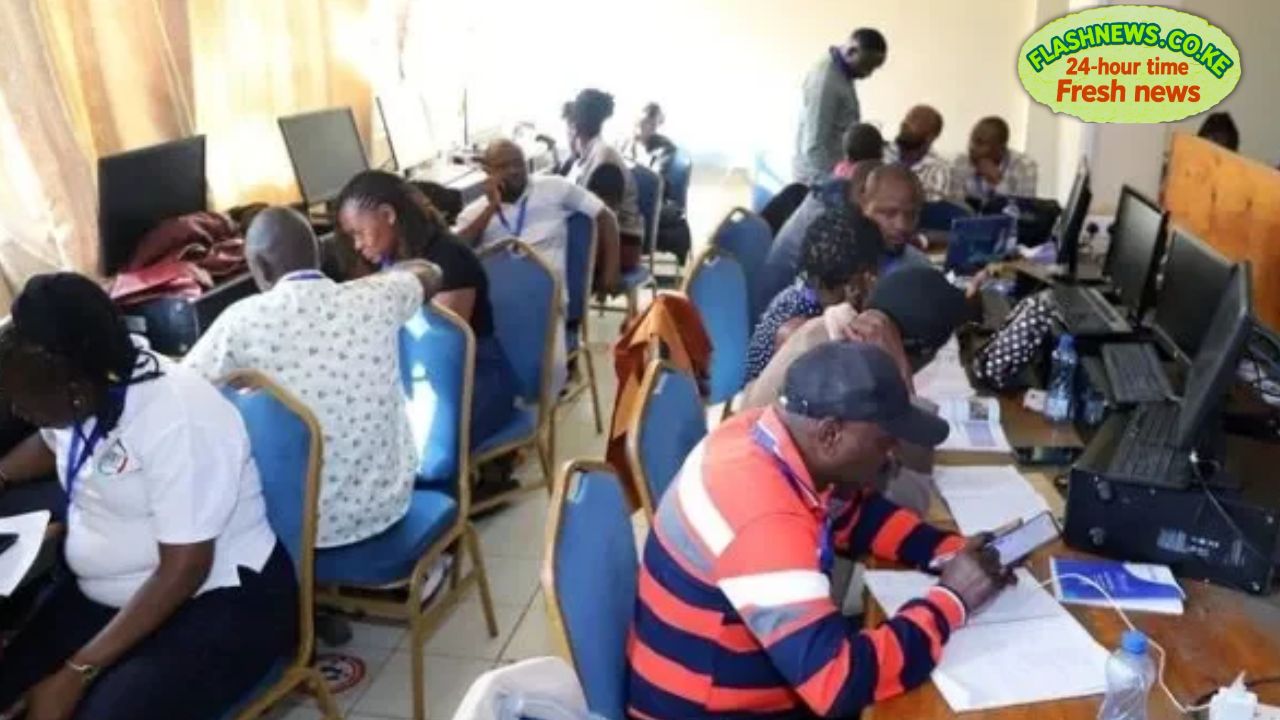
The programme also emphasises the use of locally available resources, recognising that schools may have different levels of access to specialised equipment and facilities.
Five institutions hosting the first training cohort
The first cohort's residential sessions are being conducted at selected training institutions equipped to support practical instruction.
Reports on the programme identify five institutions hosting the initial sessions:
-
Kenya Institute of Mass Communication (KIMC), Nairobi
-
Tseikuru National Polytechnic, Kitui
-
Scotts International University, Machakos
-
Kabarak University, Nakuru
-
Michuki National Polytechnic, Murang'a
The institutions provide access to facilities and expertise needed for practical learning in media, film and theatre.
The partnership with the Kenya Institute of Mass Communication is particularly important because of its experience in media training and access to specialised production facilities.
The arrangement is expected to expose teachers to professional working environments and practical techniques they can adapt for use in senior schools.
Second cohort scheduled for April 2027
TSC has organised the programme in two cohorts, with the first group attending training between November 23 and December 12, 2026.
The second cohort is scheduled for April 2027, allowing the Commission to extend the retooling exercise to additional teachers.
However, the initial rollout has attracted questions about the number of teachers selected for the first phase. Reports published before the commencement of training indicated that the first intake had been scaled down, with some teachers who expected to participate yet to receive invitations.
In some areas, only a small number of teachers had reportedly been listed for the initial sessions.
This means the overall target of 1,600 teachers should not be interpreted as confirmation that all participants have already started training.
Teachers awaiting selection or further instructions are advised to follow official communication from TSC and their respective school or county education offices.
Why TSC is training teachers in Media Technology, Film and Theatre
Media Technology, Film and Theatre are specialised learning areas within the Sports and Creative Arts pathway under the senior school CBE curriculum.
Unlike subjects that rely mainly on classroom instruction, the three areas require practical experience and access to relevant equipment.
Media Technology involves the use of digital tools and communication technologies to create, process and distribute media content.
Film introduces learners to areas such as storytelling, camera operation, sound recording, production and editing.
Theatre focuses on performance, stage production, creative expression and the development of practical artistic skills.
Teachers handling these subjects therefore need both subject knowledge and the ability to guide learners through practical activities.
Through the retooling programme, TSC hopes to strengthen teachers' confidence and competence in delivering lessons that reflect the curriculum's emphasis on skills development and talent identification.
TSC to work with KIMC on specialised teacher training
The training follows earlier announcements by former TSC Acting Chief Executive Officer Dr Evaleen Mitei, who said the Commission would work with the Kenya Institute of Mass Communication to prepare teachers for the specialised learning areas.
Speaking during the Kenya Comprehensive School Heads Association conference in November, Mitei explained that the partnership would provide access to experts, specialised equipment and training facilities.
The collaboration is intended to ensure teachers receive practical instruction rather than relying solely on theoretical learning.
She also urged school administrators to make professional development a continuous process so that teachers remain equipped to respond to changes introduced under CBE.
The partnership reflects the need for specialised institutions to support schools in areas where practical facilities and technical expertise are essential.
What the training means for senior school learners
The success of the programme will ultimately depend on how effectively teachers transfer the skills acquired during training into classroom activities.
For learners taking the Sports and Creative Arts pathway, properly trained teachers could improve access to practical lessons in media production, film-making and theatre performance.
The subjects may also expose students to career opportunities in broadcasting, journalism, digital content creation, photography, film production, sound engineering and the wider creative industries.
However, training teachers alone may not address every challenge facing schools. Access to cameras, computers, editing software, sound equipment and suitable performance spaces will also influence how effectively the subjects are delivered.
School administrators will therefore play an important role in providing the necessary learning resources and supporting teachers as they implement the new skills.
As the first cohort progresses through its residential sessions, online modules and school-based projects, attention will turn to the second phase scheduled for April 2027 and the Commission's wider target of preparing 1,600 teachers.
The initiative marks another step in TSC's efforts to strengthen specialised teaching under CBE, with the ultimate goal of ensuring learners receive practical instruction that develops their creativity, technical abilities and individual talents.