






Tensions in the Middle East have intensified once again after the United States confirmed it carried out fresh military strikes in southern Iran, targeting missile infrastructure and Iranian vessels allegedly attempting to deploy naval mines near the Strait of Hormuz.
The strikes, confirmed by US Central Command, were described as “self-defence measures” aimed at protecting American personnel and allied interests during an increasingly fragile ceasefire between Washington and Tehran.
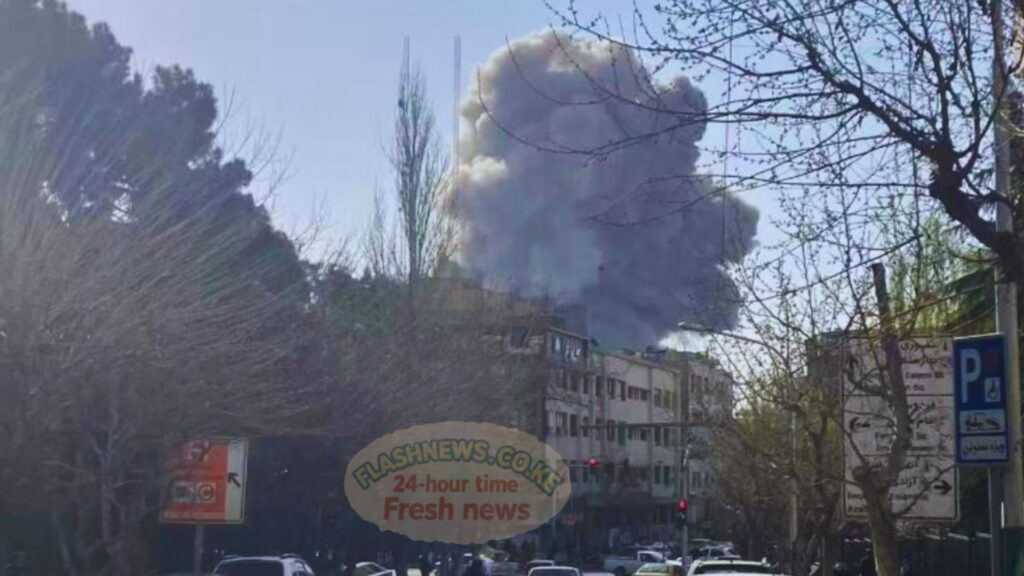
In a statement released on Tuesday, Central Command said the operation was designed “to protect our troops from threats posed by Iranian forces” amid ongoing instability in the Gulf region.
US Central Command spokesperson Captain Tim Hawkins insisted Washington was acting with caution despite the escalation.
“The US military continues to defend our forces while using restraint during the ongoing ceasefire,” Capt Hawkins said.
According to reports from the New York Times, the strikes targeted locations near Bandar Abbas — a strategically important Iranian port city that hosts a major naval base overlooking the Strait of Hormuz, one of the world’s most critical oil shipping routes.
Iranian state media earlier reported explosions in the area, with local authorities launching investigations into the blasts. Tehran has not yet officially responded to the latest US military action.
The renewed violence comes at a delicate moment in diplomatic negotiations between the US and Iran, with both sides engaged in indirect talks aimed at preventing a wider regional war.
Iranian foreign ministry spokesman Esmail Baqai acknowledged that progress had been made in negotiations but warned that a final agreement remained far from guaranteed.
“It is correct to say that we have reached a conclusion on a large portion of the issues under discussion,” Baqai said. “But to say that this means the signing of an agreement is imminent — no-one can make such a claim.”
US Secretary of State Marco Rubio echoed cautious optimism following the strikes, insisting diplomacy was still alive despite the military confrontation.
Speaking during an official visit to India, Rubio revealed discussions were continuing between Iran’s chief negotiator, the Iranian foreign minister, and Mohammed bin Abdulrahman Al Thani.
“We’ll see if we can make progress,” Rubio told reporters. “There’s a lot of talking back and forth about specific language in the initial document, so it’ll take a few days.”
Rubio added that Donald Trump remained determined to secure an agreement.
“He’s either going to make a good deal or no deal,” Rubio said.
Trump had previously suggested that negotiations were nearing a breakthrough before later warning American negotiators “not to rush into” any settlement.
Reports suggest the proposed memorandum under discussion includes a possible 60-day ceasefire extension, the reopening of the Strait of Hormuz, and further negotiations surrounding Iran’s controversial nuclear programme.
Meanwhile, US intelligence assessments cited by American media claim Iran’s Supreme Leader Mojtaba Khamenei is believed to be hiding in an undisclosed location after reportedly being injured during an Israeli strike earlier in the conflict — an attack which allegedly killed his father and predecessor.
Officials reportedly fear communication difficulties between Khamenei and Iranian negotiators may be slowing the pace of talks.
Western intelligence agencies remain deeply concerned over Iran’s uranium stockpile. At the beginning of the conflict, Tehran was believed to possess approximately 440 kilograms of uranium enriched to 60% purity — technically only a short step away from weapons-grade enrichment levels.
On Monday evening, Trump declared that the enriched uranium would either be handed over to the United States “immediately” or “destroyed in place” under international supervision.
The latest strikes threaten to further destabilise an already volatile region after months of conflict involving Iran, the United States, Israel, and Gulf allies.
The current war erupted following coordinated US and Israeli strikes on Iran on 28 February, prompting retaliatory attacks by Tehran against Israel and US-aligned Gulf states. Iran also moved to effectively shut down the Strait of Hormuz, triggering sharp increases in global oil prices and fears of wider economic disruption.
Although a ceasefire has technically remained in place since 8 April, analysts warn that the latest military escalation could place any potential peace agreement in serious jeopardy.
Also Read: Former inmate now earns Sh10,000 daily from carpentry business