

Gachagua Turns on Kindiki Again? From ‘Our Son’ to ‘Don’t Call Me Your Brother’





Former Deputy President Rigathi Gachagua has dramatically distanced himself from his successor, Deputy President Kithure Kindiki, in a fresh escalation of political tensions within the Mount Kenya region.
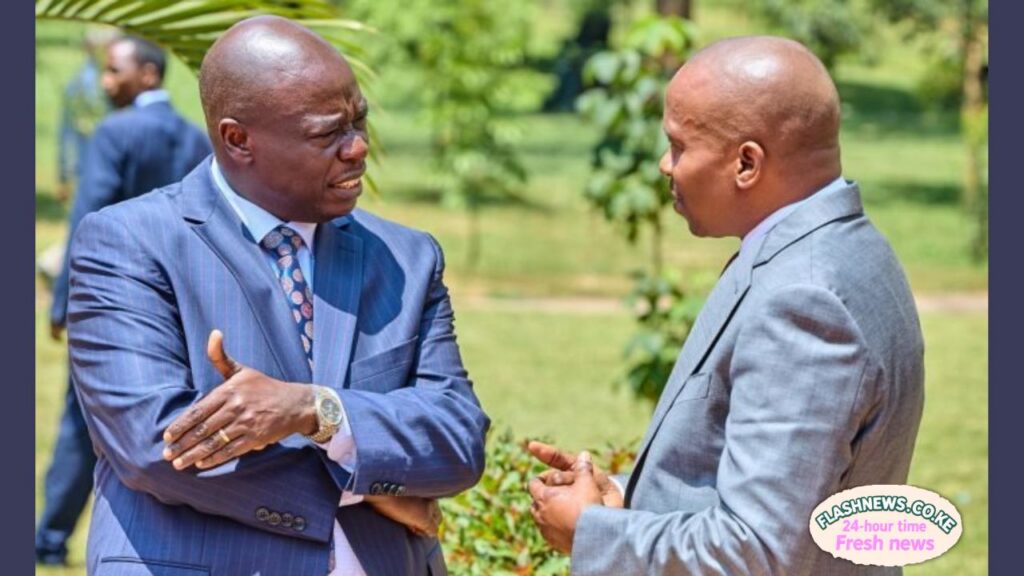
Just days after appearing to defend Kindiki as a fellow “son of the Mountain”, Gachagua has now told the serving Deputy President not to refer to him as his brother.
The striking remarks were made by Gachagua during a church service in Kiambu County on Sunday, August 9, 2026, where the Democracy for the Citizens Party (DCP) leader openly questioned Kindiki’s claim that he had respected him while he was serving as Deputy President.
Gachagua said their relationship changed after he was removed from office, suggesting that Kindiki could not simultaneously claim to have respected him while being associated with the political transition that followed his departure.
“I respected you when you were in the office; we fell apart when I got out and he told me to leave. When I left, were you not the one who removed me? Now let me ask you, Deputy President Kithure Kindiki, how did you respect me?” Gachagua said.
He then delivered his most pointed message yet to his successor.
“Even if you are facing problems there, remain there; do not call me your brother,” he added.
The remarks marked a striking change in tone from Gachagua’s earlier position, when he had sought to portray Kindiki as a Mount Kenya politician facing pressure within the Kenya Kwanza administration.
From defending Kindiki to publicly distancing himself
Gachagua had previously urged his political allies to leave Kindiki alone, describing him as a son of the Mount Kenya region despite the latter’s position inside President William Ruto’s administration.
That intervention appeared to reflect Gachagua’s broader argument that political differences should not prevent leaders from the region from defending one another.
But the latest comments suggest that the former Deputy President’s relationship with Kindiki may have entered a new and considerably more hostile phase.
Rather than speaking of regional solidarity, Gachagua focused on questions of personal respect, political loyalty and the circumstances surrounding his removal from office.
The contrast is striking.
One moment, Kindiki was being presented as a fellow son of the Mountain who should not be attacked.
Days later, Gachagua was publicly rejecting the language of brotherhood.
The shift is likely to fuel further speculation about the increasingly competitive political landscape in Mount Kenya ahead of the 2027 General Election.
The battle for Mount Kenya influence
At the centre of the dispute is a much larger question: who will command political influence across the Mount Kenya region as Kenya moves towards the 2027 elections?
Gachagua has increasingly positioned himself as a leading opposition voice from the region, using his DCP platform to mobilise support and challenge the Ruto administration.
Kindiki, meanwhile, occupies one of the most powerful constitutional offices in the country and remains a central figure within the Kenya Kwanza administration.
The two politicians therefore represent very different political positions.
Gachagua operates outside government and has increasingly criticised the administration he once served, while Kindiki remains President Ruto’s deputy and has continued defending the government’s record.
That difference has created the potential for a direct contest over the political direction of Mount Kenya.
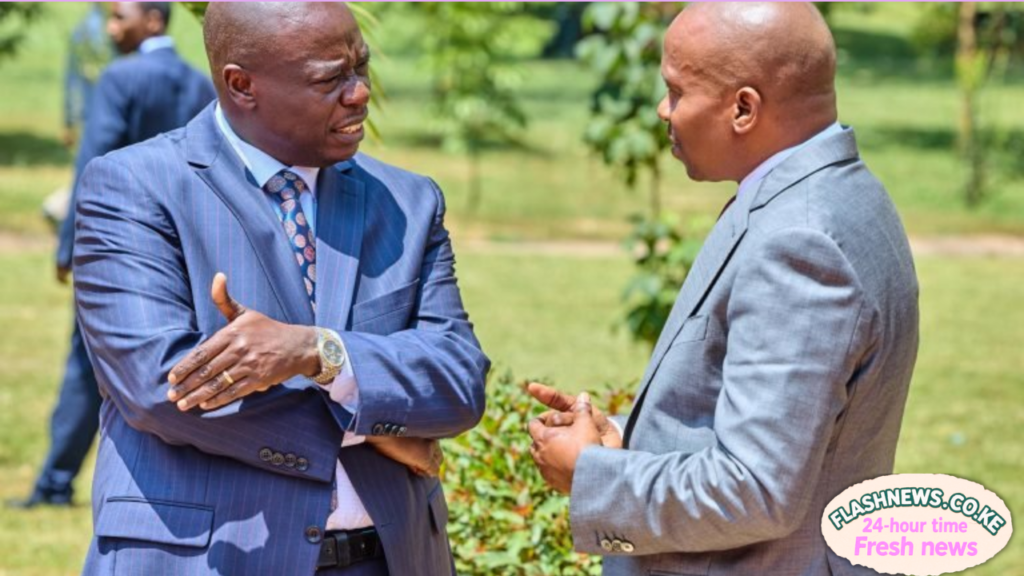
Kindiki’s rising profile adds another layer
The tension has become even more politically significant amid renewed efforts to establish who speaks for the wider Mount Kenya region.
Reports on the activities of the Njuri Ncheke council have placed Kindiki increasingly at the centre of political conversations in Mount Kenya East, adding to his visibility beyond his constitutional role as Deputy President.
Kindiki has also publicly urged Mount Kenya voters to support President Ruto’s re-election, arguing that backing the President would amount to the region voting itself into power.
That position puts him on a sharply different political trajectory from Gachagua, who has been building an opposition movement aimed at challenging the administration.
The result is an increasingly complicated political equation: Gachagua is seeking to consolidate support outside government, while Kindiki retains the institutional advantage of being Deputy President.
Did the ‘kingpin’ debate change the equation?
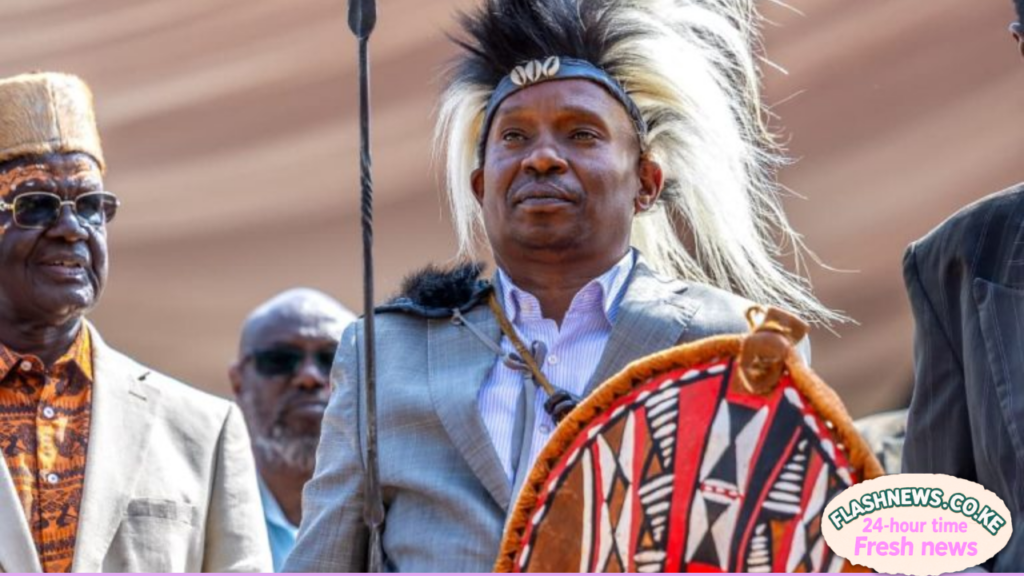
Kindiki’s reported recognition by sections of Mount Kenya traditional leadership has added another dimension to the rivalry.
On August 7, reports emerged that elders associated with the Njuri Ncheke had elevated Kindiki’s status as a leading political figure in the region.
Such recognition, if sustained, could strengthen Kindiki’s claim to regional influence at a time when Gachagua has been seeking to establish himself as a central political voice for Mount Kenya.
However, there is no evidence that the endorsement directly caused Gachagua’s August 9 remarks.
The timing, nevertheless, has made the development politically significant.
It highlights the possibility of competing centres of influence emerging within a region that has traditionally played a decisive role in Kenyan presidential politics.
Brotherhood or political strategy?
Gachagua’s latest remarks also raise a difficult question about the meaning of regional solidarity in Kenyan politics.
When Kindiki was perceived to be under pressure, Gachagua defended him as a fellow Mount Kenya politician.
Now, after a public disagreement over their relationship, Gachagua has rejected the very language of brotherhood.
Critics may interpret the change as evidence that regional unity is being invoked selectively when it serves particular political interests.
Gachagua’s supporters, however, could argue that defending Kindiki against political attacks is entirely different from accepting what Gachagua regards as disrespect from him.
Under that interpretation, Gachagua is not abandoning Mount Kenya solidarity but drawing a line between regional interests and personal political relationships.
That distinction could become increasingly important as the 2027 contest takes shape.
A rivalry bigger than two politicians
The growing friction between Gachagua and Kindiki is unlikely to be viewed simply as a personal disagreement.
Both men occupy important positions in the political history and future of Mount Kenya.
Gachagua served as Deputy President before his removal from office and has since emerged as one of the most vocal critics of the Ruto administration.
Kindiki succeeded him as Deputy President and has become one of the administration’s most important political figures.
Their increasingly divergent political paths could therefore become part of a much larger contest over who will shape Mount Kenya’s political choices in 2027.
For now, however, Gachagua’s message is unmistakable.
Whatever relationship existed between the two men in government, he appears unwilling to allow Kindiki to invoke the language of brotherhood while their political differences remain unresolved.
From “our son” to “don’t call me your brother”, the dramatic change in language could prove to be another warning sign that the battle for Mount Kenya’s political allegiance is becoming increasingly personal.
Also Read: ‘Blame Me, Not Uhuru’: Kalonzo’s Direct Challenge to Ruto