






The Ministry of Health has moved to calm growing public anxiety after reports emerged suggesting the United States could send Ebola-exposed patients to Kenya under specialised monitoring and treatment arrangements.

In a statement issued on May 27, Health Cabinet Secretary Aden Duale assured Kenyans that the country remains fully prepared to deal with any Ebola-related threat, insisting that no decision would compromise public safety, national laws, or biosafety standards.
The ministry stopped short of confirming reports that Kenya may host Ebola-exposed American patients, instead emphasizing that any international health cooperation would be conducted strictly within Kenya’s legal and public health framework.
“The Government of Kenya notes ongoing discussions with the US government and other global partners regarding international collaboration on strengthening preparedness and response mechanisms for Ebola Virus Disease (EVD) and other emerging public health threats,” the Ministry said in its official statement.
The ministry further stressed that any potential arrangements would be guided by “Kenya’s national laws, public health regulations, biosafety and biosecurity standards,” while maintaining that the government’s overriding duty remains protecting the health and welfare of Kenyans.
The clarification comes amid rising public concern following reports that the United States is exploring options for handling citizens exposed to Ebola after fresh infections and exposure incidents linked to the Democratic Republic of Congo (DRC).
According to health authorities, one American has already been confirmed infected with Ebola in the DRC, while at least six other U.S. citizens exposed to the virus have since been evacuated to Germany and the Czech Republic for observation and monitoring. Among the reported cases is an American doctor currently receiving treatment in Germany.
Even as speculation intensified online, the Kenyan government insisted discussions with Washington are broader and focused on strengthening preparedness systems rather than confirming a direct patient transfer arrangement.
“Kenya welcomes partnerships that strengthen global health security and reaffirm our shared commitment to protecting lives through coordinated, science-based action,” the ministry added.
To reinforce public confidence, Duale revealed that Kenya has already activated its national Incident Management System (IMS), enhanced disease surveillance at all entry points, and designated specialised laboratories capable of handling Ebola testing and diagnostics.
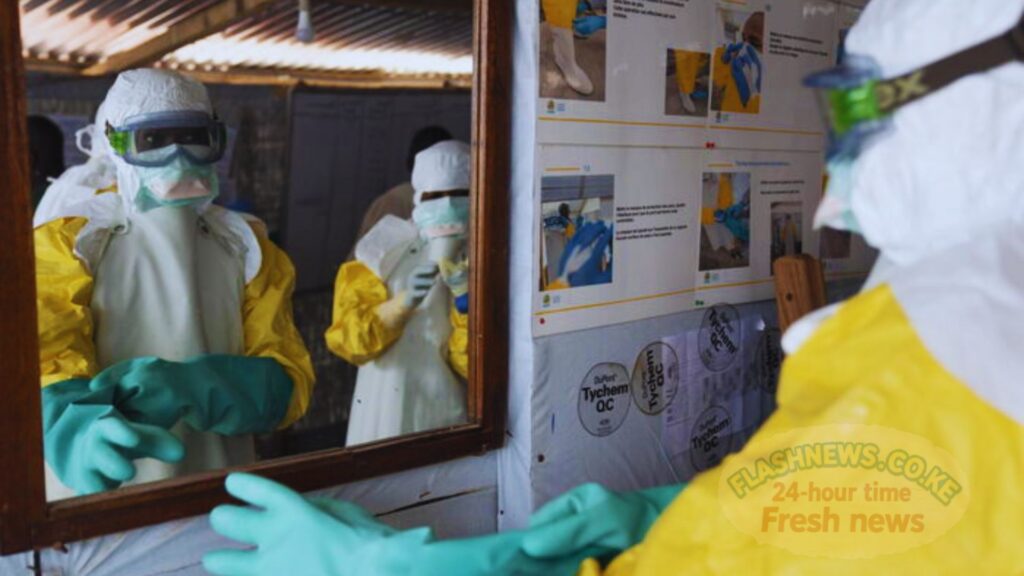
The government has also intensified screening operations at airports and border crossings. According to ministry data, more than 55,000 travellers have so far been screened across the country’s entry points since Ebola alerts were heightened — a sharp increase from the initial 48,000 screenings recorded earlier — with no positive case detected in Kenya.
County and national emergency coordination mechanisms have also reportedly been strengthened to ensure rapid response should any suspected case emerge.
The developments come at a sensitive moment in Kenya-U.S. relations following the signing of the KSh200 billion U.S.-Kenya Health Cooperation Framework in December 2025.
The five-year agreement marked a major shift in American health funding strategy after the closure of USAID operations under President Donald Trump. Under the deal, U.S. health funding is now channelled directly through Kenyan government institutions rather than non-governmental organisations.
Among the key provisions of the agreement is the planned absorption of more than 13,000 health workers into Kenya’s public healthcare system, alongside expanded investments in disease surveillance, epidemic preparedness, and digital health security infrastructure.
Health experts say such systems could prove crucial if East Africa faces renewed Ebola threats, especially given Kenya’s role as a major regional transport and medical hub.
However, the possibility of Ebola-linked international transfers is already triggering heated debate online, with some Kenyans questioning whether the country’s health system can safely manage such high-risk arrangements without exposing the wider population.
Government officials, however, insist Kenya possesses both the expertise and emergency response structures required to contain any potential outbreak.
Also Read: WhatsApp Moves Closer to Telegram-Style Usernames