

HELB Funding 2026/2027: Latest Information for Kenyan Students


University students in Kenya are checking their financial statements as institutions process government funding allocations for the 2026/2027 academic year. The funding process is important for learners who depend on scholarships and student loans to meet tuition costs and other expenses associated with higher education.
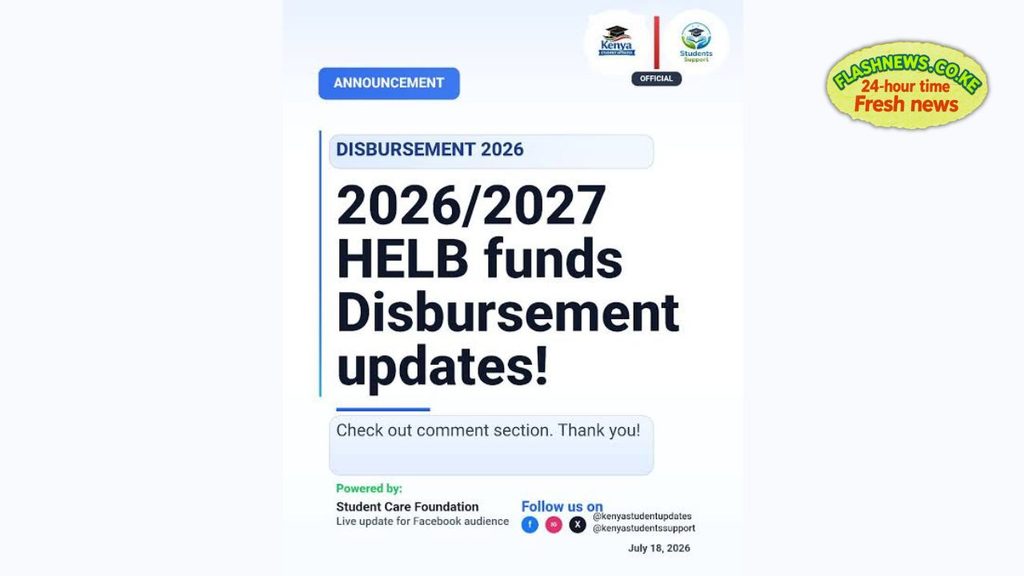
A report published by Education News on 25 September 2026 said the Higher Education Loans Board (HELB) and the Universities Fund were processing and communicating funding allocations, while universities were updating student fee statements.
The report placed the overall higher-education funding allocation at KSh56.7 billion against a reported requirement of approximately KSh114 billion. The difference highlights the financial pressure surrounding student support and the importance of checking individual funding awards rather than assuming every learner will receive the same amount.
Students should use official portals to establish their personal funding position. National funding figures provide useful context, but they do not reveal the exact loan or scholarship awarded to an individual student.
How to Check HELB Funding Status for 2026/2027
Students can begin by checking their official funding account and university fee statement.
Follow these steps:
- Visit the official Higher Education Financing portal at https://www.hef.co.ke/.
- Sign in using the account and credentials associated with your application.
- Open the relevant funding or application-status section.
- Review the information available about your application and award.
- Log in to your university’s student portal and open the finance or fees section.
- Compare the updated fee statement with the funding information shown in your official account.
- Contact the university finance office or the relevant funding agency if information is missing or inconsistent.
Portal menus may change, so students should follow the current instructions displayed on the official website.
A funding application, an approved award and an actual disbursement are different stages. An applicant should not assume that money has reached the university or their personal account simply because an application has been submitted.
How the Student-Centred Funding Model Works
Kenya’s student-centred funding framework combines different forms of support, including government scholarships, loans and household contributions. The amount awarded depends on the applicable assessment and programme costs.
This means students taking different courses or assessed at different financial-need levels may receive different funding packages.
A government scholarship is not the same as a loan. Scholarships provide support under the applicable award conditions, while loans are generally subject to repayment requirements. Students should read the terms attached to their awards so that they understand their obligations.
The household contribution is also important. Where a fee statement includes an amount payable by the student or family, the learner should establish how that figure was calculated and whether all approved funding has been reflected.
Students who believe their assessment does not accurately reflect their circumstances should seek clarification through the official procedures rather than relying on unofficial agents.
Will HELB Pay All University Fees?
Students should not assume that receiving HELB funding means every university expense will automatically be covered.
The actual support depends on the student’s award, programme costs and applicable funding arrangements. Some learners may still have a balance after government support has been credited to their accounts.
Students should therefore check the latest university fee statement before making payment arrangements. If a statement shows an outstanding amount, they should confirm whether all relevant funding has been processed.
It is also important to distinguish between tuition support and upkeep money. These may be handled differently under the applicable arrangements. Students should check the official status of each component instead of assuming that all payments will arrive at the same time.
What Should Students Do if Their Fee Statements Have Not Changed?
Universities may update student accounts at different times as they reconcile funding information. A student whose fee statement has not changed should first confirm whether the relevant allocation has been communicated and processed.

The following steps may help:
- Check the official funding portal for the latest application or award status.
- Review announcements issued by the university.
- Confirm that the student registration details match the information used in the funding application.
- Contact the university finance office if the account does not reflect an expected award.
- Contact HELB or the relevant funding agency if the issue concerns the application or disbursement itself.
Students should keep copies of relevant notifications and correspondence. They should never disclose passwords or verification codes to individuals claiming to accelerate a payment.
What About the 2026/2027 Funding Application Deadline?
A September 2026 report stated that the application deadline for first-time university and TVET funding applicants had been extended to 21 September 2026.
That reported deadline has passed. Students who did not apply should not assume that the same application window remains open. They should check the official HEF portal for any subsequent announcement about a reopening, additional application window or alternative arrangements.
Continuing students should also check the instructions applicable to their category, because requirements and timelines may differ between first-time applicants and students already receiving support.
HELB Loans and Repayment Responsibilities
Students who receive loans should understand that the money is financial assistance that may need to be repaid under the applicable terms.
After completing their studies, borrowers should follow official communication about repayment, account balances and available payment channels. Keeping contact information current can help them receive important notices.
Graduates should use official HELB channels to establish their repayment obligations. They should not make payments to personal mobile-money numbers or bank accounts supplied by unverified intermediaries.
Why Students Should Check Their Funding Early
Checking funding information early gives students more time to address errors, understand their remaining balance and communicate with their institutions.
It can also help parents and guardians plan household expenses. However, decisions should be based on the student’s actual award and fee statement, not on general announcements about the total national funding allocation.
Conclusion
HELB funding for 2026/2027 remains an important issue for university and TVET students across Kenya. Official reports indicate that funding allocations and university account updates have been underway, but the amount awarded varies according to the applicable assessment and programme costs.
Students should check their HEF accounts, review their university fee statements and contact the relevant authorities if information is unclear. Since the reported first-time application deadline of 21 September has passed, applicants should verify any new instructions before taking further action.
Also Read: TSC Promotion Results 2026: 78,732 Teachers Await Outcome of 34,016 Vacancies