


Candidates sitting the 2026 Kenya Certificate of Secondary Education (KCSE) examinations should prepare carefully for every paper, from checking the timetable to organising permitted stationery and getting enough rest.
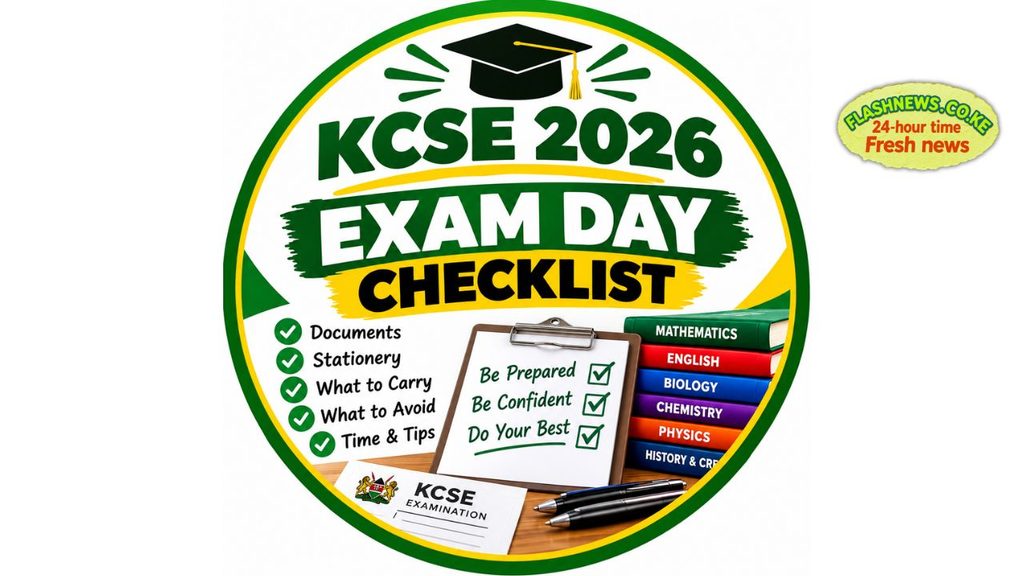
A simple examination-day routine can reduce avoidable stress and help candidates concentrate on answering questions. With the examination period scheduled to continue until November 20, 2026, candidates should repeat the preparation process for every remaining paper.
1. Confirm the Next Examination Date
The first step is to check the official KCSE timetable.
Confirm the subject, paper number, examination date, session and duration. Do not rely solely on an old screenshot or a message shared in a WhatsApp group.
The official timetable is available from the Kenya National Examinations Council at:
https://www.knec.ac.ke/wp-content/uploads/2026/02/2026-KCSE-Timetable.pdf
Candidates should also follow instructions issued by their schools concerning reporting time and examination-centre arrangements.
2. Prepare Approved Stationery
Organise the stationery required for the next paper before going to bed.
Depending on the subject, this may include pens, pencils, a ruler, an eraser or other permitted items. Candidates must follow the instructions for their specific examination.
Do not assume that every item used during ordinary lessons is permitted in the examination room.
3. Avoid Unauthorised Electronic Devices
Candidates should not take mobile phones or other prohibited electronic devices into the examination room.
Leave such items at home or follow the arrangements communicated by the examination centre. Do not risk a problem by carrying an unauthorised device into the examination area.
4. Get Adequate Sleep
Candidates may feel tempted to study throughout the night before a paper. However, severe sleep loss can affect concentration, attention and recall.
Revise important points, organise your materials and allow sufficient time for sleep. If you are struggling with a topic, focus on the main concepts rather than attempting to learn an entire subject overnight.
5. Eat and Hydrate Appropriately
Candidates should maintain their normal routine and eat an appropriate meal before the examination.
Drink water as needed and avoid experimenting with unfamiliar foods or excessive stimulants on examination day.
The aim is to arrive ready to concentrate rather than feeling exhausted or uncomfortable.
6. Arrive According to School Instructions
Follow the reporting time given by the school or examination centre.
Arriving early enough helps candidates settle down and receive instructions without unnecessary rushing. Candidates should not assume that arriving at the exact starting time will be acceptable.
If a transport or other emergency threatens to delay you, contact the school through the appropriate channel as soon as possible.
7. Read the Question Paper Carefully
When instructed to begin, read the examination instructions before answering.
Check the subject and paper, the number of questions required and any special instructions. Pay attention to words such as “explain”, “compare”, “calculate”, “describe” and “state”, because these indicate different expectations.
Candidates should answer the questions required by the paper and avoid spending too much time on one section.
8. Manage Time During the Examination
Look at the marks allocated to each question and use them to guide your time management.
If a question is difficult, move on where the instructions allow and return to it later. Avoid leaving several easier questions unanswered because you spent too long on one problem.
Keep enough time to review your work if possible.
9. Follow Instructions When the Examination Ends
Stop writing when instructed by the invigilator.
Follow the directions for arranging answer booklets, checking identifying details and handing in the script. Do not leave the examination room with materials that must be submitted.
10. Prepare for the Next Paper
After an examination, candidates should avoid becoming distracted by rumours about the paper or unverified claims about marking.
Take a short break, then check the next examination on the official timetable. Focus revision on the next subject and use the remaining time constructively.
Frequently Asked Questions
What should KCSE candidates carry into the examination room?
Candidates should carry only the materials permitted for the specific paper and follow the centre’s instructions.
Can candidates bring phones into the exam room?
Candidates should not bring unauthorised phones or electronic devices into the examination room.
Where can candidates confirm the next paper?
Use the official KNEC timetable and verify any additional arrangements with your school.
Conclusion
A reliable examination-day routine helps candidates reduce avoidable mistakes and focus on their work. Check the timetable, prepare approved materials, sleep adequately, arrive as instructed and follow every direction from examination officials.
Also Read: How to Revise for KCSE 2026: Best Study Tips to Improve Your Exam Performance