


The latest meeting between former Deputy President Rigathi Gachagua, former Interior Cabinet Secretary Fred Matiang’i and Wiper leader Kalonzo Musyoka has raised hopes of improved cooperation among opposition figures ahead of the 2027 General Election.
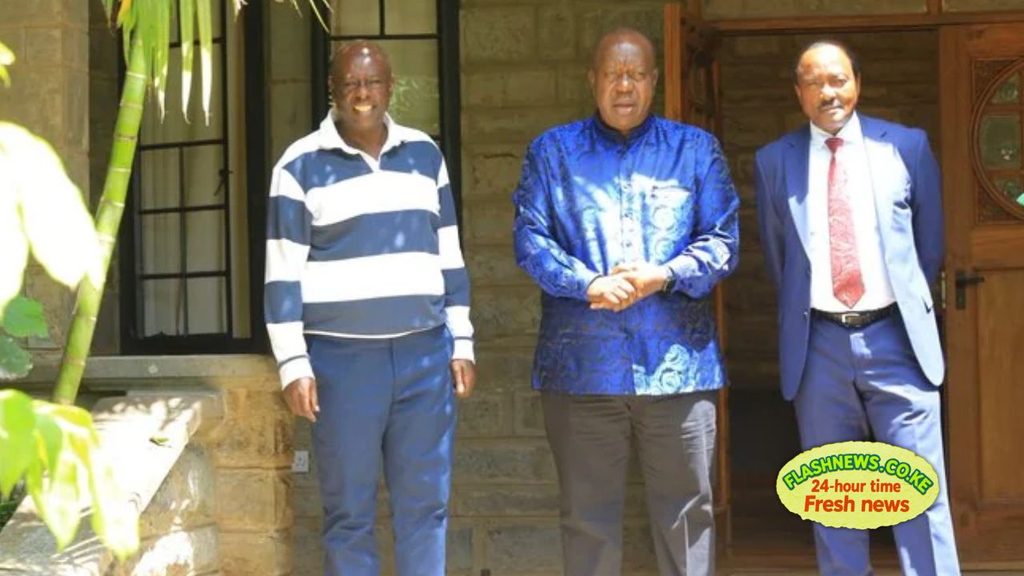
The meeting came against the backdrop of growing political disagreements within the opposition, with competing ambitions and differences over leadership threatening efforts to build a united front against President William Ruto.
Matiang’i shared photographs of the engagement, signalling a willingness to put political differences aside in the interest of national unity.
“Brothers will always put Kenya first,” he said.
Although the meeting offered an opportunity to ease tensions, it remains uncertain whether the three politicians have resolved the underlying disagreements that have strained relations within the opposition.
Their political interests, presidential ambitions and differing views on how an alliance should operate could still create fresh divisions as the country approaches the next elections.
Several outstanding issues explain why the latest engagement may not be enough to end the opposition’s internal rivalry.
Presidential ambitions could complicate unity
The biggest obstacle to a united opposition remains the question of who will carry its presidential ticket in 2027.
Gachagua, Kalonzo and Matiang’i are prominent political figures with ambitions and established support networks. However, only one candidate can ultimately lead a joint presidential campaign.
Gachagua has advocated for the opposition to settle on a single candidate to challenge Ruto. Nevertheless, his own presidential ambitions could make the selection process more complicated.
Kalonzo also has considerable experience in national politics and has previously contested the presidency, making him an influential figure in discussions about the opposition’s future leadership.
Matiang’i has similarly emerged as a potential contender through his Jubilee Party platform. He has emphasised the importance of a fair and transparent process in choosing a presidential candidate.
While the three leaders may agree that the opposition needs one candidate, reaching a consensus on who should be selected could prove considerably more difficult.
Differences over the coalition’s political direction
Another source of disagreement is how the opposition should organise itself before the next General Election.
Gachagua has promoted cooperation among influential political formations, including his Democracy for the Citizens Party, Kalonzo’s Wiper Patriotic Front and the Linda Mwananchi movement associated with Nairobi Senator Edwin Sifuna.
His approach has focused on bringing together powerful political bases to strengthen the opposition’s electoral prospects.
Matiang’i, however, has expressed reservations about building an alliance around regional and ethnic calculations.
During a television interview, he warned that excessive emphasis on numerical strength and ethnic considerations could undermine the opposition’s ability to unite Kenyans.
He has instead advocated for a political arrangement founded on national interests, leadership competence and inclusivity.
The contrasting positions reveal a fundamental disagreement about the type of coalition the opposition should establish.
Unless the leaders agree on a common strategy, the same arguments could return despite their latest reconciliation efforts.
Regional influence remains a sensitive issue
The political influence of the three leaders in their respective regions is another factor likely to shape the negotiations.
Gachagua is seeking to maintain his standing in the Mt Kenya region, while Kalonzo remains a major political figure in Ukambani.
Matiang’i, meanwhile, has been working to strengthen his political presence in the Gusii region while positioning himself as a national leader.
These regional interests could influence negotiations over leadership, representation and the distribution of political responsibilities within a possible coalition.
Each politician will want an arrangement that protects his political influence while allowing the opposition to build support across the country.
This creates a delicate balancing act, particularly if the leaders disagree over which regions and political groups should have greater influence in the alliance.
Power-sharing could become another source of tension
The negotiations may also become more complicated when attention shifts from presidential nominations to the question of government positions.
Political alliances are often built around agreements that define the responsibilities and influence of participating leaders.
If the opposition settles on a common presidential candidate, those who fail to secure the ticket may expect assurances about their roles in the coalition and a possible future administration.
This could lead to difficult negotiations over positions, decision-making authority and the interests of individual political parties.
The three leaders have not publicly established a final power-sharing agreement arising from their meeting.
Consequently, their ability to reach a compromise on these matters could determine whether the emerging cooperation survives the pressure of the election season.
Other opposition figures cannot be left out
The political discussions also extend beyond Matiang’i, Gachagua and Kalonzo.
Other influential opposition figures, including Martha Karua, Justin Muturi, Eugene Wamalwa, Ndindi Nyoro and Edwin Sifuna, have their own political interests and constituencies.
Their involvement will be important if the opposition intends to build an alliance with broad national appeal.
Any arrangement dominated by a small group of leaders could generate resentment among politicians who feel excluded from important decisions.
Previous disagreements have already highlighted concerns about political dominance, consultation and the treatment of different opposition factions.
For the alliance to remain stable, the leaders will need to create an arrangement that allows participating parties and movements to contribute to major decisions.
Supporters could make compromise more difficult
The rivalry within the opposition is also being fuelled by disagreements among supporters of different political leaders.
Political supporters have increasingly taken sides in discussions about who should lead the opposition and which political formations should dominate the emerging alliance.
Such divisions can place additional pressure on politicians who may otherwise be willing to negotiate.
A leader considering stepping aside for another presidential hopeful could face criticism from supporters who expect him to pursue his own ambitions.
This means that even an agreement among the three principals may not immediately bring an end to disagreements within their political camps.
Managing supporters’ expectations will therefore be an important part of any reconciliation process.
Will the opposition remain united ahead of 2027?
The meeting between Matiang’i, Gachagua and Kalonzo has provided an opportunity to reduce tensions and restore communication among three important opposition figures.
However, a successful political alliance requires more than meetings and public declarations of unity.
The leaders must agree on how the presidential candidate will be selected, how the coalition will operate and how the interests of participating political groups will be protected.
They must also convince other opposition figures and their supporters that the proposed arrangement offers everyone a meaningful opportunity to participate.
For now, the meeting can be viewed as a positive step towards reconciliation, but it does not necessarily mean that the rivalry has been settled.
As preparations for the 2027 elections gather momentum, the opposition’s ability to manage competing ambitions and reach binding political agreements will determine whether the current cooperation develops into a lasting alliance.
Also Read: Why Matiang’i, Gachagua and Kalonzo’s meeting may not end opposition rivalry