

Bolivia President Declares State of Emergency as Deadly Protests Push Nation Deeper Into Crisis





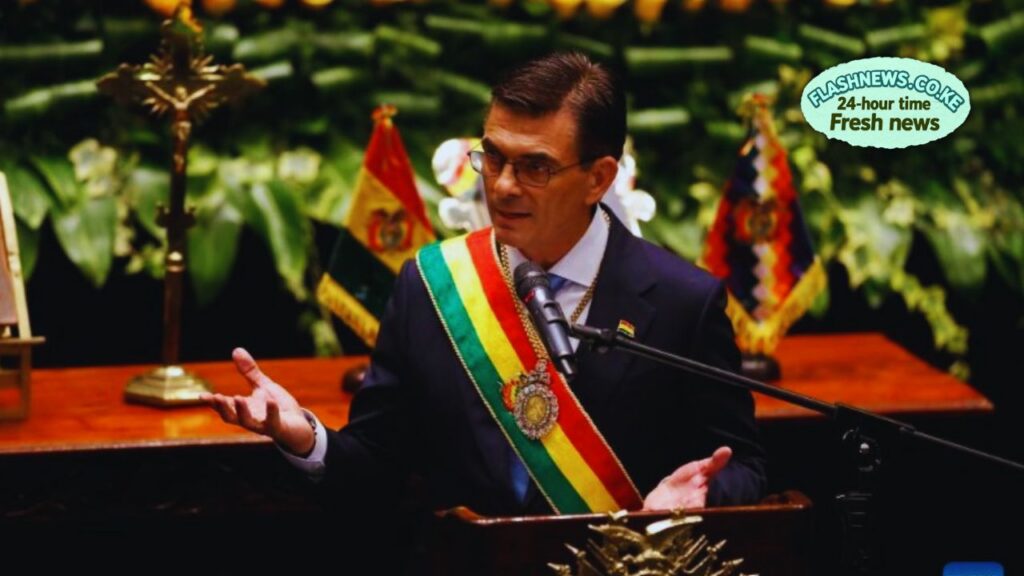
Bolivia has been plunged further into political turmoil after President Rodrigo Paz declared a nationwide state of emergency following weeks of anti-government protests that have left several people dead, hundreds arrested, and major transport routes crippled.
The dramatic move grants the government expanded powers to dismantle roadblocks erected by demonstrators, whose actions have disrupted the movement of goods across the country and triggered shortages of essential supplies.
Announcing the measure on Saturday, President Paz insisted the government could no longer allow the nation to be paralysed by unrest.
In a strongly worded statement, he said the state of emergency would help “free the country’s roads” and restore normal daily life for millions of Bolivians affected by the ongoing disruption.
“Bolivians cannot continue to be hostages of blockades that prevent working, studying, receiving medical attention, supplying themselves, and bringing sustenance to their homes,” Paz wrote in a social media post.
Under Bolivia’s constitution, Congress must approve or reject the emergency declaration within 72 hours.
Protests Escalate Into National Crisis
The demonstrations began in late April after Paz proposed a controversial land reform package that critics claimed would benefit wealthy landowners at the expense of small farmers.
Although the president later withdrew the proposal amid mounting pressure, the protests rapidly expanded into a broader movement against his administration.
Farmers, miners, indigenous organisations and labour groups have since united behind demands that include the restoration of fuel subsidies, the reversal of austerity measures, and ultimately the resignation of the president.
The unrest has caused severe disruption across Bolivia, with roadblocks cutting off major transport corridors and affecting the delivery of food, fuel and medical supplies.
Security forces have responded with arrests and crowd-control operations as tensions continue to rise.
Government Struggles to Restore Order
President Paz, who took office last October on a centre-right platform, has repeatedly accused opposition figures of attempting to destabilise his administration.
The Bolivian leader claims the protests are part of a coordinated effort to undermine his government rather than a spontaneous expression of public anger.
His declaration of emergency came only hours after officials announced a breakthrough agreement with the powerful Bolivian Workers’ Confederation, one of the country’s largest labour organisations.
Despite the deal, indigenous groups and other protest leaders have vowed to continue demonstrating.
According to reports, several roadblocks remain active across the country, while journalists witnessed increased deployments of police and military personnel in key public squares following the announcement.
Constitutional Reforms Spark Fresh Backlash
The crisis has also been fuelled by opposition to proposed constitutional reforms championed by Paz.
The president argues the changes are necessary to attract private investment, modernise the economy, and unlock growth opportunities.
However, critics warn the reforms could weaken public oversight of Bolivia’s natural resources and hand greater influence to private interests.
The debate has intensified existing frustrations over economic hardship and government spending cuts, creating a volatile political environment.
Former President Drawn Into Dispute
Paz has accused former left-wing president Evo Morales of helping orchestrate the protests, allegations Morales has firmly denied.
In an effort to calm tensions, the president has undertaken a series of measures including reshuffling his cabinet, cutting his own salary and those of senior ministers by half, and establishing a new council tasked with engaging groups that feel marginalised by government policies.
Yet those concessions have so far failed to halt the demonstrations.
Adding to concerns, Bolivia’s Congress last month approved legislation making it easier for the president to declare a state of emergency and deploy military forces during periods of civil unrest.
As lawmakers prepare to debate Paz’s latest declaration, Bolivia now faces a critical political test that could determine whether the country moves towards stability—or deeper confrontation.
Also Read: UAE Grants 30-Day Visa Grace Period for Kenyans Hit by Flight Disruptions