

Victims of Protest Abuses as Ruto Backs Compensation Plan





Victims of human rights violations linked to demonstrations, public protests and other forms of state abuse could soon receive compensation through a dedicated government-backed Reparations Fund under a new proposal aimed at addressing years of delayed justice.
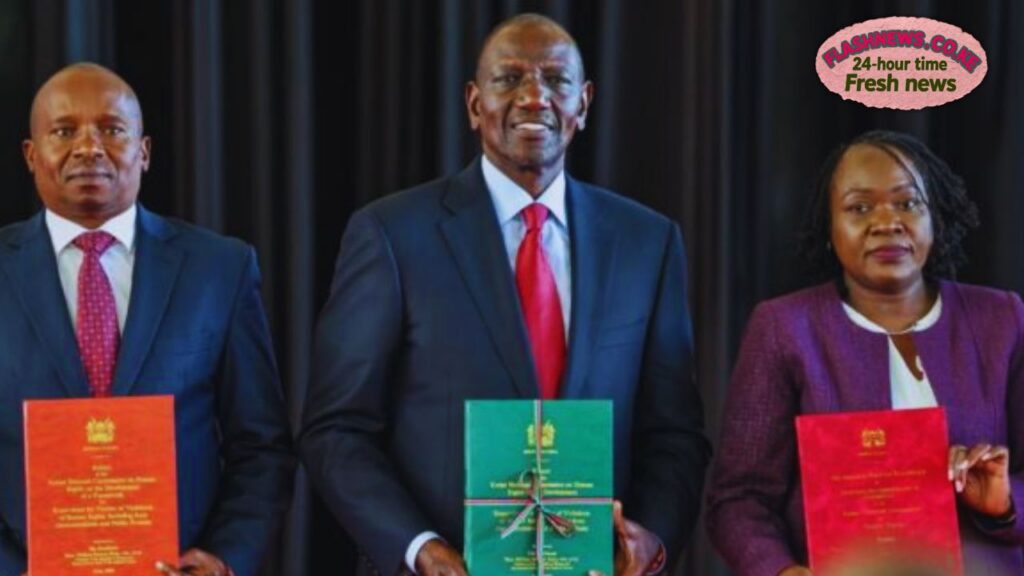
Details contained in a Compensation Framework obtained by Kenyans.co.ke reveal plans for the establishment of a permanent fund designed to provide a predictable and sustainable mechanism for compensating victims of rights violations, including those arising from protests and demonstrations.
The proposal comes amid mounting pressure from victims’ groups, human rights organisations and civil society activists who have long accused successive governments of failing to implement compensation recommendations arising from historical injustices and protest-related abuses.
According to the framework, the proposed fund seeks to address persistent shortcomings that have undermined previous compensation efforts.
“Previous compensation efforts and recommendations, including those arising from historical injustices, have often been delayed or undermined by inadequate and inconsistent financing,” the document states.
If adopted, Parliament would be required to enact legislation creating a permanent, ring-fenced Reparations Fund, while the National Treasury would be responsible for allocating and releasing money for compensation programmes.

The fund would operate under a proposed Reparations Act, which would establish the legal framework for its administration and create structures to oversee its long-term sustainability.
The recommendations stem from a report prepared by the Kenya National Commission on Human Rights (KNCHR) on the development of a national reparations framework for victims of human rights violations.
The report was formally presented to President William Ruto on June 15 and proposes sweeping reforms, including the creation of an independent institution to administer reparations and oversee compensation claims.
Under the proposals, financing for the fund would primarily come from annual Treasury allocations but could also be supplemented through grants, donations and other legally approved sources.
Human rights advocates have consistently argued that victims of police brutality, unlawful arrests, enforced disappearances and injuries sustained during demonstrations have often been left waiting for years despite court rulings and official recommendations supporting compensation.
The KNCHR recommendations also extend beyond financial payments. They call for accelerated investigations into alleged protest-related abuses, prosecution of perpetrators, prioritisation of vulnerable victims and a review of cases involving individuals arrested while exercising constitutionally protected rights.
The proposals come against the backdrop of heightened scrutiny over the government’s handling of demonstrations in recent years, particularly during periods of political unrest and anti-government protests.
President Ruto has since pledged to implement the recommendations contained in the KNCHR report, signalling what could become one of the most significant reforms in Kenya’s approach to addressing historical and protest-related human rights violations.
In a further indication of the government’s commitment, authorities have announced that KSh2 billion has already been set aside to compensate victims of human rights violations linked to protests that occurred between 2017 and 2024.

The compensation payments are expected to begin next week, providing immediate relief to some victims even as the broader legislative framework for the proposed Reparations Fund moves forward.
Should Parliament approve the recommendations, Kenya would for the first time establish a permanent mechanism specifically designed to compensate victims of rights abuses, reducing reliance on ad hoc government payouts and potentially transforming how justice and restitution are delivered to affected citizens.
Also Read: U.S. Embassy Warns Americans Ahead of June 25 Demonstrations in Kenya