


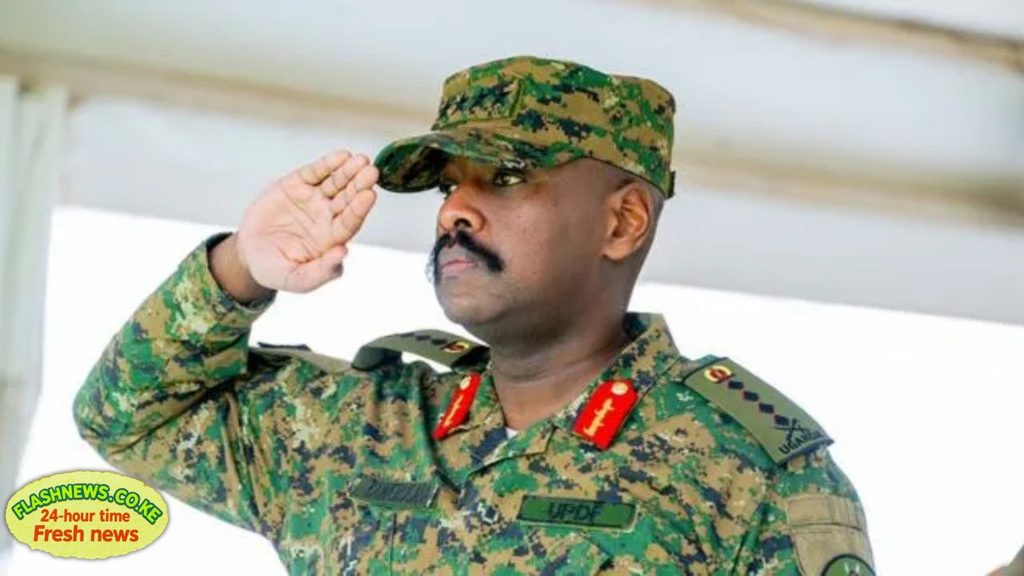
Ugandan military chief General Muhoozi Kainerugaba has suffered a potential political setback after senior members of his father’s ruling National Resistance Movement (NRM) reportedly resisted efforts to position him as President Yoweri Museveni’s successor.
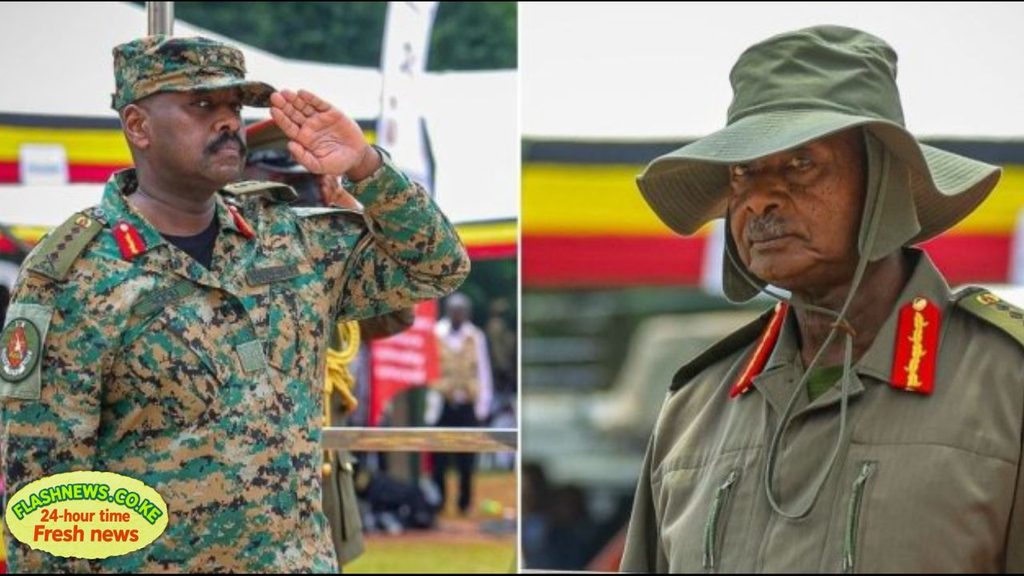
The disagreement emerged during a closed-door meeting of the party’s executive committee on Tuesday, November 10, 2026, where senior officials were discussing Uganda’s future leadership.
According to five NRM members who spoke to Agence France-Presse (AFP), a proposed vote on Muhoozi’s suitability to succeed his father was abandoned after several participants expressed opposition.
The sources said four members had supported the proposal while three voted against it before the exercise was stopped.
The reported disagreement suggests that Muhoozi’s political ambitions do not enjoy unanimous backing within the ruling party, despite efforts by some senior figures and supporters to promote his potential presidency.
However, the NRM had not publicly confirmed the reported outcome of the meeting, meaning the account remains based on statements from unnamed participants rather than an official party resolution.
Senior party members reportedly question Muhoozi’s suitability
The reported resistance was linked partly to concerns about Muhoozi’s conduct, particularly his controversial statements on social media.
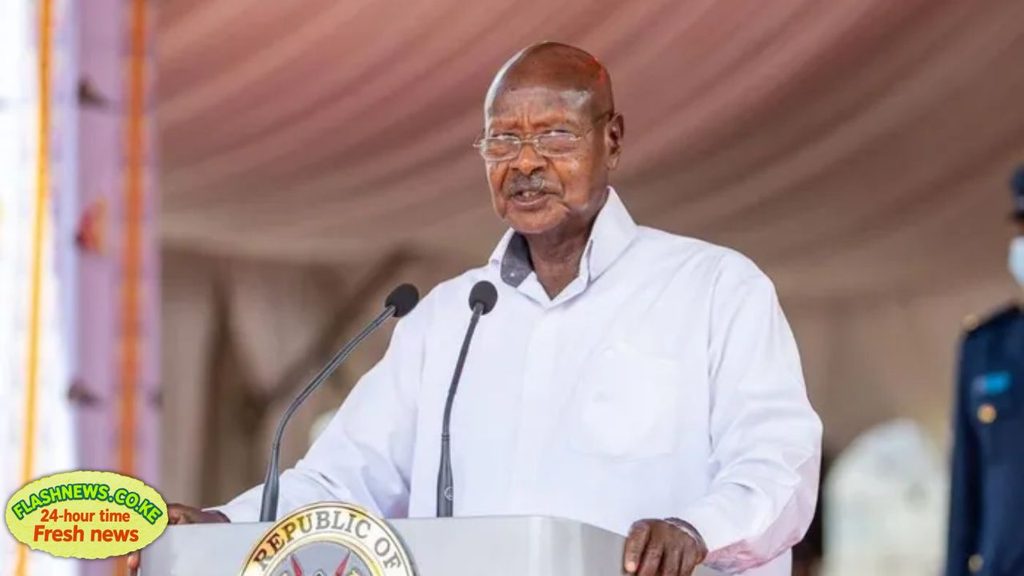
One participant told AFP that the military chief’s confrontational approach had made some party officials uncomfortable.
The source argued that Muhoozi needed to build public support through persuasion rather than threats or pressure.
Another reported intervention came from NRM vice-chairman Calvin Echodu, who allegedly advised Museveni to consider giving his son a civilian responsibility before allowing him to pursue the country’s top political office.
According to the AFP account, Echodu suggested that Muhoozi needed more direct experience engaging with ordinary citizens and preparing for civilian leadership.
He also reportedly advised Museveni to consider seeking another term in 2031, arguing that his son was not yet ready to take over.
The reported exchanges indicate that some influential figures within the ruling establishment may have reservations about an immediate succession arrangement centred on the military chief.
Museveni had presented his son as a possible successor
The latest disagreement follows an earlier intervention by Museveni, who reportedly presented a succession discussion paper to senior NRM officials in late October.
The document outlined considerations for identifying Uganda’s next leader beyond 2031 and reportedly argued that Muhoozi possessed the credentials required to be considered for the presidency.
The discussions were expected to give the ruling party an opportunity to examine the question of succession as Museveni approaches the end of his current political cycle.
However, the latest meeting appears to have exposed differences among senior officials over whether the president’s son should be endorsed as the preferred successor.
Museveni has governed Uganda since 1986 and remains the dominant figure within the NRM.
His long stay in power has made the question of who will eventually take over an important political issue, particularly as different groups within the ruling party seek to influence the transition.
Muhoozi has already declared interest in the 2031 presidency
Despite the reported opposition within the NRM executive, Muhoozi has publicly expressed his intention to contest the Ugandan presidency in 2031.
The 52-year-old general’s ambitions have received backing from members of the Patriotic League of Uganda (PLU), a political movement associated with his supporters.
Some senior political figures have also publicly promoted his potential candidacy, presenting him as a possible successor to his father.
His position as Chief of Defence Forces has further placed him at the centre of discussions about Uganda’s political future.
Nevertheless, public endorsements by supporters do not automatically amount to formal selection by the NRM or guarantee that he will become the party’s presidential candidate.
The reported disagreement within the executive committee therefore raises questions about how the party will handle succession negotiations in the coming years.
Muhoozi announces plans to leave military command
The succession debate has also coincided with Muhoozi’s announcement that he intends to relinquish his position as Uganda’s Chief of Defence Forces.
On Friday, November 6, he indicated that he would hand over the military command to another qualified officer in the coming months before dedicating more time to his Christian faith.
However, subsequent remarks suggested that his departure from the military might not be immediate, with reports indicating that he expected to remain in the armed forces for at least another year.
His announcement has attracted attention because serving military officers face legal restrictions when seeking elective political office.
Under Uganda’s military legal framework, an officer seeking political office must first resign or retire from the armed forces in accordance with the applicable regulations.
Consequently, any decision by Muhoozi to pursue the presidency would require him to address his military status before formally entering electoral politics.
Controversial social media posts add to political scrutiny
Muhoozi has repeatedly attracted public attention through provocative statements published on his X account.
His latest remarks reportedly included threats to arrest Vice President Jessica Alupo over allegations that she was involved in a plot to overthrow the government.
Such statements have contributed to concerns among some political observers about his approach to leadership and the implications of his public conduct.
The controversy has become particularly significant as discussions about his possible succession move beyond political endorsements to questions about his suitability to lead the country.
The latest AFP report suggests that these concerns have also featured in private discussions among senior ruling party officials.
Why Uganda’s succession debate matters to Kenya
The political developments in Uganda are being closely watched across East Africa because of the country’s strategic importance to regional trade, transport and security.
Kenya and Uganda maintain extensive economic ties, with Uganda serving as one of Kenya’s major export markets within the East African Community.
The two countries also cooperate in areas including infrastructure development, agriculture, investment, transport and regional security.
Their defence forces have maintained joint engagements focusing on challenges such as terrorism, cross-border crime, human trafficking and intelligence sharing.
Any major political transition in Kampala could therefore attract attention in Nairobi and other regional capitals, particularly if it affects the stability of Uganda’s institutions or its foreign policy direction.
NRM succession battle remains unresolved
The reported resistance to Muhoozi’s proposed succession marks an important development in Uganda’s internal political discussions.
Although his father has reportedly encouraged the party to consider his credentials, the latest meeting suggests that some senior NRM officials are not yet convinced that he should automatically become the next leader.
The party now faces the challenge of managing competing views while determining how succession should be handled after Museveni’s long presidency.
For Muhoozi, the immediate task may be to convince influential party figures that he can command support beyond his father’s political network and the military establishment.
Whether he can overcome the reported resistance and secure broader backing within the NRM will be a major question as Uganda approaches the 2031 presidential election.
Also Read: Sifuna’s Linda Mwananchi Movement Faces Fresh Court Challenge Ahead of Friday’s Delegates Conference