


Controversial preacher Paul Nthenge Mackenzie has been sentenced to 200 years in prison for his role in the Shakahola massacre, in which 191 people, including 190 children, were murdered through starvation and direct violence.
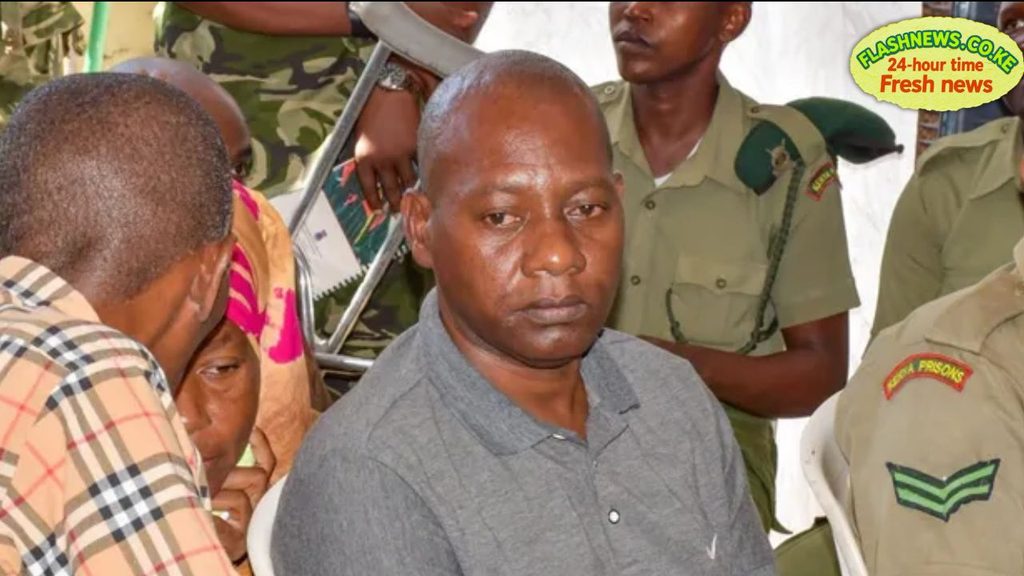
The High Court in Mombasa delivered the sentence on Friday, November 6, 2026, following Mackenzie’s conviction on all 191 counts of murder arising from the deaths at Shakahola Forest in Kilifi County.
Lady Justice Diana Kavedza Mochache imposed two consecutive 100-year prison terms on the founder of Good News International Ministries. The first sentence relates to 183 murders by starvation, while the second covers eight murders by direct homicide.
The sentences within each category will run concurrently, but the two categories will run consecutively, resulting in an aggregate prison term of 200 years.
The ruling marks a major development in one of Kenya’s most disturbing cases involving religious extremism, the deaths of children and the abuse of spiritual authority.
How the Court Arrived at Mackenzie’s 200-Year Sentence
In her sentencing decision, Justice Kavedza ordered Mackenzie to serve 100 years for each of the 183 counts of murder by starvation. The victims in this category comprised 182 children and one adult.
She imposed a further 100 years for each of the eight counts of murder by direct homicide involving child victims.
The judge directed that the sentences in the starvation category would run concurrently. The same arrangement would apply to the eight direct-homicide counts.
However, the two groups of sentences would run consecutively, meaning the second 100-year term would begin after the first category had been served.
This brought Mackenzie’s total sentence to 200 years.
The distinction is important because the court did not impose 200 years for every individual count. Instead, it grouped the sentences into two categories, with each category attracting an aggregate term of 100 years.
The court also sentenced Mackenzie’s co-accused, with prison terms ranging from 10 to 160 years depending on their individual roles and levels of responsibility in the killings.
Other Shakahola Convicts Receive Between 10 and 160 Years
Mackenzie was not the only person sentenced over the deaths at Shakahola Forest.
His 28 co-accused also received prison terms after the court considered their individual involvement in the offences.
According to the sentencing reports, deputy pastor Smart Deri Mwakalama received 160 years in prison. Fourteen other convicts were also handed aggregate sentences of 160 years each.
Ten others received 140 years, while another convict was sentenced to 100 years.
At the lower end of the sentencing scale, Enos Amanya Ngala and Pastor Lucas Owino Ogola each received 10 years in prison.
Ngala had pleaded guilty to all 191 counts and was convicted on his own plea. His circumstances and expression of remorse were among the factors considered during sentencing.
Some of the convicts also received additional probation conditions, including a three-year probation period for those specified by the court.
The differences in the sentences reflected the judge’s assessment of each person’s contribution to the crimes rather than treating all the accused as having played identical roles.
The court considered factors including the level of involvement, abuse of authority, participation in enforcing the fasting instructions and the vulnerability of the victims.
Court Rejects Death Penalty for Mackenzie
The prosecution had asked the court to impose the death penalty on Mackenzie, arguing that the scale and seriousness of the crimes justified the harshest possible punishment.
However, Justice Kavedza declined to sentence him to death, choosing instead to impose the lengthy custodial term.
In explaining the decision, the judge considered the objectives of punishment, including retribution, denunciation and deterrence.
She said the punishment needed to reflect the gravity of the offences and the suffering inflicted on the victims and their families.
The court also considered the possibility that keeping Mackenzie alive could help investigators and families obtain information about children whose remains have not been located or conclusively identified.
The judge observed that executing the convict would permanently eliminate the possibility of obtaining such information from him.
She also considered whether a living convict could eventually participate in disengagement and rehabilitation processes.
The decision therefore balanced the need for severe punishment against the possibility of obtaining information that could assist families still searching for answers.
NCTC to Assess Other Convicts for Rehabilitation
In addition to the prison sentences, the court directed that the other convicts, excluding Mackenzie, be assessed for possible participation in a disengagement, deradicalisation, rehabilitation and reintegration programme recommended by the National Counter Terrorism Centre (NCTC).

The proposed framework provides for eligible convicts to apply for a review of their sentences after serving one-third or half of their custodial terms.
However, the review is not automatic.
The judge indicated that applications would need supporting certification from the NCTC and regional authorities confirming that an individual had disengaged from extremist beliefs and was ready for reintegration into society.
The arrangement is intended to provide a structured process for assessing whether some convicts can safely abandon extremist practices and eventually return to their communities.
It does not mean that every convicted person will automatically qualify for early release after serving a specified portion of their sentence.
The court’s approach also reflects concerns about the risk of continued radicalisation and the need to protect the public.
How Mackenzie Directed Followers to Starve to Death
The sentencing followed a judgment delivered on October 19, 2026, when Justice Kavedza found Mackenzie and his co-accused guilty of all 191 counts of murder.
The court established that Mackenzie, who led Good News International Ministries, directed followers to relocate to Shakahola Forest and undertake extreme fasting in the belief that they would meet Jesus.
According to the court’s findings, the deadly practice began with children before spreading to young people, women and men.
The judge rejected the argument that the victims had voluntarily chosen to starve themselves to death.
Instead, the court found that the fasting was enforced through an organised system of religious indoctrination, intimidation and violence.
Some followers who resisted the instructions or attempted to escape were subjected to force, while the court established that children were particularly vulnerable to the deadly teachings.
The prosecution presented evidence from witnesses, forensic investigations, medical examinations and other materials to demonstrate how the killings occurred.
The court concluded that the evidence established Mackenzie’s responsibility and the involvement of the other convicted individuals beyond reasonable doubt.
Shakahola Massacre: More Than 400 Bodies Exhumed
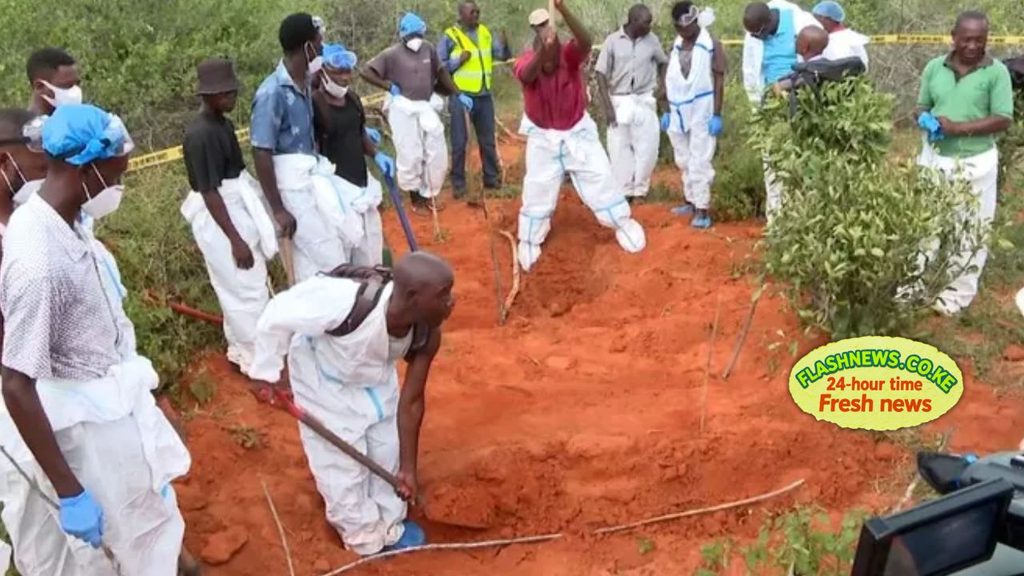
The Shakahola tragedy came to national and international attention in April 2023 after investigations uncovered mass graves in Shakahola Forest, located in Kilifi County.
Subsequent searches and exhumations revealed the scale of the deaths associated with the settlement linked to Mackenzie’s church.
More than 400 bodies have been recovered from graves associated with the wider Shakahola investigation.
However, the 191 murder counts in the case for which Mackenzie and his co-accused were sentenced relate to the specific victims covered by the High Court proceedings. The figure should not be confused with the wider number of bodies recovered during investigations.
The discovery raised serious questions about the regulation of religious institutions, the protection of children and the ability of authorities to detect and prevent harmful practices operating under the cover of religion.
Families of victims have continued to seek answers, particularly concerning missing relatives and the identification of recovered remains.
What the 200-Year Sentence Means for the Shakahola Case
Mackenzie’s 200-year prison term represents a significant judicial response to the organised killings established during the trial.
The court’s decision also sends a strong message about the criminal consequences of exploiting religious authority to encourage or enforce practices that endanger human life.
For families who lost relatives, however, the sentencing does not necessarily bring an end to the search for answers.
Questions surrounding missing children, the identification of remains and the full circumstances of the wider Shakahola tragedy remain important.
The NCTC rehabilitation framework for eligible co-convicts will also require careful implementation and assessment to ensure that public safety remains a priority.
Meanwhile, Mackenzie faces other legal proceedings relating to separate allegations connected to the wider Shakahola investigations. The 200-year sentence reported here relates specifically to the 191 murder counts decided by the High Court.
The ruling closes a major chapter in the murder trial, but the wider consequences of the Shakahola massacre will continue to affect victims’ families, communities and Kenya’s approach to preventing religiously motivated abuse.
Also Read: Judiciary Fires Back at The Standard Over ‘Big Talk, Small Act’ Headline