






Tanzania Fires Back at Ruto Over Road Claims as Regional Rivalry Intensifies
The Tanzanian government has issued a sharp rebuttal to remarks made by William Ruto, escalating a growing regional debate over infrastructure and economic standing in East Africa.
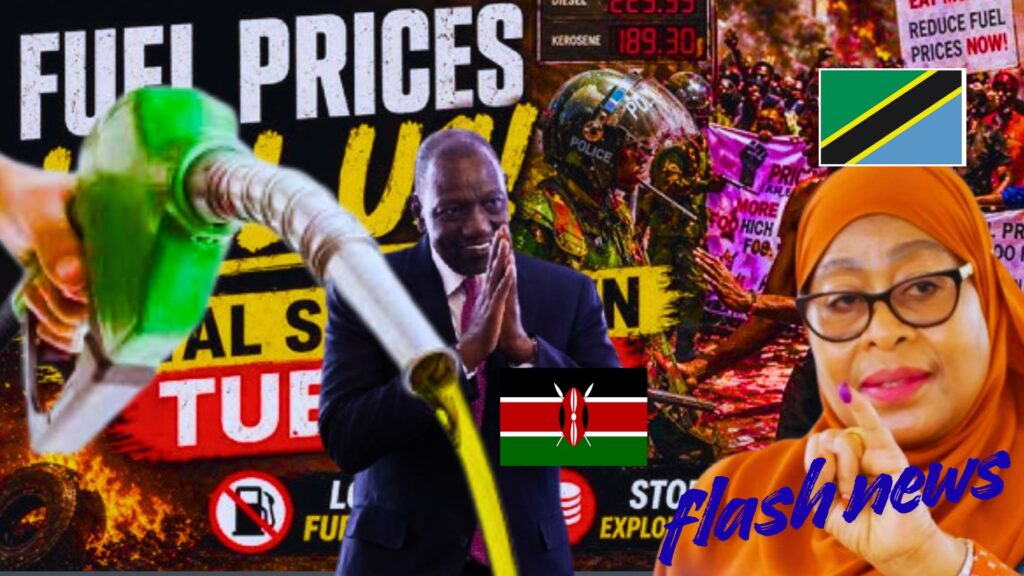
Speaking during a church service on April 19, the Kenyan Head of State defended persistently high fuel prices in Kenya, attributing them to the country’s expansive road network and its classification as a middle-income economy.
“Kenya is a middle-income country. Our neighbours are the least developed countries. If you want to compare Kenya with others, compare Kenya with other middle-income countries,” Ruto said.
He further claimed that Kenya’s tarmacked road network—estimated at approximately 20,000 kilometres—surpasses the combined total of several neighbouring nations.
“If you add the number of kilometres in Uganda, Tanzania, DRC, Rwanda, Burundi and South Sudan, it is not 20,000 km,” he added, suggesting Kenya’s infrastructure burden justifies higher fuel costs.
However, the remarks have been strongly contested by Tanzania under the leadership of Samia Suluhu Hassan.
In a response issued on Tuesday, April 21, a senior Tanzanian minister dismissed Ruto’s claims as “false and misleading,” insisting that Tanzania alone accounts for a significant portion of the region’s road infrastructure.
“It must be known that Tanzania is a middle-low income country, and in East Africa, we are only two countries, Tanzania and Kenya,” the minister said. “Tanzania has a total of 16,000 kilometres of tarmac roads in both urban and rural areas.”
He added that when factoring in other East African nations—including Uganda, Rwanda, Burundi, South Sudan and the Democratic Republic of the Congo—the total length of paved roads exceeds 22,000 kilometres.
“So those figures belittling us as other East African countries… are untrue,” the minister stated.
The diplomatic exchange has sparked fresh debate across the region, with analysts pointing to underlying tensions over economic influence and development narratives in East Africa. The dispute also comes amid ongoing global fuel price pressures, which have intensified scrutiny on government policies and public spending.
Observers note that infrastructure development remains a key benchmark for economic progress, making such comparisons politically sensitive—particularly between Kenya and Tanzania, the region’s two largest economies.
As the discussion unfolds, the contrasting claims have drawn public attention to the accuracy of official statistics and the broader implications for regional cooperation within the East African bloc.
Also Read: 11 Arrested in Nairobi Fuel Protests as Police Downplay Disruptions