






Ruto Introduces ‘Lipa Polepole’ SHA Payment Scheme to Ease Payments for Informal Sector
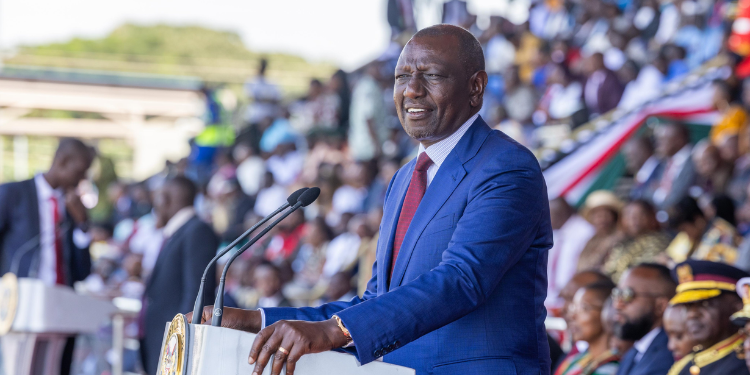
Homa Bay, Kenya — June 1, 2025 – President William Ruto has unveiled a new “Lipa Polepole” payment scheme aimed at easing access to the Social Health Authority (SHA) insurance for millions of Kenyans working in the informal sector. Speaking during the 62nd Madaraka Day celebrations in Homa Bay, the Head of State said the flexible payment system is designed to accommodate irregular income patterns that have historically hindered consistent health coverage.
“To address persistent challenges such as irregular premium payments, especially among the informal sector, the government of Kenya is introducing an inclusive payment solution known as Lipa SHA Polepole,” said President Ruto.
The initiative will allow households to pay their annual SHA insurance premiums in manageable installments—whether monthly, weekly, or even daily—depending on their financial capacity. This, Ruto emphasized, is part of his administration’s broader agenda to make healthcare accessible and affordable to all Kenyans, regardless of income level.
“This initiative will enable Kenyans to remit their annual SHA contributions through flexible, manageable installments… based on their financial abilities,” he added.
Integrated Through Public-Private Partnerships
According to President Ruto, the scheme is a result of strategic collaboration between several stakeholders, including the Ministry of Health, the Ministry of Cooperatives, financial institutions, and mobile network providers, all working under the framework of the Hustler Fund.
These partnerships, he noted, aim to streamline premium collections and widen health coverage for underserved communities. The move also reflects the government’s continued push for digital innovation in service delivery, particularly in social protection programmes.
SHA Milestones: 50,000 Registered, 4.5 Million Treated
Ruto highlighted some of SHA’s early successes, noting that over 50,000 Kenyans have so far registered with the scheme. Additionally, more than 4.5 million individuals have received fully covered treatment since the authority became operational.
These figures, according to government sources, illustrate the growing demand for universal health insurance and the need for adaptive financing models that align with Kenya’s economic realities.
World Bank Flags Financial Risks in Current SHIF Model
However, while the government pushes forward with the SHA rollout, it is also under increasing pressure from international partners to review the financial sustainability of its Social Health Insurance Fund (SHIF), under which SHA operates.
In its Public Finance Review (PFR) report released on May 27, the World Bank called for a reassessment of the scheme’s funding framework. The report warns that Kenya’s reliance on contributions from the informal sector—where income is unpredictable—could undercut the financial viability of the programme.
“Implementing SHIF in an economy dominated by informal employment will pose serious funding constraints,” the report noted, projecting that current policies would generate just Ksh67 billion annually, well below the Ksh157 billion target required to sustain operations.
Recommendations for Reform: Subsidies, Exemptions, and Equity
In its recommendations, the World Bank urged the Kenyan government to concentrate SHIF collections on formal sector workers, while directly subsidising informal sector participants and vulnerable groups.
Additionally, the bank called for exemptions for low-wage earners in the formal sector to prevent further financial strain. Such reforms, it argued, would better promote equity in healthcare access, a cornerstone of Kenya’s Universal Health Coverage (UHC) aspirations.
As Kenya continues to transition toward full-scale implementation of SHA and SHIF, the introduction of Lipa Polepole represents a critical adjustment to ensure inclusivity and payment flexibility. However, balancing financial sustainability with universal access remains a pressing concern.
The government is expected to release updated guidelines for SHA premium collection later this quarter, as it consults further with stakeholders, donors, and civil society organisations to refine the rollout.
Ruto Introduces ‘Lipa Polepole’ SHA Payment Scheme to Ease Payments for Informal Sector