

Ruto Scores Major Court Victory as High Court Upholds Reconstituted Cabinet and Clears Appointment of ODM-Linked Ministers





President William Ruto has secured a significant legal victory after the High Court upheld the constitutionality of his decision to appoint politicians affiliated with the opposition into his reconstituted Cabinet, dismissing a petition that sought to nullify the appointments.
In a landmark judgment delivered on Tuesday, July 7, a three-judge bench sitting at the Milimani Law Courts ruled, by a majority decision of two judges against one, that the Constitution does not prohibit the President from appointing members of opposition political parties as Cabinet Secretaries.
The case stemmed from President Ruto’s July 2024 decision to dissolve his Cabinet at the height of nationwide anti-Finance Bill protests before unveiling a reconstituted team that included several senior politicians associated with the Orange Democratic Movement (ODM).
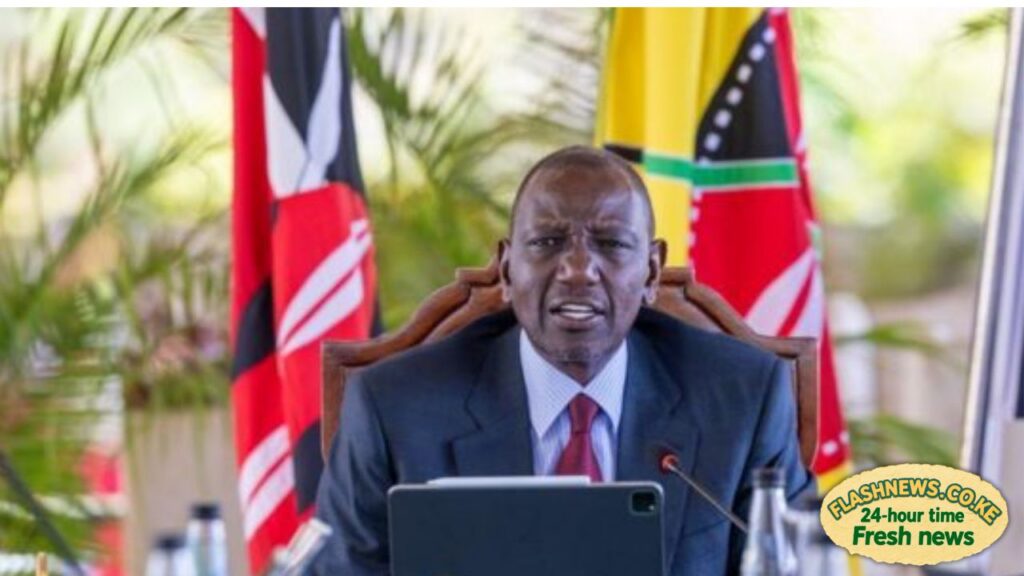
The appointments immediately triggered legal challenges, with petitioners led by Katiba Institute and Busia Senator Okiya Omtatah arguing that bringing opposition figures into government undermined Kenya’s constitutional order, weakened the country’s multi-party democracy and effectively blurred the distinction between the government and the opposition.
However, the majority of the bench rejected those arguments, holding that political affiliation alone is not a constitutional barrier to appointment as a Cabinet Secretary.
The ruling effectively validates President Ruto’s appointment of National Treasury Cabinet Secretary John Mbadi, Cooperatives Cabinet Secretary Wycliffe Oparanya, Energy Cabinet Secretary Opiyo Wandayi, Mining Cabinet Secretary Hassan Joho and Gender Cabinet Secretary Beatrice Askul, all of whom were affiliated with ODM when they joined the Cabinet.
According to the judges, the Constitution does not establish an official opposition as a constitutional institution, meaning there is no legal prohibition preventing the Head of State from appointing qualified members drawn from opposition parties into government.

The court also examined the legality of President Ruto’s decision to reappoint some Cabinet Secretaries after dissolving the Cabinet in 2024.
In its findings, the bench held that the dismissal of Cabinet Secretaries under Article 152(5)(b) of the Constitution does not permanently disqualify them from future appointment.
The judges observed that the dissolution of the Cabinet was a political and administrative reorganisation rather than a disciplinary process, adding that no evidence had been presented to demonstrate that the reappointed Cabinet Secretaries had violated Chapter Six of the Constitution on leadership and integrity.
The decision represents one of the most significant judicial rulings concerning President Ruto’s post-protest government reorganisation and is expected to shape future interpretations of presidential appointment powers under the Constitution.
The judgment, however, comes against the backdrop of another recent High Court decision declaring that the current Cabinet fails to comply with the constitutional two-thirds gender principle.
In that separate ruling, the court found that despite multiple Cabinet appointments and reshuffles, the Executive had failed to achieve the gender balance required under the Constitution.
The bench comprising Justices Eric Ogola, Jairus Ngaah and Stephen Githinji consequently directed President Ruto to reconstitute the Cabinet within 120 days to ensure compliance with the constitutional gender threshold.

The latest ruling therefore secures the legality of the President’s appointment of opposition-affiliated Cabinet Secretaries while leaving intact the court’s earlier directive requiring changes to address gender representation in the Cabinet.