






Standard Group Locked Out of State House Event Covering Slovenian President’s Visit
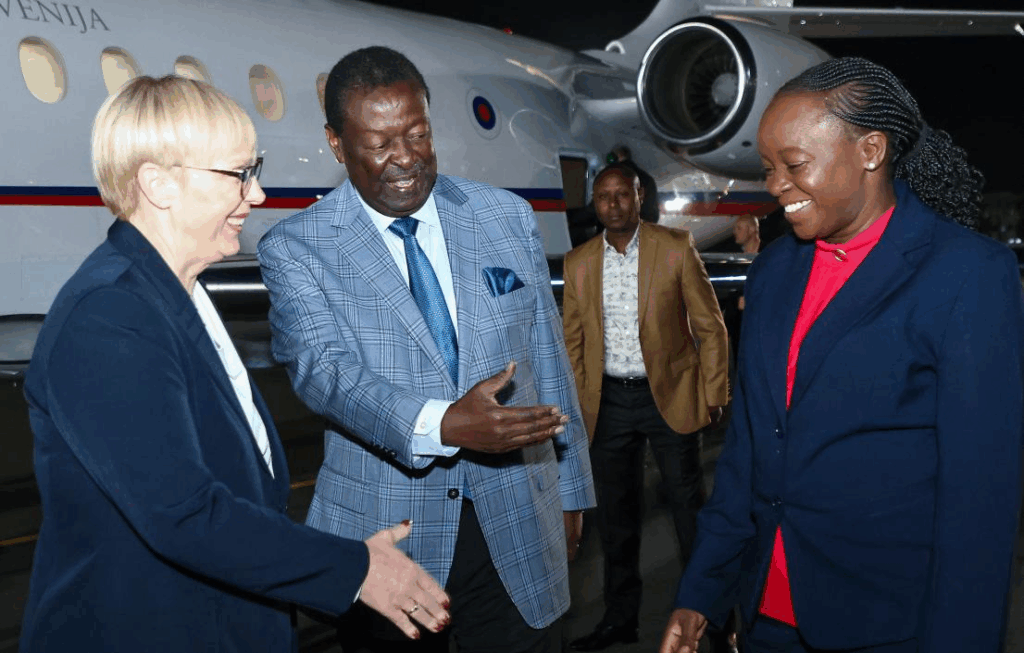
Journalists from the Standard Media Group were on Saturday, May 31, denied access to State House Nairobi, where Slovenian President Natasa Pirc Musar was on an official visit. The exclusion of Standard reporters has reignited debate over media freedom in Kenya, particularly under President William Ruto’s administration.
According to eyewitness accounts, journalists from other major media houses were allowed entry, but State House officials reportedly issued direct instructions to block Standard Group journalists from covering the event. The reason, while not officially stated, is widely seen as a response to the media house’s recent critical reporting on the government.
The Standard Group, headquartered on Mombasa Road, has long maintained an editorial stance that holds the government to account. In recent months, it has published a series of front-page headlines that have irked senior government officials. This editorial boldness appears to have led to increased friction with the administration.
Transport Cabinet Secretary Kipchumba Murkomen is among the most vocal critics of the media house. On March 26, he lashed out at The Standard for what he termed as “unfair targeting” of his ministry and security agencies amid ongoing security concerns in the country. Just days earlier, the paper had run a bold headline labeling Murkomen a “Below Average CS,” a move that reportedly escalated tensions.
“It is easy for people to criticise without understanding the challenges police face in safeguarding the nation,” Murkomen said in defense of the security services.
Adding to the strained relationship, the government has reportedly pulled advertising contracts from the Standard Group — a significant source of revenue for Kenyan media outlets. While no official reasons have been given, media analysts believe the move is a deliberate attempt to economically squeeze the outlet into editorial compliance.
The situation was further complicated on May 23 when Standard Group’s TV and radio stations — including KTN, Radio Maisha, Spice FM, and Berur FM — experienced an unexpected outage. Although the company cited a technical hitch, viewers and listeners raised concerns about the lack of transparency over the incident.
“Standard Group radio and TV platforms temporarily off air due to a technical hitch; KTN, Radio Maisha, Spice FM, and Berur FM available online as engineers work to restore services,” the media house stated.
President Natasa Pirc Musar’s visit comes ahead of the Madaraka Day celebrations on June 1, where she will serve as the Chief Guest in Homa Bay County. The visit is centered on strengthening Kenya-Slovenia relations, with a focus on economic cooperation, peace and security, and multilateral partnerships, according to the Ministry of Foreign Affairs.
While the State House visit was a diplomatic engagement, the exclusion of Standard Group reporters has taken center stage in local media discourse, sparking concerns about the state of press freedom under the Ruto administration.
Civil society groups and media freedom advocates have since called on the government to clarify its position and ensure equal access for all accredited journalists. Some have warned that continued suppression of critical media voices could erode Kenya’s democratic gains and press ranking globally.
The Kenya Editors Guild and the Media Council of Kenya are yet to issue formal statements, but insiders say private consultations are underway.
With Madaraka Day — a national celebration of Kenya’s self-governance — just a day away, the irony of restricting press access during a moment meant to honor freedom has not gone unnoticed.
Also Read: Samidoh Faces Yet Another Political Heat After ‘Wantam’ Chants at UK Concert
Standard Group Locked Out of State House Event Covering Slovenian President’s Visit