






State House Official Dispels Rumors of Monica Kimani’s Killer Jowie Release After Gazette Notice
Kenya was gripped by a wave of speculation and misinformation on Wednesday, May 27, 2025, following reports that Joseph Kuria Irungu—widely known as Jowie and convicted of the 2018 murder of businesswoman Monica Kimani—had been released from prison. The rumors stemmed from a gazette notice issued on Friday, May 23, in which President William Ruto pardoned 57 inmates under the Constitution’s prerogative of mercy. However, government officials and credible investigations have since confirmed that the individual named Joseph Irungu Maina, not Jowie, was among those granted clemency.
Clarification from the Office of the President
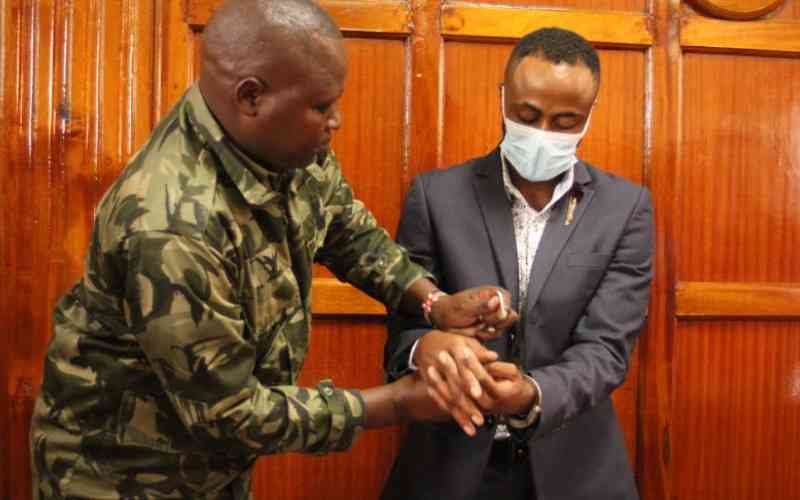
The confusion erupted after the gazette notice listed “Joseph Irungu Maina” among the beneficiaries of the presidential pardon. Given the similarity of names, many Kenyans quickly assumed that this individual was the same as Joseph Kuria Irungu—Jowie—who was convicted of the high-profile murder of Monica Kimani and sentenced to death in March 2024.
However, Dennis Itumbi, the Digital Strategist and Head of Creative Economy at the Office of the President, quickly intervened to quash the misinformation circulating on social media platforms. “The person released is not Jowie. The name is different. The claims being made online are entirely false and misleading,” Itumbi stated. He further criticized certain online users for exploiting a sensitive issue and causing unnecessary public distress.
Independent Verification and Name Discrepancy
A subsequent verification conducted by Flashnews.co.ke revealed that the man released under presidential clemency was indeed a different individual. The report identified the released inmate as Joseph Irungu Maina, who had been incarcerated since 2015 and sentenced to a term unrelated to the Monica Kimani case.
This Joseph Irungu was listed in the gazette as prisoner number 22. In contrast, Jowie—full name Joseph Kuria Irungu—was sentenced on March 13, 2024, following his conviction for the brutal slaying of Monica Kimani in Nairobi in September 2018. Justice Grace Nzioka, who presided over the trial, cited the heinous nature of the crime in handing down a death sentence. “The sentencing reflects the severity of the offence and the circumstances under which it was committed,” the judge remarked during her ruling.
The stark difference in middle names and sentencing dates serves as further evidence that the two individuals are entirely distinct.
The Power of Presidential Mercy in Kenya
The confusion has brought renewed attention to the constitutional provisions surrounding the President’s power to grant mercy. Codified under Article 133 of the 2010 Constitution of Kenya, the prerogative of mercy allows the President to pardon or commute sentences on the advice of the Power of Mercy Advisory Committee.
This legal concept was inherited from the United Kingdom’s royal prerogative of mercy, which empowered the British monarch to mitigate or rescind criminal penalties. Kenya, as a former British colony, incorporated the principle into its legal framework, which remains operational today.
The President may exercise this power under several circumstances: where the inmate has demonstrated consistent good behavior, for humanitarian reasons such as pregnancy or mental illness, or where the law under which the person was convicted is later deemed unjust or outdated. Additionally, diplomatic considerations or widespread public sympathy may also factor into the decision.
Public Reaction and Social Media Misinformation
The rapid spread of misinformation regarding Jowie’s supposed release underscores the growing impact—and potential danger—of unverified information shared via digital platforms. Many Kenyans, still reeling from the brutal nature of Monica Kimani’s murder, expressed outrage and disbelief online before official clarifications were issued.
“This incident shows the importance of fact-checking and responsible communication, especially on matters of national interest,” said Dr. Lydia Mwangi, a Nairobi-based legal scholar and media ethics consultant. “The state must act swiftly to provide accurate information, but citizens also have a duty to verify before amplifying unconfirmed claims.”
Context of the Jowie Conviction
Joseph Kuria Irungu was convicted for the murder of 28-year-old Monica Kimani, whose lifeless body was found in a bathtub in her Lamuria Gardens apartment in Kilimani, Nairobi, on the night of September 19, 2018. Her throat had been slit, and the nature of the crime sparked widespread media coverage and public debate.
Following years of legal proceedings, Lady Justice Grace Nzioka in March 2024 found Jowie guilty beyond reasonable doubt. His co-accused, former television journalist Jacque Maribe, was acquitted due to insufficient evidence linking her directly to the crime.
The conviction and subsequent death sentence were viewed by many as a landmark judgment in Kenya’s criminal justice system. It signaled an assertive stance against gender-based violence and highlighted the importance of due process in high-profile cases.
Reaffirmation of the Rule of Law
Officials reiterated that no miscarriage of justice had occurred in this case. The Judiciary, through a spokesperson, confirmed that Joseph Kuria Irungu remains in custody and is continuing to serve his sentence at Kamiti Maximum Security Prison.
“The integrity of the legal process must be protected at all costs,” said Justice (Ret.) Bernard Muturi, a member of the Power of Mercy Advisory Committee. “The role of this committee is to ensure that decisions are made transparently, justly, and with the necessary checks in place.”
The temporary confusion surrounding the release of Joseph Irungu Maina has sparked necessary conversations about the ethics of information dissemination in Kenya. While the legal framework for presidential pardons remains robust and historically rooted, the incident reveals a critical gap in public understanding and the ease with which misinformation can disrupt public discourse.
As President William Ruto continues to exercise his constitutional duties—including the power of mercy—the need for clear communication and public education becomes increasingly evident. In the meantime, Joseph Kuria Irungu, known to many as Jowie, remains behind bars, serving the sentence handed down by the courts in one of Kenya’s most closely watched murder cases in recent years.
Also Read: Didmus Barasa Shares Details of a Phone Call From Juja MP George Koimburi Before he Went Missing
State House Official Dispels Rumors of Monica Kimani’s Killer Jowie Release After Gazette Notice
State House Official Dispels Rumors of Monica Kimani’s Killer Jowie Release After Gazette Notice