






Kenyan TikTok creators are being asked to submit personal and tax residency information as the platform moves to comply with Kenya’s withholding-tax requirements on digital income.

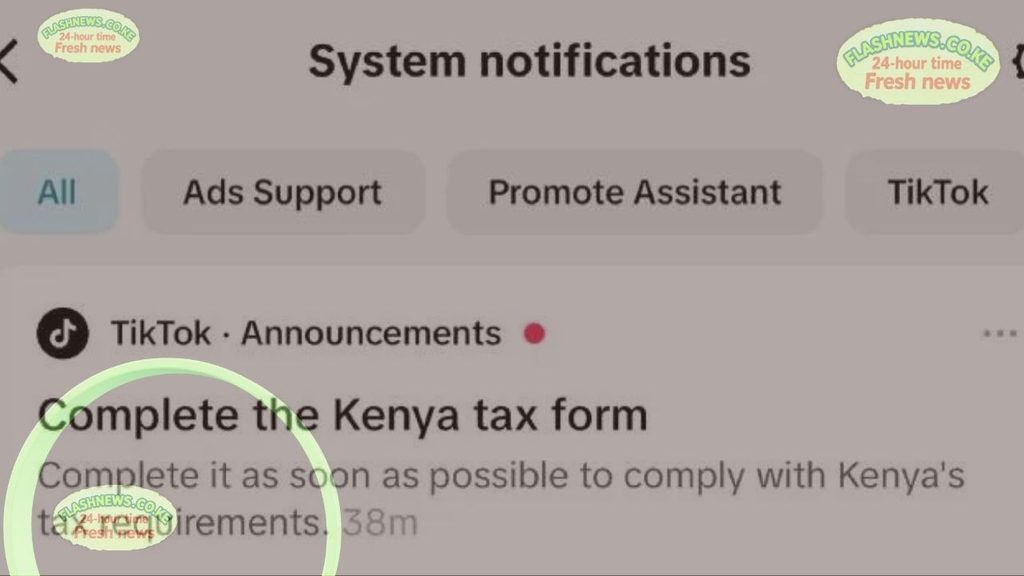
TikTok has begun notifying Kenyan creators through its ‘TikTok Announcements’ channel, directing them to complete a Kenyan tax form to help determine their tax status and the rate applicable to their earnings.
The form asks creators to indicate whether they are tax residents or non-residents of Kenya, a distinction that determines whether a 5 per cent or 20 per cent withholding tax is applicable.
Creators are required to provide details including their name, email address, residential address, country of residence and residential status. Providing a residential address, however, is listed as optional.
How the TikTok tax will work
Kenya introduced withholding tax on income earned from digital content monetisation under the Finance Act 2023, with Kenyan residents subject to a 5 per cent deduction and non-residents facing a 20 per cent rate.
The tax covers a wide range of digital-content income, including advertising revenue, sponsorships, affiliate commissions, subscriptions, memberships, merchandise licensing, photo and music licensing, and crowdfunding commissions.
For creators, the change means eligible earnings from TikTok programmes could be paid out after the applicable tax has already been deducted.
However, the withholding amount is generally treated as an advance payment of tax rather than the creator’s final tax liability. Creators are still required to declare their income when filing their annual tax returns.
TikTok monetisation in Kenya
Kenyan creators currently have access to several TikTok earning options, including LIVE gifts, video gifts, subscriptions and the Work With Artist programme.
However, a number of TikTok’s monetisation products remain unavailable to creators in Kenya and much of Africa.
These include the Creator Rewards Programme, TikTok Shop, Creator Marketplace and Pulse, which offer additional ways for creators in supported markets to earn from their content.
The tax requirements therefore come as Kenyan creators continue to push for wider access to TikTok’s monetisation ecosystem.
Platforms face greater tax obligations
Kenya further strengthened its digital tax collection framework in December 2024, when legislation placed greater responsibility on digital marketplace and platform operators to deduct applicable taxes.
The requirements apply to platforms operating in Kenya as well as qualifying operators based outside the country.
TikTok’s latest request for creator information is therefore part of a broader effort to ensure income generated through digital platforms is captured within Kenya’s tax system.
The move also comes after TikTok committed to establishing a continental operations and coordination office in Nairobi following a virtual meeting between President William Ruto and TikTok chief executive Shou Zi Chew in August 2023.
The Nairobi office was expected to support TikTok’s African operations, including cooperation with Kenyan authorities on content moderation, local employment, creator monetisation and training programmes.

TikTok has yet to publicly specify when the deductions will begin for individual creators, the exact treatment of particular payouts, or what consequences creators may face if they fail to complete the tax form.
The platform has, however, urged creators to submit the requested information promptly.
Also Read: Besigye Trial Takes Dramatic Turn as Witness Says Kenyan Police Planted Guns, Fake Currency