

U.S. Turns Up Heat on ICC as Chad Quits Hague Court — Washington Urges More Nations to Follow





The United States has called on countries around the world to withdraw from the International Criminal Court (ICC) after Chad formally began the process of leaving the Hague-based tribunal, escalating Washington’s campaign against an institution it says threatens national sovereignty.
Washington welcomed Chad’s decision on Monday, July 27, describing it as part of a growing movement by nations seeking to reclaim control over their own affairs.
In a statement issued by the U.S. Bureau of African Affairs, Washington went further, urging all remaining ICC members to abandon the Rome Statute — the treaty that established the court.
“The United States welcomes Chad’s decision to withdraw from the ICC and join the growing number of nations reclaiming their sovereignty from this flawed institution. We call on all other ICC members to withdraw from the Rome Statute.”
The statement marks a significant escalation in the Trump administration’s opposition to the ICC, which Washington has repeatedly criticised over its attempts to exercise jurisdiction over nationals of countries that are not members of the court.
Secretary of State Marco Rubio has also intensified the administration’s campaign against the tribunal. Reuters reported on Monday that the U.S. diplomatic push is unfolding as the ICC faces mounting pressure over its investigations and arrest warrants involving senior figures from outside the court’s membership.

Chad becomes latest African country to walk away
Chad’s announcement adds another major blow to the ICC, which has witnessed a growing number of countries initiate withdrawal procedures.
The Central African nation is the fourth African country in the latest wave to move against the Rome Statute, following Mali, Burkina Faso and Niger. Venezuela has also recently initiated its own withdrawal process, making Chad the fifth country overall to begin leaving the court in the recent period.
Chad’s Foreign Ministry said it had formally notified United Nations Secretary-General António Guterres of its decision following what it described as an extensive assessment of the ICC’s performance since its establishment in 2002.
The Chadian government accused the court of having a “limited and uneven” record and criticised what it considers an excessive concentration of investigations on African states.
According to figures cited by Chad, nine of the ICC’s 13 investigations involve African countries, a disparity the government said raised serious questions about the court’s balance and credibility.
Chad also argued that leaving the ICC should not be interpreted as abandoning accountability, saying domestic and African judicial institutions should play a stronger role in prosecuting serious crimes.
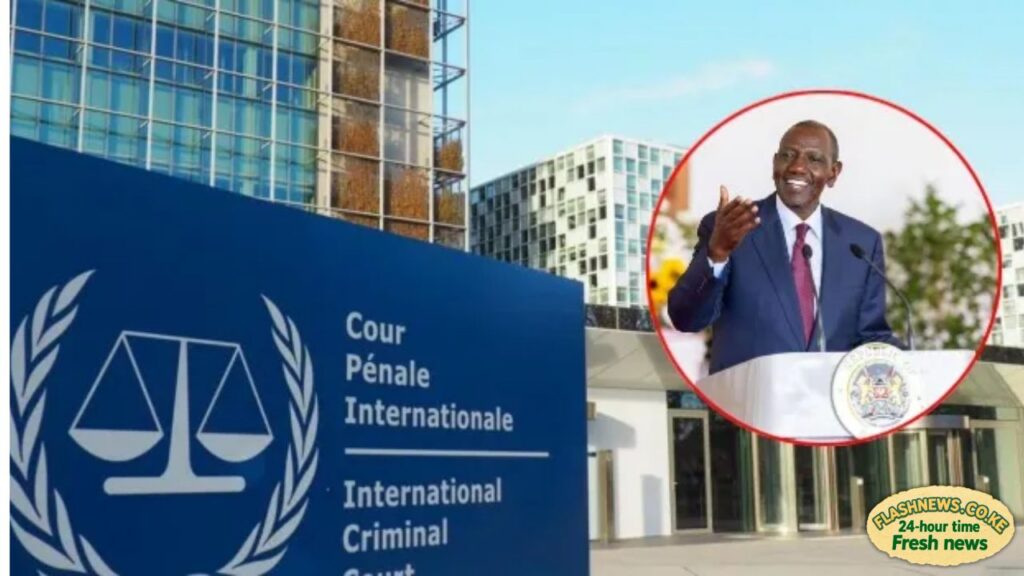
The decision comes amid a wider political shift across parts of Africa, particularly among governments that have become increasingly critical of Western-backed institutions.
Mali, Burkina Faso and Niger — all governed by military regimes following coups — have accused the ICC of selective justice and have moved away from several Western-aligned institutions. Amnesty International, however, has warned that their withdrawals could weaken accountability for serious crimes and leave victims with fewer avenues for justice.
Kenya now faces an uncomfortable question
The developments are likely to attract particular attention in Kenya, which remains a member of the ICC and has a long and controversial history with the Hague court.
Kenya signed the Rome Statute on August 11, 1999, before ratifying it on March 15, 2005. The treaty entered into force for Kenya on June 1, 2005.
Kenya’s most significant confrontation with the ICC followed the disputed 2007 presidential election and the violence that erupted afterwards.
The ICC eventually opened an investigation into alleged crimes against humanity committed during the 2007-2008 post-election violence.
Six prominent Kenyans were initially brought before the court: William Ruto, Uhuru Kenyatta, Joshua Arap Sang, Francis Muthaura, Henry Kosgey and Mohammed Hussein Ali.
The proceedings later collapsed one by one.
The ICC declined to confirm charges against Kosgey and Hussein Ali in 2012. Charges against Muthaura and Kenyatta were subsequently withdrawn, while the case against Ruto and Sang was terminated in 2016. The ICC eventually concluded its broader investigation into the Kenya situation in November 2023.
The cases became emblematic of the difficult relationship between African governments and the Hague-based tribunal, with accusations of political interference, witness interference and insufficient evidence featuring prominently in the collapse of the Kenyan proceedings.
What would happen if Kenya followed Chad?
For Kenya, any decision to leave the ICC would not amount to an immediate escape from obligations arising from its membership.
Under Article 127 of the Rome Statute, withdrawal takes effect one year after the United Nations Secretary-General receives formal notification, unless a later date is specified.
Crucially, withdrawal does not erase obligations arising while a country was a member. The treaty also states that withdrawal does not affect cooperation relating to criminal investigations and proceedings that began before withdrawal took effect, nor does it prejudice matters already under consideration by the court.
That means any future Kenyan debate over withdrawing from the ICC would likely extend far beyond the question of sovereignty.
It would raise fundamental questions about international accountability, the protection of victims, Kenya’s relationship with African judicial institutions and whether the country believes the ICC remains an effective mechanism for prosecuting the gravest international crimes.
With Chad now joining the growing list of countries seeking to leave the Rome Statute — and Washington openly encouraging others to follow — pressure on the ICC is entering a potentially decisive new phase.
Also Read: ODPP Approves Bribery Charges Against Kangema Magistrate After EACC Sting