






The Environment and Land Court says landowners seeking eviction must prove that trespass occurred on their specific parcel, warning that ownership documents alone cannot establish unlawful occupation.
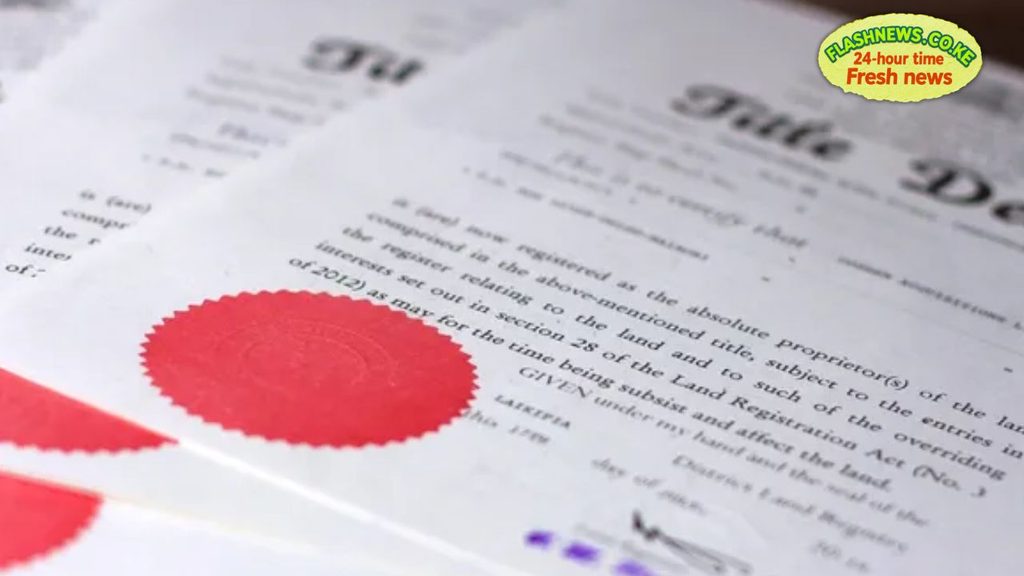
The Environment and Land Court has clarified that holding a valid title deed does not automatically prove that another person has trespassed on a property, setting out the evidence landowners must present before securing an eviction order.
In a ruling delivered by Justice Oguttu Mboya at the Environment and Land Court in Isiolo, the judge emphasised that a person alleging trespass must establish both ownership of the disputed property and the specific unauthorised act said to have occurred on the land.
The decision followed an appeal by a man who had been ordered by a lower court to vacate a parcel of land after being accused of trespassing and erecting a structure without the owner’s permission.
However, the man challenged the eviction, arguing that he had not constructed the structure and that it stood on a separate parcel belonging to his mother.
The dispute ultimately turned on a critical question: whether the structure was actually located on the land claimed by the person who had sought the eviction.
Court questions evidence used to justify eviction
In considering the appeal, Justice Mboya noted that the location of the disputed structure had been specifically contested.
The man accused of trespass maintained that the structure was situated on a different parcel of land, raising questions about whether the claimant had established that an unlawful act had occurred on the property covered by his title deed.
The court observed that the dispute could have been clarified through expert evidence, including a report from a surveyor or the Land Registrar, to establish the boundaries and determine the precise location of the structure.
Such evidence can be particularly important in land disputes where neighbouring parcels, disputed boundaries or the position of buildings determine whether trespass has occurred.
Without reliable evidence linking the alleged encroachment to the claimant’s property, ownership documents alone may not resolve the central issue.

Judge says burden of proof remains with claimant
The court also faulted the lower court for effectively shifting the burden of proof to the person accused of trespass.
Justice Mboya emphasised that the responsibility rests with the person making the allegation to establish the claim through credible evidence.
In other words, a person accused of trespass is not automatically required to disprove the allegation simply because the claimant holds a title deed.
The claimant must demonstrate that the alleged conduct occurred on the specific property in question and that the conduct was unauthorised.
Having found fault with the lower court’s approach to the evidence and burden of proof, Justice Mboya allowed the appeal.
What landowners must prove before seeking eviction
The ruling provides an important practical lesson for property owners involved in eviction disputes, particularly where the location of a structure or the boundaries of a parcel are contested.
To establish a trespass claim, a landowner should be prepared to demonstrate:
- Ownership of the property: Provide evidence establishing legal ownership or the relevant rights over the land.
- The alleged act of trespass: Identify the specific conduct said to constitute unlawful entry, occupation or encroachment.
- Absence of permission: Show that the alleged act occurred without the owner’s authorisation or other lawful justification.
- The precise location: Establish that the disputed structure or activity is on the particular parcel claimed by the landowner.
- Supporting expert evidence: Where boundaries or the location of a structure are disputed, consider obtaining a surveyor’s report or relevant evidence from the Land Registrar.
These requirements are especially significant where a person claims that a building or other structure stands on a neighbouring parcel rather than the land identified in the claimant’s title documents.
Title deeds remain important, but proof of trespass is separate
The decision does not diminish the importance of title deeds in establishing land ownership. Instead, it distinguishes between proving ownership and proving that another person has unlawfully interfered with the property.

A title deed may establish a claimant’s ownership, but it does not, by itself, settle every dispute about the position of a structure, the boundaries of a parcel or whether a particular person has committed trespass.
For landowners, the distinction could prove decisive when seeking court orders to remove structures or compel occupants to leave disputed property.
The ruling reinforces the principle that eviction proceedings must be supported by evidence establishing the alleged wrongdoing rather than ownership documents alone.
Ultimately, a successful trespass claim requires more than showing who owns the land. The claimant must also prove what happened, where it happened and why the conduct was unlawful.
Also Read: CMA Exposes Five Tricks Fake Investment Firms Use to Scam Kenyans