






Health CS Aden Duale says the patient travelled through Uganda before flying into Nairobi, as authorities trace dozens of contacts and launch urgent efforts to contain the risk of further infections.
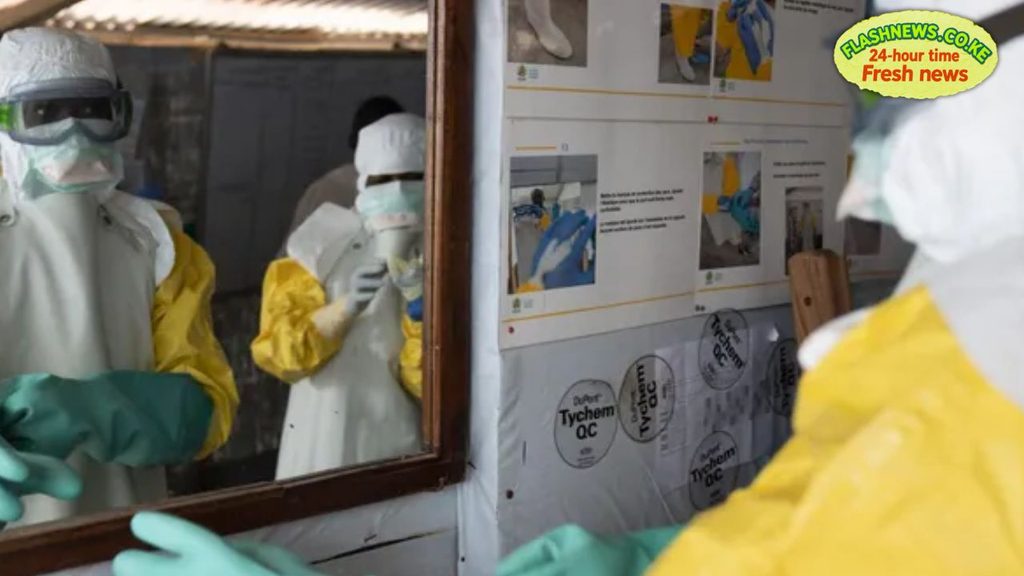
Kenya has confirmed its first imported case of Ebola virus disease in Nairobi, with the patient dying after testing positive for the Bundibugyo strain, Health Cabinet Secretary Aden Duale has announced.
The confirmation, made on Tuesday, 6 October, has heightened public health concerns as authorities work to establish whether anyone else may have been exposed to the highly infectious disease.
According to Duale, the patient had been living and working in the Democratic Republic of Congo (DRC) for seven years before falling ill approximately a month ago. He reportedly sought treatment at several hospitals in the DRC before travelling by road to Uganda as he made his way back to Kenya.
The patient subsequently boarded a Jambojet flight carrying 23 passengers and arrived at Jomo Kenyatta International Airport (JKIA) on Saturday, 3 October, at 1.10pm.
“The Ministry of Health wishes to inform members of the public that it has confirmed the first imported case of Ebola Bundibugyo virus disease,” Duale said.
Patient developed severe symptoms after arriving in Nairobi
The Health CS said the patient underwent routine public health screening at JKIA before proceeding through immigration. He was later picked up by relatives and friends in a Toyota Fielder and taken directly to Nairobi Hospital.

Upon arrival at the facility, he was isolated in a separate room after presenting with several worrying symptoms, including fever, chills, extreme fatigue, general weakness, muscle pain, painful swallowing and bleeding beneath the skin.
Doctors initially suspected a viral fever, prompting them to collect samples for laboratory testing.
“Based on the presentation and history of travel, the doctors considered his case to be viral fever and collected samples for testing, which turned positive for Ebola,” Duale said.
The samples were analysed by two national institutions: the National Virology Reference Laboratory, operated by the National Public Health Institute, and the Kenya Medical Research Institute (KEMRI).
Both laboratories reportedly confirmed the infection, establishing the case as Kenya’s first imported Ebola Bundibugyo infection.
Despite receiving supportive treatment, the patient died on Monday, 5 October, at 11.30pm, according to the Ministry of Health.
Authorities trace contacts as burial preparations begin
Following the confirmation, health officials have begun tracing people who may have come into contact with the deceased in an effort to limit the possibility of further transmission.
Duale said authorities had so far identified 28 contacts, including family members and healthcare workers who attended to the patient during his illness.
Officials are also seeking to trace 23 passengers and four crew members who travelled on the same flight as the deceased.
The contact-tracing exercise is expected to help health teams establish who may have been exposed, assess potential risks and arrange appropriate monitoring and follow-up.
The Ministry has also begun preparations for the safe and dignified burial of the deceased, with officials planning to conduct the burial in accordance with established Ebola-safe procedures.
“Arrangements for the safe and dignified burial of the deceased are ongoing, and the burial is planned for later today in line with Ebola-safe and dignified burial protocols,” Duale said.
Public health vigilance heightened
The confirmation places renewed attention on Kenya’s disease surveillance systems, particularly at airports and other points of entry used by travellers arriving from countries affected by Ebola outbreaks.

The patient’s journey through the DRC and Uganda before reaching Nairobi also highlights the importance of cross-border coordination, rapid laboratory testing and timely identification of contacts when suspected cases emerge.
Health authorities are expected to continue investigations to determine the full extent of possible exposure and whether additional suspected cases emerge from the tracing exercise.
The Bundibugyo virus is one of the viruses that causes Ebola virus disease. The illness can be severe, and transmission can occur through direct contact with the blood or other bodily fluids of an infected person who is symptomatic, or with contaminated materials.
However, confirmation of an imported case does not, on its own, establish that widespread transmission has occurred in Kenya.
As investigations continue, the immediate priority for health officials remains identifying and monitoring contacts, following infection-prevention protocols and ensuring that any further suspected cases are assessed promptly.
Also Read: Teachers’ Big SHA Relief as Government Moves to Fix IVF and Cancer Care Crisis