


The Higher Education Loans Board (HELB) has clarified how money paid by former students is distributed across outstanding loan balances, interest and penalties, following questions from borrowers seeking to understand why their debts may remain high despite making repayments.
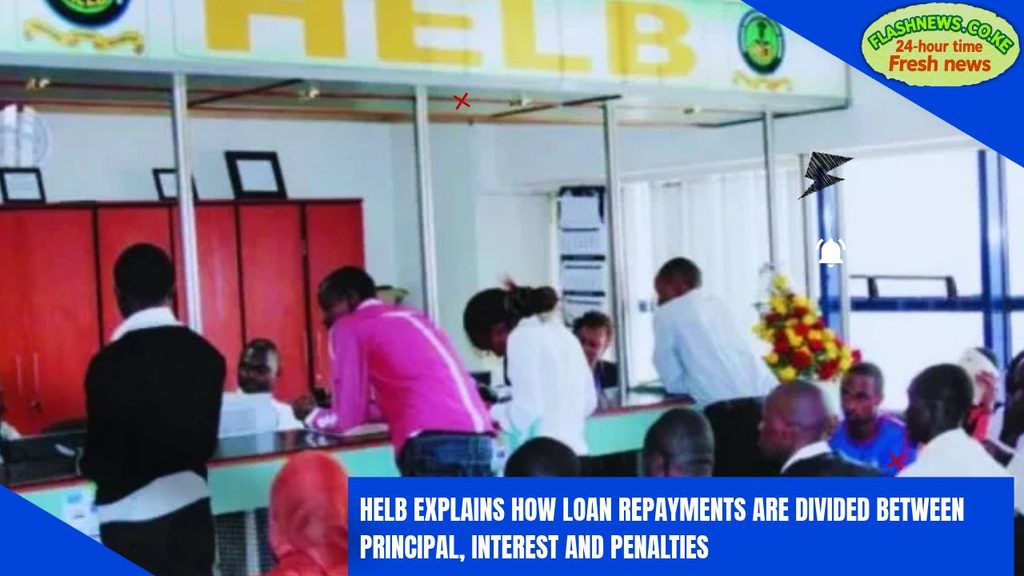
In a response shared on Tuesday, November 17, 2026, the Board said every repayment made towards a student loan is distributed across three components: the original loan amount, accumulated interest and any applicable penalties.
The clarification followed concerns raised by borrowers about whether their payments were being used mainly to clear interest and penalties instead of reducing the principal amount initially borrowed.
HELB responded that repayments are not directed exclusively towards interest and penalties, confirming that the original loan balance also receives a share of the money paid.
“Every HELB repayment done towards your loan is distributed across principal loan, interest and any penalties and not just penalties and interest,” the Board stated.
However, HELB did not provide a specific percentage showing how much of each repayment goes towards the principal, interest or penalties.
How HELB divides loan repayments
A HELB loan account consists of different components that determine how much a former student owes the Board.
The principal is the original amount borrowed to finance university or college education. Interest represents the additional cost charged on the loan, while penalties may accumulate when borrowers fail to meet their repayment obligations.
According to HELB, payments made by beneficiaries are shared across these three outstanding components.
This means borrowers should not automatically assume that their entire monthly repayment reduces the original amount they received.
Similarly, it would be incorrect to conclude that every payment is absorbed by interest and penalties without reducing the principal.
The actual effect of a repayment can be established by reviewing an individual’s loan statement, which provides details of the outstanding balance and account transactions.
The Board’s latest clarification did not explain whether the allocation percentages differ depending on the age of a loan, repayment history or the amount outstanding.
HELB explains 80 per cent penalty waiver
The clarification comes as HELB continues to promote its 80 per cent penalty waiver programme targeting beneficiaries with outstanding student loan balances.
The initiative was introduced to encourage former students who have defaulted on their repayments to settle their outstanding debts.
Under the arrangement, eligible borrowers receive an 80 per cent reduction in accumulated penalties when they meet the programme’s full-clearance conditions.
However, the waiver does not automatically reduce the original loan amount or accumulated interest.
Borrowers are still required to settle the remaining outstanding balance, including the principal, interest and the portion of penalties that has not been waived.
This distinction is important because some beneficiaries may mistakenly believe that the 80 per cent reduction applies to their entire HELB debt.
Instead, the relief targets accumulated penalties, leaving the other components of the loan payable.

For graduates who have struggled to find employment or experienced financial difficulties after completing their studies, the requirement to clear the remaining balance may still present a challenge.
Borrowers question relief for unemployed graduates
The latest clarification followed a question from a borrower who raised concerns about graduates who have remained unemployed for several years after completing their studies.
The individual presented a hypothetical example of someone who borrowed KSh200,000 but remained unemployed for 10 years, allowing interest and penalties to accumulate until the total outstanding debt reached KSh500,000.
The borrower questioned whether the penalty waiver offered meaningful relief to people who had struggled to secure employment and had been unable to make regular repayments.
Other concerns centred on beneficiaries who had consistently made payments but still had substantial outstanding balances.
HELB’s response sought to clarify that repayments contribute towards reducing the original loan amount as well as settling interest and penalties.
Nevertheless, the Board’s statement did not provide a detailed numerical breakdown showing how much of a particular payment is allocated to each component.
Borrowers seeking to understand the effect of their previous payments may therefore need to examine their individual statements or request further clarification from HELB.
More than 380,000 HELB beneficiaries reportedly in default
The penalty waiver forms part of HELB’s wider efforts to recover money owed by former beneficiaries.
The Board has previously reported that more than 380,000 beneficiaries had defaulted on their student loans, with the combined outstanding amount approaching KSh42 billion.
Recovering the money is important because HELB relies on repayments to replenish funds used to support other students pursuing higher education.
The institution provides financial assistance to eligible students in universities and other recognised institutions, with beneficiaries expected to repay their loans after completing their studies in accordance with the applicable repayment terms.
However, loan recovery remains challenging where graduates struggle to secure stable employment or experience prolonged financial difficulties.
HELB has consequently encouraged former students to engage with the Board, regularise their accounts and take advantage of available repayment arrangements.
Risk of being listed with Credit Reference Bureaus
HELB has also warned borrowers that failure to meet repayment obligations could result in adverse credit reporting.
Beneficiaries who default on their loans risk being listed with Credit Reference Bureaus (CRBs), subject to applicable legal and regulatory requirements.
A negative credit record may affect an individual’s ability to access loans and other financial services from banks and other lending institutions.
The warning has increased pressure on former students to address their outstanding balances, particularly those who have accumulated penalties over extended periods.
However, borrowers experiencing financial difficulties can contact HELB to establish the available repayment options rather than ignore their accounts.
How to check your HELB loan balance and repayment statement
Former students can access their loan information through HELB’s official online services and mobile application.
The Board provides access to personal loan statements, allowing beneficiaries to review their outstanding balances and repayment records.
Borrowers can also use the HELB USSD service by following these steps:
- Dial *642# on your mobile phone.
- Log in using the required account details.
- Select the loan repayment or account services option.
- Follow the instructions to access the available loan information.
Alternatively, borrowers can visit the official HELB website at https://www.helb.co.ke/ and access the loan portal.
The Board advises beneficiaries who need further clarification about their statements to contact its customer service team through the official communication channels.
For borrowers considering the 80 per cent penalty waiver, checking the latest account statement is particularly important because the relief applies to penalties rather than the entire outstanding loan.

HELB’s latest clarification confirms that repayments contribute towards reducing the principal, interest and penalties. However, borrowers still need an individual account breakdown to understand exactly how much they owe and how previous payments have affected their balances.
Also Read: Kenya and Saudi Arabia Agree to Cut Recruitment Costs for Kenyans Seeking Jobs