


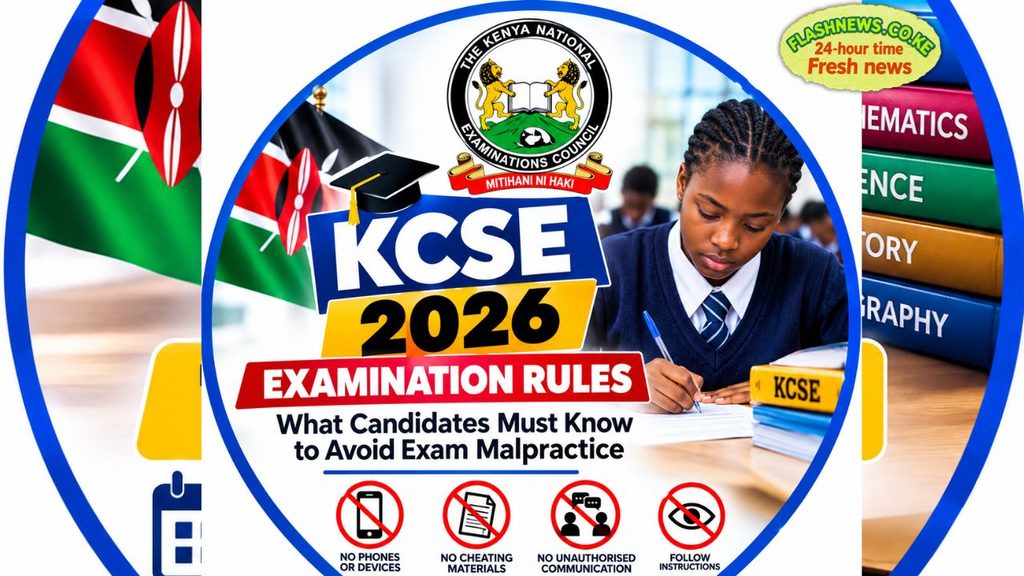
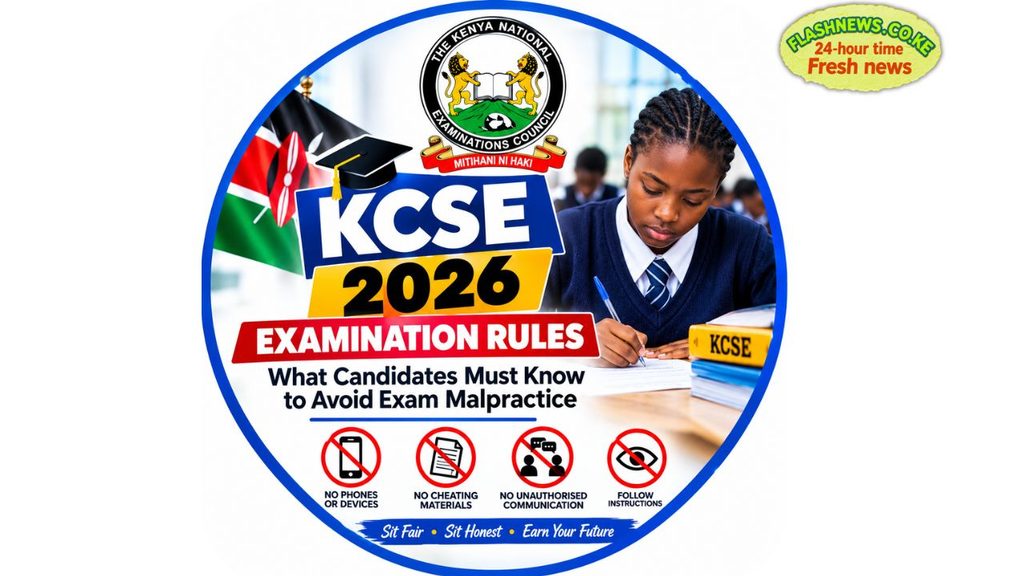
Candidates sitting the 2026 Kenya Certificate of Secondary Education (KCSE) examinations must follow the rules and instructions issued by the Kenya National Examinations Council (KNEC). Understanding these requirements is important for protecting the integrity of the examination and avoiding mistakes that could affect a candidate’s results.
As the examination period continues from October 19 to November 20, candidates should pay attention to instructions from invigilators, examination centre managers and their school administrators.
The official KCSE timetable contains examination instructions, while additional guidance may be provided through KNEC circulars and notices. Candidates should always follow the current instructions applicable to their examination.
1. Follow Instructions From Examination Officials
Candidates must follow instructions issued by authorised examination personnel before and during each paper.
These instructions may cover seating arrangements, the distribution of question papers, the use of answer booklets, the start and end of examinations, and the collection of scripts.
Candidates who do not understand an instruction should seek clarification from the invigilator before proceeding, where permitted.
2. Do Not Bring Unauthorised Materials Into the Examination Room
Candidates should bring only materials permitted for the examination they are sitting.
Unauthorised notes, books, written materials, electronic devices or other prohibited items can create serious examination-integrity concerns.
The materials permitted may differ by subject. Candidates should check the instructions for their particular paper and follow guidance from examination officials.
3. Avoid Mobile Phones and Unauthorised Electronic Devices
Candidates should not take mobile phones or other unauthorised electronic devices into the examination room.
Electronic devices can be used to access information or communicate improperly, which is why candidates must comply with the rules communicated by KNEC and examination officials.
Candidates should leave prohibited items outside the examination room in accordance with the centre’s arrangements.
4. Do Not Communicate With Other Candidates During a Paper
Candidates must complete their work independently and must not exchange answers or communicate improperly with other candidates.
Sharing answers, receiving unauthorised assistance or attempting to obtain information from another candidate undermines the fairness of the examination.
If a candidate needs assistance with an authorised procedural matter, the correct approach is to raise the issue with the invigilator.
5. Avoid Examination Leaks and Fake Papers
Candidates should be cautious about messages claiming to contain leaked KCSE papers or guaranteed examination questions.
Such claims may be fraudulent, misleading or intended to exploit anxious candidates and their families. Purchasing purported leaked papers can expose candidates to scams and serious examination-integrity risks.
Revision should be based on the approved syllabus, class notes, textbooks, past papers and official KNEC resources.
6. Write Your Details Correctly
Candidates should follow the instructions on the examination paper and answer booklet when entering identification details and other required information.
Errors in identifying information or failure to follow instructions can create unnecessary problems during the handling of examination scripts.
Candidates should carefully read the instructions before writing their answers and ask an invigilator about procedural uncertainties.
7. Observe Examination Time Limits
Candidates must work within the duration specified for each paper.
The official timetable gives the time allowed for individual examinations. Candidates should manage their time carefully and stop writing when instructed to do so.
The timetable states that no additional time is to be allowed beyond the authorised examination period, except where a specific approved arrangement applies.
What Happens if a Candidate Breaks Examination Rules?
The consequences depend on the nature of the incident and the applicable KNEC regulations.
Examination irregularities can trigger investigations and other action under the relevant rules. Candidates should not assume that every violation carries the same penalty.
For an accurate account of applicable sanctions, consult the current KNEC examination regulations and official instructions rather than relying on unverified social media claims.
Advice for Parents and Teachers
Parents and teachers should help candidates understand the rules without frightening them unnecessarily.
Schools should explain the examination procedures, clarify the materials allowed in each paper and encourage candidates to report concerns through the proper channels.
Parents can help by ensuring candidates have the necessary approved stationery, follow the timetable and receive accurate information from their schools.
Frequently Asked Questions
Can candidates carry phones into the KCSE examination room?
Candidates should not bring unauthorised mobile phones or electronic devices into the examination room. Follow the official instructions provided by the examination centre.
Are leaked KCSE papers safe to buy?
No. Claims of leaked papers should be treated with caution. Use legitimate revision materials and official resources.
Where can I read the KCSE examination instructions?
Visit the official KNEC timetable page at https://www.knec.ac.ke/timetables/ and consult the applicable instructions and regulations.
Conclusion
Following KCSE examination rules helps protect candidates, maintain fairness and safeguard the credibility of the national examination. Candidates should read the official instructions, avoid unauthorised assistance and complete every paper honestly.
Also Read: KCSE 2026 Timetable PDF Download: KNEC Exam Dates, Paper Schedule and Candidate Guidelines