


Kenya has supported an international call for countries to suspend executions, joining 132 other nations that backed a United Nations resolution seeking a worldwide moratorium on the death penalty.

The resolution received 133 votes in favour, 33 against and 16 abstentions during a meeting of the UN General Assembly’s Third Committee on Friday, November 13, 2026.
The proposal urges countries that still impose capital punishment to establish a moratorium on executions as they consider the possibility of abolishing the practice.
It was sponsored by Switzerland and Mexico, with supporters arguing that suspending executions would strengthen the protection of human rights and reduce the risk of irreversible miscarriages of justice.
Although the committee’s decision represents a significant international position, it does not automatically abolish the death penalty in countries that retain it. The resolution is also expected to proceed to the full General Assembly for consideration.
Countries that supported and opposed the resolution
The proposal attracted support from several major economies and countries that have abolished capital punishment or maintain restrictions on its use.
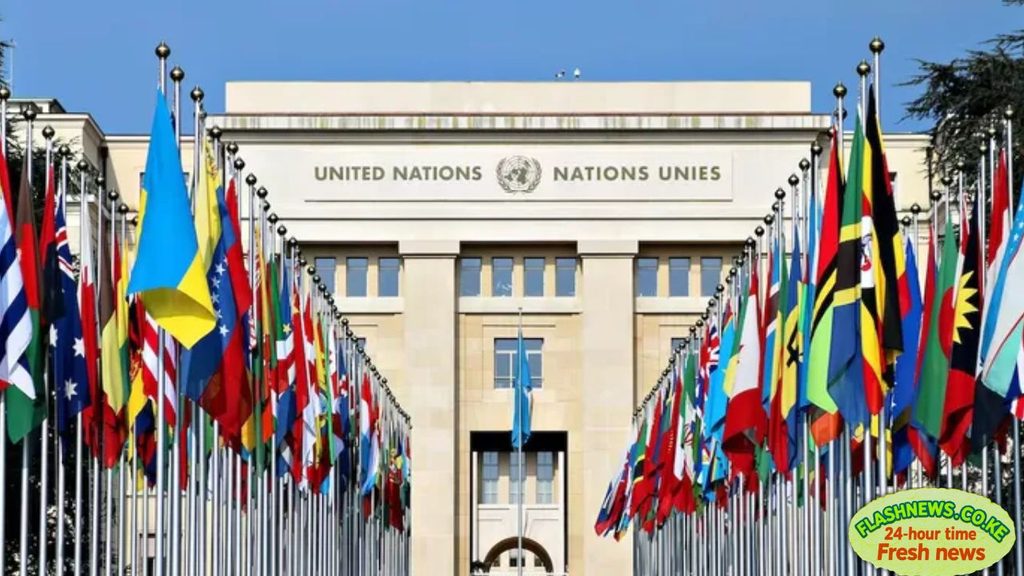
Among those supporting the resolution alongside Kenya were the United Kingdom, France, Germany, Canada, Australia, Brazil, Italy, Spain, South Africa and Switzerland.
However, 33 countries voted against the proposal, including the United States, China, India, Iran, Japan, Saudi Arabia, Pakistan, Egypt, Iraq, Singapore, Kuwait, Yemen and Bahrain.
Other countries opposing the resolution included Barbados, Botswana, Burkina Faso, South Korea, Jamaica, Libya, Maldives, Mauritania, Oman, Qatar and Sudan.
A further 16 countries abstained from the vote.
Switzerland’s Foreign Affairs Department welcomed the outcome, describing it as an important message at a time when executions were increasing in several parts of the world.
The department said the resolution strengthened protections for people facing execution, including women and older people, while reinforcing the importance of fair trials.
Amnesty International reports rise in global executions
The latest UN vote comes amid growing concern over the use of capital punishment worldwide.
According to Amnesty International’s report on death sentences and executions in 2025, at least 2,707 people were executed in 17 countries during the year.
This represented a 78 per cent increase compared with the 1,518 executions recorded in 2024, marking the highest annual figure documented by the organisation since 1981.
The figures exclude thousands of executions believed to have taken place in China, where official information on the use of capital punishment remains classified.
Iran accounted for the largest publicly documented number of executions, with at least 2,159 people put to death in 2025.
Saudi Arabia followed with at least 356 executions, while the United States recorded 47.
Other countries that carried out executions included Yemen, Egypt, Somalia, Kuwait, Singapore, Afghanistan, the United Arab Emirates, Japan, South Sudan and Taiwan.
Amnesty International has repeatedly warned that the death penalty carries the risk of irreversible injustice, particularly where individuals are convicted following flawed investigations or unfair trials.
The organisation also opposes the use of capital punishment for all crimes, arguing that governments should adopt alternative approaches to criminal justice.
What the UN resolution means
A moratorium is a temporary suspension of executions. It does not necessarily mean that a country has abolished the death penalty from its laws.
Under the proposed resolution, countries that retain capital punishment are encouraged to stop carrying out executions while considering reforms that could eventually lead to abolition.
The distinction is important because countries can maintain death penalty provisions in their legislation while choosing not to execute people sentenced to death.
The United Nations has repeatedly called for a global moratorium through resolutions adopted over the years.
The latest vote demonstrates continued international support for suspending executions, although opposition from several countries shows that governments remain divided over the issue.
The Third Committee’s approval is an important step, but the proposed resolution still requires consideration by the full General Assembly.
Kenya’s Constitution still recognises the death penalty
Despite supporting the international moratorium, Kenya continues to retain capital punishment under its domestic legal framework.
Article 26 of the Constitution guarantees every person the right to life. However, Article 26(3) provides that a person may be deprived of life to the extent authorised by the Constitution or other written law.
The Penal Code provides for death sentences for certain serious offences, including murder, treason, robbery with violence and attempted robbery with violence.
However, Kenya has maintained a long-standing practice of not carrying out executions, even though courts continue to issue death sentences in cases where the punishment is legally available.
The distinction between retaining the death penalty in law and imposing an actual execution moratorium remains central to the debate over capital punishment in the country.
Kenya also supported the previous UN General Assembly resolution on a moratorium in December 2024, having previously abstained from earlier votes.
Its latest position therefore continues its support for international efforts to suspend executions.
Parliament considers reforms to Kenya’s death penalty laws
The debate over capital punishment has also gained attention within Kenya’s Parliament.
On November 5, 2026, the National Assembly’s Departmental Committee on Justice and Legal Affairs expressed support for efforts to eliminate the mandatory death sentence.
The committee’s position emerged during discussions with representatives of the International Commission Against the Death Penalty, who were in Kenya to assess progress towards reforming the country’s laws.
The discussions focused on the mandatory nature of certain death sentences and the need to review legislation governing capital punishment.
The issue is particularly significant following the Supreme Court’s 2017 decision in the Francis Karioko Muruatetu case, which declared the mandatory nature of the death sentence for murder unconstitutional.
However, the decision did not abolish the death penalty itself or automatically invalidate its application to every other offence.
The ongoing parliamentary discussions could therefore contribute to further legal reforms concerning how courts impose death sentences.
Kenya’s position puts capital punishment debate back in focus
The latest UN vote has renewed international attention on whether countries should continue using the death penalty as a form of punishment.
For Kenya, supporting a global moratorium comes alongside an ongoing domestic debate about the future of capital punishment and the extent to which existing laws should be changed.

While the country has not abolished the death penalty, its support for the UN resolution signals continued backing for international efforts to suspend executions.
The next important development will be consideration of the proposed resolution by the full UN General Assembly, alongside any further legislative action in Kenya.
Also Read: Israel Offers Eligible Kenyans KSh455,000 and Free Flights Under New Voluntary Departure Programme