






Mp Kuria Kimani Highlights Most Opposed 2025 Finance Bill Provision
Public outcry has emerged over a proposal in the Finance Bill 2025 to give the Kenya Revenue Authority (KRA) access to private and business data through amendments to the Tax Procedures Act. During a public participation forum held on Thursday, June 5, 2025 in Kiambu County, National Assembly Finance and National Planning Committee Chairperson Kuria Kimani confirmed that the proposed deletion of Section 59(1B) of the Tax Procedures Act has raised concerns from various sectors with stakeholders citing data privacy and protection of confidential information.
The Finance Bill 2025 proposes deletion under Clause 37, amending Section 59A of the Tax Procedures Act by deleting subsection (1B). This subsection currently prohibits KRA from integrating its systems with those of taxpayers or businesses without consent. The provision states: “Furnish information relating to the tax liability of any person in the manner and by the time as specified in the notice.” Repealing this clause will remove the existing legal barriers that limit KRA’s ability to access taxpayer information directly from third-party systems.
The chairperson of the committee said the amendment has raised concerns among the public, particularly on the scope and nature of data KRA will access if the proposal is passed. “One of the issues that is coming out clearly from the counties we have visited is data privacy. Many Kenyans have come out and said they don’t think KRA having access to their private data is good,” Kuria Kimani said during the Kiambu hearing.
Kimani also revealed that professional bodies such as the Architectural Association of Kenya (AAK) have raised specific objections. AAK has said that such provisions will enable the tax authority to access confidential client information including proprietary house designs which they argue are not related to tax compliance and are private intellectual property. “For instance here in Kiambu, AAK has said when they are drawing a house design for someone, that information is private and therefore they will find it difficult to share that information with KRA,” Kimani noted.The public has also asked why the clause needs to be repealed when the Tax Procedures Act already allows KRA to access financial data including bank statements. Kimani said “Kenyans are wondering because the Tax Procedures Act says KRA can access your financial data. So why should they be given permission to access trade secrets and other private data?”
Despite public opposition, the Kenya Revenue Authority has justified the proposal saying it’s to modernize the tax administration framework and strengthen mechanisms for detecting tax evasion and financial crimes including money laundering. KRA says having direct access to the data will enable faster and more accurate assessment of taxpayers’ obligations.
Nickson Omondi, a KRA’s Digital Tax Office official, explained the authority’s position during a stakeholder meeting in May 2025. “For instance, if KRA wants to know whether entity A is declaring their fair share of tax, we ask them for their bank account, and then they will provide us with their bank statements. KRA will then look at the bank statements and compare them with what has been declared as their income, and if there are any variances, we always come back and ask why there are any differences,” Omondi said.
He added: “Instead of KRA asking you every now and then to give the statement, why not have the bank give us the statement in advance so that those who are tax cheats are caught in good time?”
While KRA says the proposed amendment is key to efficiency in tax collection and enforcement, professional associations, civil society organizations and ordinary citizens have raised concerns about data protection and constitutional rights. The deletion of the clause has been seen as a way to allow for excessive surveillance and erosion of privacy safeguards.
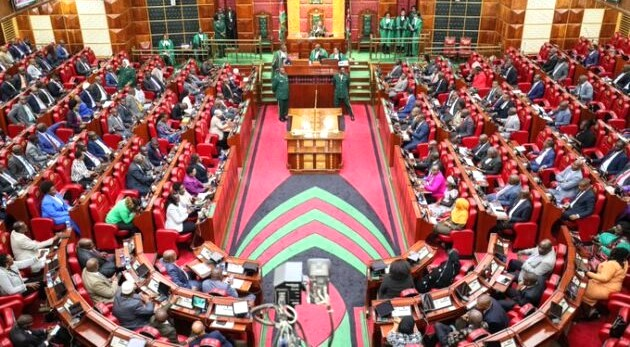
Public participation forums are ongoing across the counties as required by the constitution. The feedback will inform the committee’s report when the Finance Bill 2025 is tabled for second reading and consideration in the National Assembly.
Besides AAK, various industry stakeholders and business representatives have submitted memoranda opposing the clause, citing risks to trade secrets, competitive business intelligence and customer confidentiality. Some of the issues raised are:
- Violation of Article 31 of the Constitution of Kenya which guarantees the right to privacy;
- Lack of data protection infrastructure within KRA to ensure secure handling and storage of sensitive information;
- Unclear scope of data that will be accessible, raising fears of mission creep;
- Economic impact on professional service providers and firms dealing with proprietary intellectual content.
While the Finance Bill 2025 has other tax proposals — including VAT thresholds, motor vehicle circulation tax and digital services tax — the data access clause is the most contentious in this round of public participation.Public hearings will end by mid June 2025 and the committee will then compile the report and submit to Parliament. The report will have all the feedback on the contentious clauses including Section 59(1B) of the Tax Procedures Act.
As the public hearings continue, the Data Protection Commissioner, the Law Society of Kenya and KEPSA will also issue their official positions in the next few days. The final decision will be with Parliament after considering constitutional principles, public input and fiscal policy.
The Finance Bill 2025 will come into effect on July 1, 2025 as part of the new financial year. The outcome of this debate will have big implications for the balance between revenue collection and data privacy rights.
Also Read: Climate WorX 2025: Online Application Guidelines for Eligible Kenyan Youth
Mp Kuria Kimani Highlights Most Opposed 2025 Finance Bill Provision