





Education CS announces new security approach for KPSEA and KJSEA
The Ministry of Education has announced a change in security arrangements for the 2026 Kenya Primary School Education Assessment (KPSEA) and Kenya Junior School Education Assessment (KJSEA), with armed police officers not expected to be routinely stationed at assessment centres unless security concerns make their presence necessary.
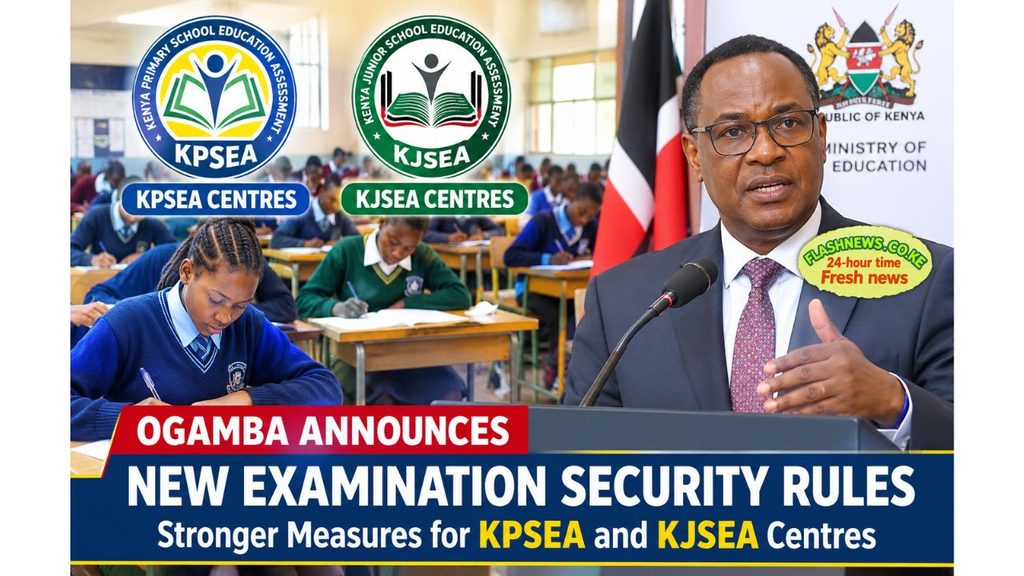
Education Cabinet Secretary Julius Migos Ogamba announced the position on Monday, 26 October 2026, as the national assessments began. The approach is intended to provide learners with a calm and supportive environment in which to demonstrate their competencies without unnecessary intimidation.
According to a report by People Daily, Ogamba made the announcement while overseeing the opening of an examination container at the Deputy County Commissioner’s office in Makindu, Makueni County. Security personnel will continue to play a role in protecting examination materials and supporting security operations where required.
The announcement is important for parents, learners, teachers and school administrators because it explains how authorities intend to balance examination security with a less intimidating assessment environment.
More than 2.58 million learners registered
The 2026 assessment exercise involves a large number of learners across the country. According to the reported figures, 1,380,463 candidates registered for KPSEA, while 1,206,028 registered for KJSEA. The combined total is 2,586,491 learners.
KPSEA is taken by learners completing Grade 6, while KJSEA assesses learners at the end of Grade 9 as they prepare for the next stage of their education.
The assessments are part of Kenya’s Competency-Based Education system. They are intended to help establish learners’ progress and competencies rather than simply reward the memorisation of facts.
KPSEA was scheduled to run from 26 to 28 October 2026, while KJSEA was scheduled to continue until Friday, 30 October. Parents and schools should rely on the official timetable and any subsequent instructions from the Kenya National Examinations Council (KNEC) for subject-specific details.
Why armed police will not routinely be stationed at centres
The explanation given by the Education CS is that assessment centres should provide a calm environment that enables learners to demonstrate what they have learned.
For many children, a national assessment can be stressful even when they have prepared adequately. The presence of heavily armed officers at a school may increase anxiety among some learners, particularly younger candidates.
The policy does not mean that the government has abandoned examination security. The reported arrangement provides for armed officers to be deployed where prevailing security concerns justify their presence.
Security arrangements may therefore differ depending on the location and circumstances of an assessment centre. Schools should not interpret the announcement as a blanket prohibition on police involvement in every part of the assessment process.
The Kenya News Agency also reported that security officers would escort assessment materials to centres and back to secure containers, while not being routinely stationed at the centres themselves. This distinction is important: protecting examination materials and maintaining a supportive learning environment are related but separate responsibilities.
What the new arrangement means for parents and learners
Parents should reassure children that assessments are an opportunity to demonstrate their learning and that they should approach the process calmly.
Learners should follow the instructions given by teachers and assessment officials. They should arrive at the designated time, bring only permitted materials and avoid any form of examination malpractice.
Schools, meanwhile, should continue following KNEC instructions on the handling of assessment materials, candidate identification, supervision and reporting of irregularities. A less intimidating security arrangement does not remove the responsibility to maintain the integrity of the assessment.
Parents should also avoid circulating unverified claims about examination leaks, cancellations or changes to assessment dates. Any important update should be checked against official Ministry of Education or KNEC communications.
How the assessments fit into Competency-Based Education
Kenya’s Competency-Based Education system places emphasis on what learners can understand, demonstrate and apply. The assessment of Grade 6 and Grade 9 learners is part of the process of tracking their progress through the education system.
KPSEA provides information about learning at the end of primary school, while KJSEA assesses competencies at the end of junior school as learners prepare for senior school.
The results and information gathered through assessment are intended to help stakeholders understand learning progress and support appropriate educational pathways. Parents should consult the Ministry of Education and their schools for guidance on how assessment outcomes affect each learner’s next steps.
What schools should do during the assessment period
School administrators and assessment officers should continue to:
- Follow the official KNEC timetable and instructions.
- Protect assessment materials and report suspected irregularities through the proper channels.
- Ensure learners receive clear instructions about the process.
- Maintain a calm environment in examination rooms.
- Follow any security directions issued by authorised officials.
- Avoid sharing candidate information or examination materials through unauthorised channels.
The government has also deployed a large number of personnel to support the national assessment exercise. The focus remains on orderly administration, credible assessment and the protection of learners.
Frequently asked questions
Are armed police banned from all KPSEA and KJSEA centres?
No. The reported policy is that armed officers will not routinely be stationed at centres, except where security concerns require their deployment.
When are the 2026 KPSEA and KJSEA assessments taking place?
The reported schedule places KPSEA from 26 to 28 October 2026 and KJSEA through 30 October. Candidates should confirm the relevant paper schedule with their schools and official KNEC instructions.
How many learners registered for the assessments?
The reported combined registration figure is 2,586,491: 1,380,463 for KPSEA and 1,206,028 for KJSEA.
Where can parents find official assessment information?
Parents should consult the Ministry of Education and KNEC, as well as their children’s schools.
Conclusion
The decision not to routinely station armed police at KPSEA and KJSEA centres marks a significant feature of the 2026 assessment arrangements. Authorities say the approach is intended to support a calm environment while preserving security where necessary.
For parents and learners, the most important steps remain preparation, following official instructions and avoiding misinformation. The final authority on assessment procedures and timetables remains KNEC and the Ministry of Education.
Verification date: 27 October 2026. Check for any later official clarification before updating or republishing this report.
Also Read: KNEC KCSE Qualifying Test 2026: Guidelines, Timetable and PDF Download