

Somalia President Hassan Sheikh Mohamud Orders Officials to Surrender Kenyan Passports or Face Government Exit





Somalia has reportedly ordered government officials holding Kenyan passports or identification documents to surrender them, escalating an already tense diplomatic dispute between Mogadishu and Nairobi.
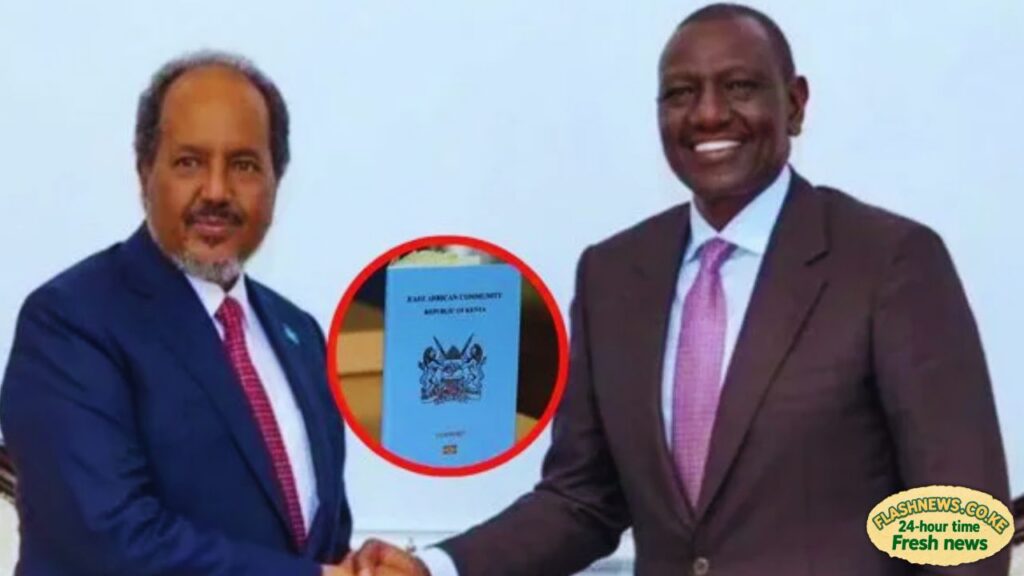
Somali President Hassan Sheikh Mohamud has reportedly directed Cabinet ministers and other government officials possessing Kenyan passports to hand over the documents or risk losing their positions in government.
The directive was issued during a Cabinet meeting on Thursday, July 30, according to reports from Somalia, as tensions continue to simmer between the neighbouring countries over the movement and documentation of senior Somali officials.
The reported order marks a significant escalation in a dispute that has increasingly centred on the nationality and travel documents held by Somali government figures.
Officials affected by the directive have reportedly been given a choice between retaining their government positions and keeping Kenyan passports they may hold.
The move follows a series of recent incidents involving senior Somali officials travelling to Kenya.
Somalia’s State Minister at the Presidency, Abshir Bukhaari, was reportedly denied entry into Kenya after arriving at Jomo Kenyatta International Airport (JKIA) earlier this week. Reports said Kenyan immigration officials questioned the travel documents he was carrying before he was returned to Mogadishu.
Kenya and Somalia have not publicly provided a detailed official account of the incident.
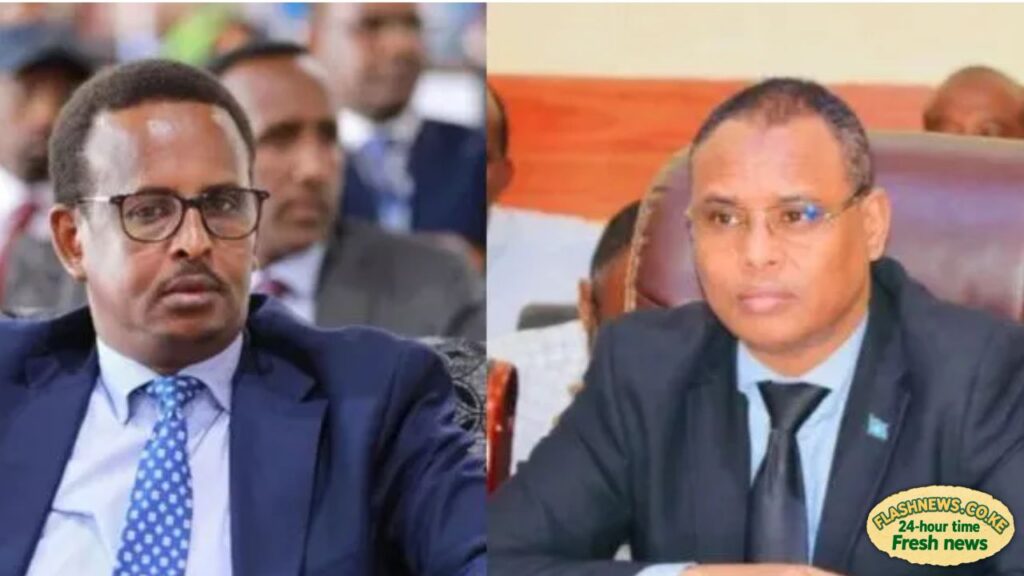
The episode came weeks after Somalia’s Second Deputy Prime Minister Jibril Abdirashid Haji was also denied entry into Kenya in a separate passport-related dispute.
Kenyan reports said immigration officials suspected Haji was in possession of a Kenyan passport that had been fraudulently obtained. Haji rejected allegations that he posed a security threat and described claims surrounding his trip as false and unsupported.
The incidents have fuelled concerns in Mogadishu over the treatment of Somali officials entering Kenya, while Nairobi has reportedly increased scrutiny of travel documents presented by senior Somali nationals.
Diplomatic tensions rise
The passport dispute has now spilled into the diplomatic arena.
Kenya’s Foreign Affairs Cabinet Secretary Musalia Mudavadi held talks with Somalia’s Foreign Minister Abdisalam Ali in Addis Ababa this week, with the two sides seeking to contain tensions arising from the recent travel disputes.
The meeting was aimed at improving bilateral relations and addressing concerns surrounding the movement of citizens and government officials between the two countries.
The talks came shortly after Somalia reportedly summoned Kenya’s ambassador in Mogadishu over the treatment of its officials.
The latest developments have also reignited scrutiny of long-running allegations that some foreign nationals have obtained Kenyan identity documents illegally.
However, Kenyan authorities have rejected the broader claim that foreigners are routinely being issued Kenyan national identity cards.
Immigration and Citizen Services Principal Secretary Belio Kipsang told Parliament in June that non-Kenyans are issued Alien Identification Cards, which are separate from Kenyan national identity cards and do not confer Kenyan citizenship.
The Kenyan government maintains that the country’s identification system distinguishes between Kenyan citizens, refugees and foreign nationals.
Somalia faces questions over dual nationality
Reports of disagreement within the Somali Cabinet have also emerged, with some officials reportedly questioning the decision on the grounds that dual nationality has been permitted in Somalia.
However, Somalia’s constitutional framework has been undergoing major changes. President Mohamud signed a new permanent constitution in March 2026, replacing the country’s previous provisional constitutional framework.
The dispute therefore comes at a sensitive moment for Somalia as the government seeks to strengthen national identification, citizenship administration and state institutions.
Somalia’s National Identification and Registration Authority has also been expanding the country’s national identification system, with the government stressing the importance of secure and verifiable identification for citizens and legal residents.
For Kenya, the controversy places renewed focus on the integrity of its passport and identification systems, particularly amid public concern over allegations of fraudulent acquisition of national documents.
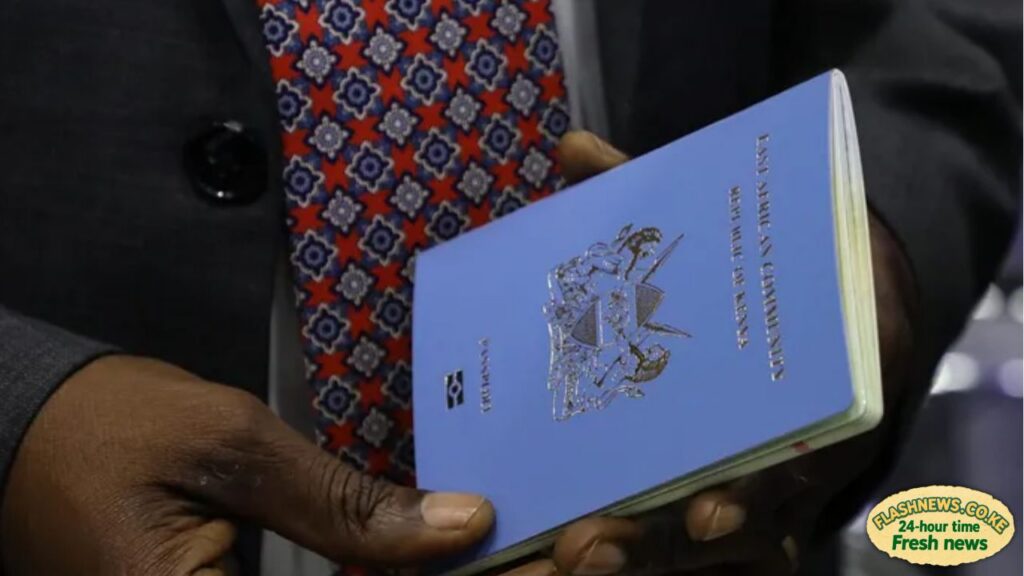
For Somalia, President Mohamud’s reported directive signals a tougher approach towards officials whose possession of foreign identity documents could raise questions about their loyalty, nationality or eligibility to hold public office.
Neither government has publicly confirmed all the details circulating about the alleged list of affected officials.
The developing dispute is likely to put further pressure on Nairobi and Mogadishu to resolve the passport controversy before it damages wider cooperation between the two neighbouring countries.
Also Read: Kindiki Leaves Kenya for Crucial AU Security Summit in Uganda