


The United Kingdom has issued a fresh travel warning for Moyale in Marsabit County, advising British nationals against all but essential travel to the Kenyan border town and surrounding areas as violent clashes in neighbouring Ethiopia continue to threaten communities on both sides of the border.

In an update published on Friday, 6 November 2026, the UK Foreign, Commonwealth and Development Office (FCDO) added Moyale Town and the area extending up to five kilometres around it to its list of locations where non-essential travel is discouraged.
The warning specifically covers the Kenya-Ethiopia border crossing, where insecurity linked to fighting between forces from Ethiopia’s Oromia and Somali regional administrations has raised concerns about the safety of residents, travellers and transport operators.
The British government also cautioned that travellers who ignore its official advice could risk invalidating their travel insurance.
“Your travel insurance could be invalidated if you travel against advice from the Foreign, Commonwealth & Development Office (FCDO),” the advisory states.
The update reflects growing concern over the possibility of the violence spilling further into Kenyan territory, following reports of stray bullets and other ammunition landing on the Kenyan side of the border.
Why the UK Has Issued a Travel Warning for Moyale
The latest advisory follows weeks of fighting in the Ethiopian border town of Moyale, where clashes involving forces and armed groups associated with the Oromia and Somali regional administrations have forced thousands of residents to flee their homes.
The violence, which began in October 2026, has disrupted normal activities in the border region and created a humanitarian emergency. Civilians have crossed into Kenya seeking safety, while businesses and cross-border transport operations have faced interruptions.
The UK government’s regional risk assessment says the security situation along the Kenya-Ethiopia border remains unpredictable and could deteriorate without warning.
It also identifies reports of stray gunfire, unexploded ordnance and projectiles landing in and around the Kenyan town of Moyale, with fatalities and injuries reported.
The British advisory therefore urges people to avoid unnecessary journeys to the affected area while the security situation remains uncertain.
Two Women Killed as Stray Bullets Hit Kenyan Territory
The conflict has already had deadly consequences for people living on the Kenyan side of the border.
Inspector General of Police Douglas Kanja confirmed that two women, one Kenyan and another Ethiopian, had died after being struck by stray bullets believed to be connected to the fighting across the border. Several other people have also sustained injuries.
One of the victims was identified as Amina Guchi, a 65-year-old woman who was reportedly struck by a suspected stray bullet near the Moyale County offices on 2 November.
Another woman was injured after bullets reportedly entered her home in the Biashara area on 4 November. She was taken to hospital, where medical personnel removed the bullets.
The incidents have increased anxiety among residents, particularly families living in areas close to the international boundary.
Some Kenyan households have reportedly been forced to leave their homes after ammunition and projectiles landed in residential areas.
The situation has raised concerns about the protection of civilians, especially children, older people and families living in neighbourhoods exposed to cross-border gunfire.
More Than 50,000 People Reportedly Flee into Kenya
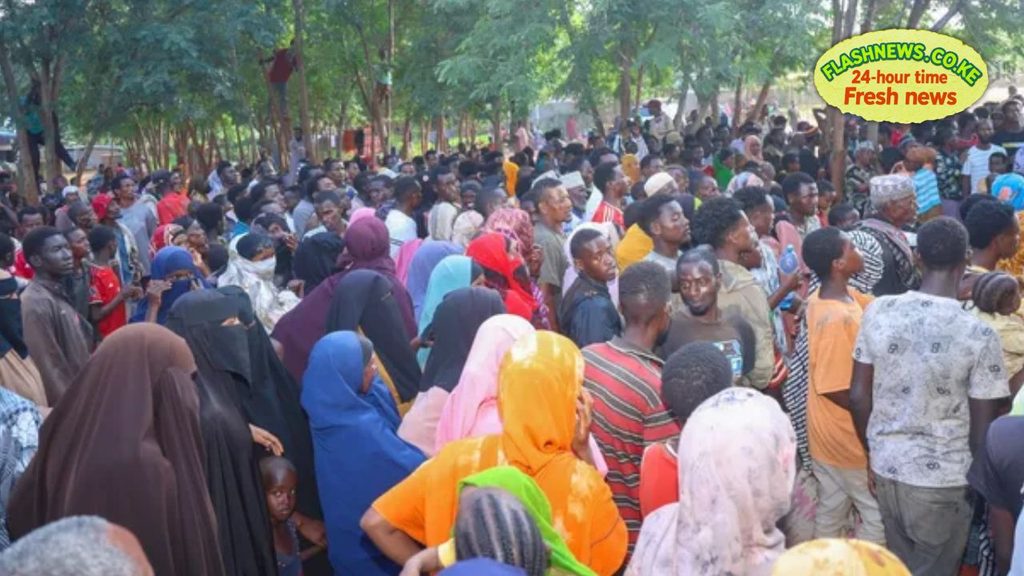
The violence has triggered a major displacement crisis, with thousands of Ethiopian nationals crossing into Kenya to escape the fighting.
The Kenya Red Cross has reported that the number of people who have crossed into Kenya has risen to more than 50,000, although the exact figure remains difficult to establish because some displaced families are staying with relatives and host communities rather than in organised shelters.
Kenya’s security agencies have also reported that thousands of displaced people are receiving assistance in temporary accommodation and public institutions around Moyale.
During a visit to the border town, Kanja said approximately 10,000 displaced people were still living in temporary shelters and public institutions.
Humanitarian organisations have been working with local authorities and residents to provide emergency assistance, including food, shelter and other essential supplies.
However, the growing number of arrivals is placing additional pressure on communities that already face challenges accessing basic services and resources.
The humanitarian situation has also prompted calls for more assistance to support both displaced families and the Kenyan communities hosting them.
Moyale Residents Face Shortages and Disrupted Transport
Beyond the security concerns, the fighting has disrupted economic activities and the movement of goods across the Kenya-Ethiopia border.
Moyale is an important transport and trading centre connecting Kenya with Ethiopia. Its location along the northern transport corridor makes cross-border movement essential for traders, businesses, travellers and transport operators.
However, insecurity has affected normal operations, leaving some traders stranded and disrupting the supply of commodities.
Reports from the area indicate that residents have experienced shortages of essential goods, electricity interruptions and rising prices of basic household commodities.
Rice, cooking oil and milk are among the products reportedly affected by the disruption, with some prices said to have nearly doubled.
The situation is particularly difficult for low-income households that depend on regular supplies of affordable food and other necessities.
The Daily Nation also reported on Saturday, 7 November, that the insecurity had prompted some residents to leave the area for Nairobi, with approximately 10 buses carrying 62 passengers each reportedly departing Moyale daily.
The reported movement highlights the extent of anxiety among residents as families seek safer locations away from the affected border region.
Kanja Orders Additional Security Deployment
The Kenyan government has moved to strengthen security in Moyale following growing fears that the violence could spread further into the country.
Inspector General of Police Douglas Kanja visited the border town on Thursday, 5 November, where he held security consultations with regional officials and other stakeholders.
He assured residents that additional security personnel would be deployed to reinforce existing teams and improve surveillance along the border.
Kanja said the government was working to protect lives and property while engaging Ethiopian authorities to help resolve the conflict.
“A lot of effort is being put into ensuring the conflict among our neighbours is resolved. This will also facilitate the movement of Kenyans who are stranded across the border,” he said.
The police chief also acknowledged the difficulties facing people caught up in the violence and said Kenya was working with its neighbour to address the situation.
Security agencies have been directed to remain alert, strengthen patrols and monitor developments along the border.
The government’s response is intended to prevent further loss of life, protect affected communities and maintain stability in the region.
Other Kenyan Areas Under UK Travel Restrictions
Moyale is not the only part of Kenya covered by British travel warnings.
The FCDO maintains separate restrictions for several areas in northern and north-eastern Kenya because of security threats, including terrorism and attacks linked to armed groups operating from neighbouring Somalia.
The areas where the UK advises against all travel include Mandera County, specified parts of Wajir County, most of Garissa County outside designated exceptions, and parts of Lamu County.
The British government also advises against all but essential travel to Garissa Town, specified parts of Tana River County and certain areas along the coast.
These existing restrictions are separate from the new warning for Moyale, which is directly linked to insecurity along the Ethiopia border.
Travellers should therefore check the exact locations covered by the latest advisory rather than assume that the restrictions apply uniformly across entire counties.
What British Travellers and Kenyans Should Know
British nationals planning to visit Moyale should read the latest FCDO travel advice before making travel arrangements.

The advisory does not amount to a nationwide travel ban or prohibit every journey to Marsabit County. It specifically advises against all but essential travel to Moyale Town and the surrounding five-kilometre area, including the border with Ethiopia.
Anyone who must travel to the affected area should monitor official security updates, follow instructions from Kenyan authorities and avoid unnecessary movement near locations affected by the fighting.
The FCDO also advises people crossing the Kenya-Ethiopia border at Moyale to remain alert, follow local authorities’ instructions and keep to the A2 road, travelling directly to Marsabit before breaking their journey.
The situation remains a concern for Kenyan security agencies and humanitarian organisations as efforts continue to protect civilians and assist displaced families.
For residents of Moyale, the immediate priority remains restoring security, ensuring access to essential supplies and preventing further casualties.
Whether normal activities can resume will largely depend on the success of diplomatic efforts between Kenya and Ethiopia and the ability of authorities on both sides to contain the violence.
Also Read: Canada Tightens Low-Wage Job Rules for Foreign Workers, Affecting Kenyans Seeking Employment