

Why KDF Soldiers Face Outwards in Military Trucks While Police Officers Often Face Inwards





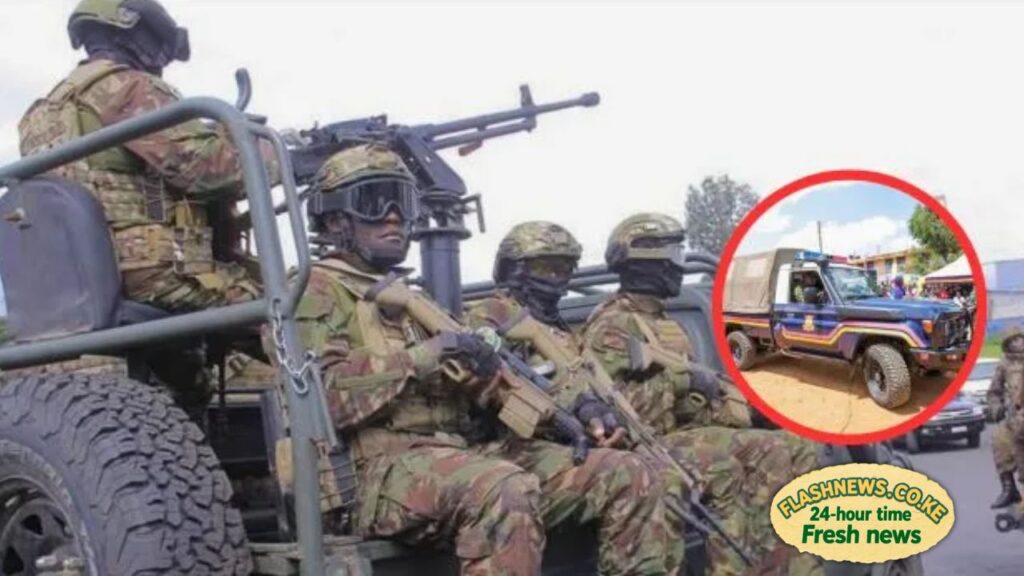
There is a reason Kenya Defence Forces personnel are often seen facing outwards from military trucks — and it has little to do with comfort.
If you have ever watched a convoy of Kenya Defence Forces (KDF) personnel moving through Kenyan towns and highways, you may have noticed something unusual.
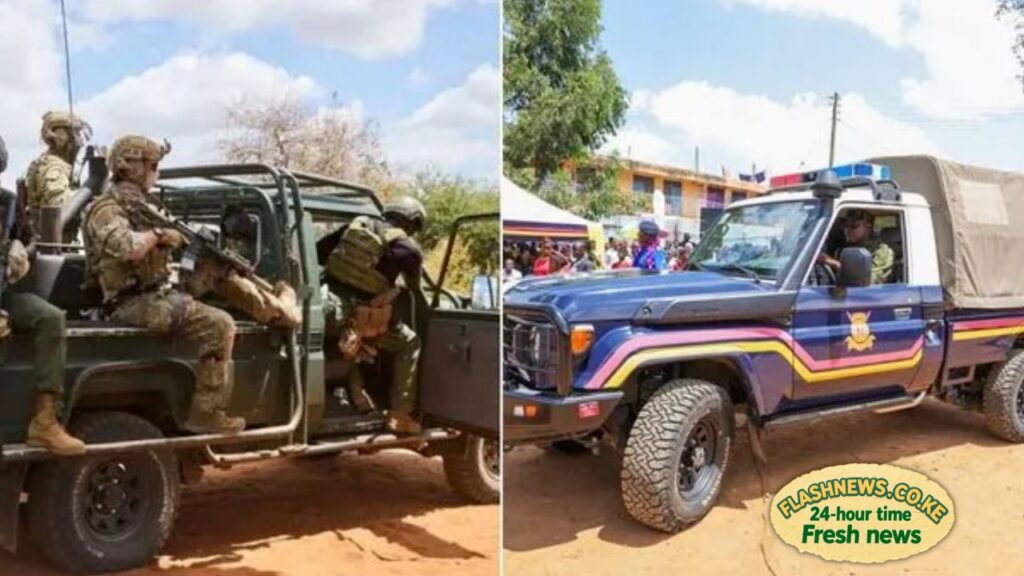
Soldiers travelling in military trucks or pickups are frequently seated facing outwards, looking towards the road and surrounding environment.
Police officers transported in lorries, meanwhile, are commonly seen sitting on benches facing inwards.
At first glance, the difference may appear to be nothing more than a matter of vehicle design or personal preference.
But the seating arrangements can reflect a much wider difference in mission, training and operational requirements.
The KDF is constitutionally mandated to defend and protect Kenya’s sovereignty and territorial integrity. It can also assist other authorities during emergencies or disasters and, under specific constitutional conditions, be deployed to restore peace in areas affected by unrest or instability.
The National Police Service, by contrast, has a primary law-enforcement mandate that includes maintaining law and order, preserving peace, protecting life and property, preventing and detecting crime and apprehending offenders.
Why soldiers face outwards
For military personnel, outward-facing seating can help maintain awareness of the environment around a moving vehicle.
Rather than having soldiers looking only at one another inside the truck, the arrangement can give personnel a broader view of what is happening outside.
In a military context, maintaining awareness of the surrounding environment can be particularly important when troops are moving through areas where conditions may change quickly.
Soldiers are trained to remain alert and to operate as part of a coordinated unit. Their mission may require them to move from transportation to operational activity rapidly, depending on the circumstances.
That is why the positioning of personnel in military vehicles can be influenced by considerations such as visibility, readiness, vehicle configuration and the nature of the assignment.
The Ministry of Defence describes the KDF as a “mission capable force”, with the Kenya Army’s primary mission centred on defending the country against external land-based aggression.
The outward-facing position therefore makes practical sense in situations where troops may need to maintain awareness of their surroundings while travelling.
It is about more than visibility
The difference is not simply about who can see more.
Military operations place considerable emphasis on preparedness, coordination and the ability to respond to changing circumstances.
A soldier travelling as part of a military convoy may be expected to remain attentive to developments outside the vehicle rather than treating the journey purely as transportation from one point to another.
The arrangement can also allow personnel to communicate observations to their colleagues and maintain awareness of different areas around the vehicle.
However, the exact seating arrangement can vary depending on the vehicle, mission, terrain, security situation and orders issued to the unit.
It should therefore not be assumed that every KDF movement uses exactly the same configuration.
Why police officers often face inwards
Police transport is generally organised around a different operational purpose.
The National Police Service is responsible for duties including maintaining law and order, preserving peace, protecting life and property, preventing and detecting crime and responding to members of the public in need.
For many routine deployments, officers are being transported to a particular location where they will carry out policing duties.
In such circumstances, inward-facing bench seating can make efficient use of the available space while allowing officers to communicate with one another during transit.
The arrangement can also be practical when large numbers of officers are being transported together.
But, just as with the military, there is no universal rule that police officers must always face inwards.
What happens during high-risk police operations?
This is where the distinction becomes less straightforward.
Police deployments can range from routine transportation to highly specialised and potentially dangerous operations.
Specialised police formations may therefore use different vehicles and positioning arrangements depending on their assignment.
The National Police Service itself is made up of the Kenya Police Service and Administration Police Service, with specialised functions and formations operating within the wider policing structure.
Consequently, photographs showing police officers facing outward should not automatically be interpreted as unusual or incorrect.
The configuration can depend on the vehicle being used, the assignment and the operational requirements of the deployment.
The bigger difference: military versus policing
Ultimately, the most important distinction is not the direction in which personnel are sitting.
It is what they are being transported to do.
The KDF’s constitutional role centres on defence of the country’s sovereignty and territorial integrity, while the National Police Service is primarily tasked with public safety, law enforcement and maintaining peace and order.
That difference influences everything from training and equipment to vehicles and deployment practices.
So the next time you see KDF soldiers sitting on the edges of a military truck and looking outwards, there is more to the unusual arrangement than meets the eye.
It can be part of a broader military emphasis on situational awareness, readiness and the demands of the mission.
And when police officers sit facing one another inside a transport lorry, that too can reflect the different requirements of conventional law-enforcement deployment.
In short: the seating arrangement is not merely about comfort. It can reflect the different jobs Kenya’s military and police are trained and mandated to perform.
Also Read: EAC Governors Reaffirm 2031 Target for Single East African Currency