

Why US Embassy in Nairobi Will Remain Closed on Monday





The United States Embassy in Nairobi will remain closed on Monday, September 7, as Americans mark Labor Day, meaning members of the public seeking embassy services will have to wait until Tuesday for normal operations to resume.
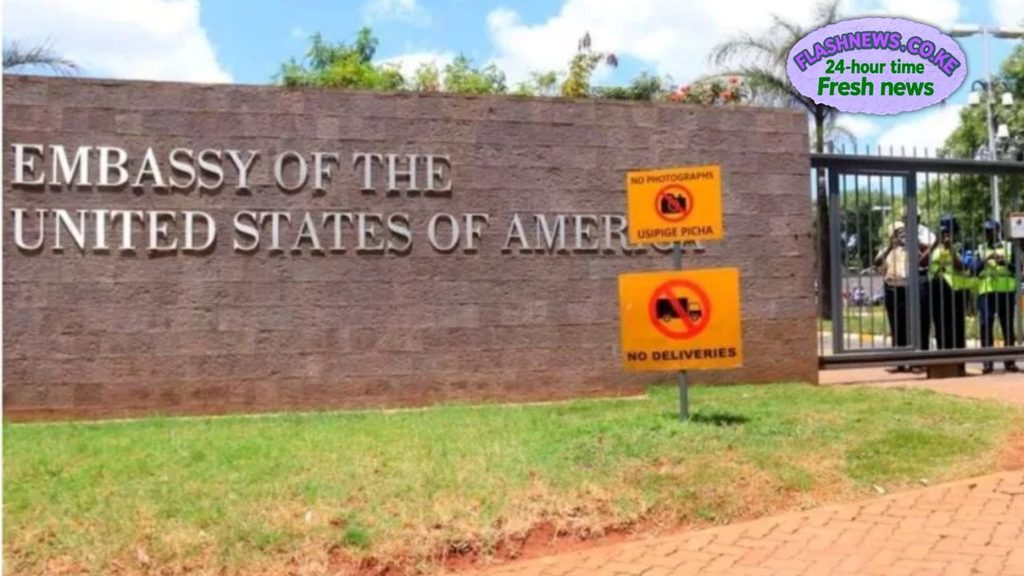
The embassy informed the public that its operations would be suspended on Monday in observance of the US federal holiday.
Normal services are expected to resume on Tuesday, September 8, 2026.
The closure applies because Labor Day is a federal holiday in the United States and is observed annually on the first Monday of September.
The 2026 US federal holiday calendar lists Monday, September 7, as Labor Day.
Why is the US Embassy closed?
Labor Day is an official US federal holiday dedicated to recognising the contributions and achievements of American workers.
It is important to distinguish the American holiday from International Workers’ Day, commonly known as Labour Day, which is observed on May 1 in Kenya and numerous other countries around the world.
While both holidays have connections to the labour movement, the US established its own Labor Day observance on a different date.
The Nairobi embassy’s closure means people who require routine consular or other services will need to plan around the holiday.
US citizens in Kenya and Kenyan nationals seeking services from the embassy are therefore expected to resume normal business with the mission when operations reopen on Tuesday.
How Labor Day began in America
The holiday has its roots in the organised labour movement of the late 19th century, a period when American workers were campaigning for better wages, safer workplaces and shorter working hours.
The first recorded Labor Day celebration took place in New York City on September 5, 1882.
Around 10,000 workers participated in a parade organised by the Central Labor Union.
The event included a march, speeches and a picnic, reflecting the growing influence of organised labour in the United States.
The idea subsequently spread across the country.
By 1894, 23 states had recognised Labor Day, demonstrating how quickly the observance had gained popularity.
Labor Day becomes a federal holiday
Congress formally established Labor Day as a federal holiday on June 28, 1894, designating the first Monday in September as the official day of observance.
The decision came during a period of significant labour unrest across the United States.
Workers were increasingly demanding improved working conditions, higher wages and shorter working hours, while disputes between employees and employers were becoming more frequent.
One of the most significant labour conflicts of the period was the Pullman Strike of 1894, a major railway dispute that caused widespread disruption and resulted in federal intervention.
The confrontation highlighted the growing tensions between workers, employers and the US government.
Labor Day today
More than a century after it became a federal holiday, Labor Day remains an important date on the American calendar.
Across the United States, the holiday is commonly marked by parades, public celebrations, family gatherings, sporting events and other activities.
It is also widely regarded as the unofficial end of the US summer holiday season, with many families using the long weekend for travel and leisure.
Despite its modern association with barbecues, sporting events and the final summer weekend, the origins of Labor Day remain firmly rooted in the struggle of American workers for improved rights and working conditions.
For those seeking services at the US Embassy in Nairobi, however, the immediate impact is straightforward: the mission will be closed on Monday, September 7, before normal operations resume on Tuesday, September 8.
Also Read: Why Africa Looks So Small on World Maps—and the UN Wants to Change It