






🗺World No Tobacco Day is being marked globally on May 31, with health experts warning that tobacco and nicotine companies are increasingly targeting young people through appealing products, social media marketing, and flavoured alternatives.
The annual awareness day, led by the World Health Organization (WHO), aims to highlight the devastating health consequences of tobacco use while encouraging governments to strengthen policies that reduce addiction and prevent new users from taking up smoking and vaping.
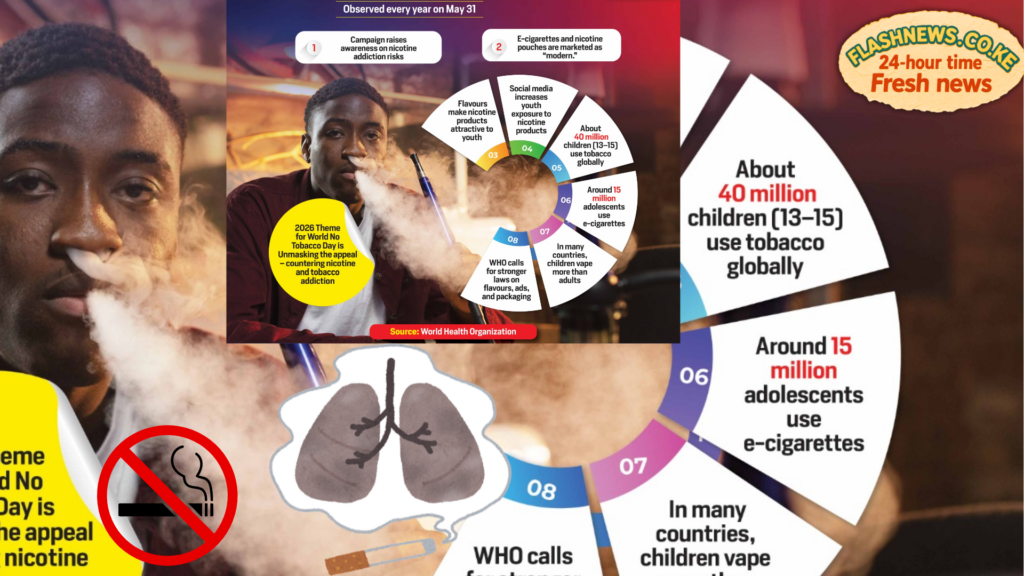
This year’s theme, “Unmasking the Appeal: Countering Nicotine and Tobacco Addiction,” focuses on what health officials describe as the growing sophistication of tobacco and nicotine marketing strategies designed to attract younger consumers.
According to WHO, flavoured tobacco products, e-cigarettes, nicotine pouches and other emerging nicotine delivery systems are increasingly being presented as fashionable, modern and less harmful alternatives, despite concerns over their addictive effects.
The agency warns that colourful packaging, sweet flavours and aggressive digital advertising campaigns are contributing to rising nicotine use among adolescents across the globe.
“Young people are being exposed to products specifically designed to make nicotine use appear attractive and socially acceptable,” WHO has said in its campaign messaging for this year’s observance.
Social media platforms have emerged as a major battleground in the fight against tobacco use, with health experts warning that influencer marketing, viral content and targeted advertising continue to expose millions of young users to nicotine-related products.
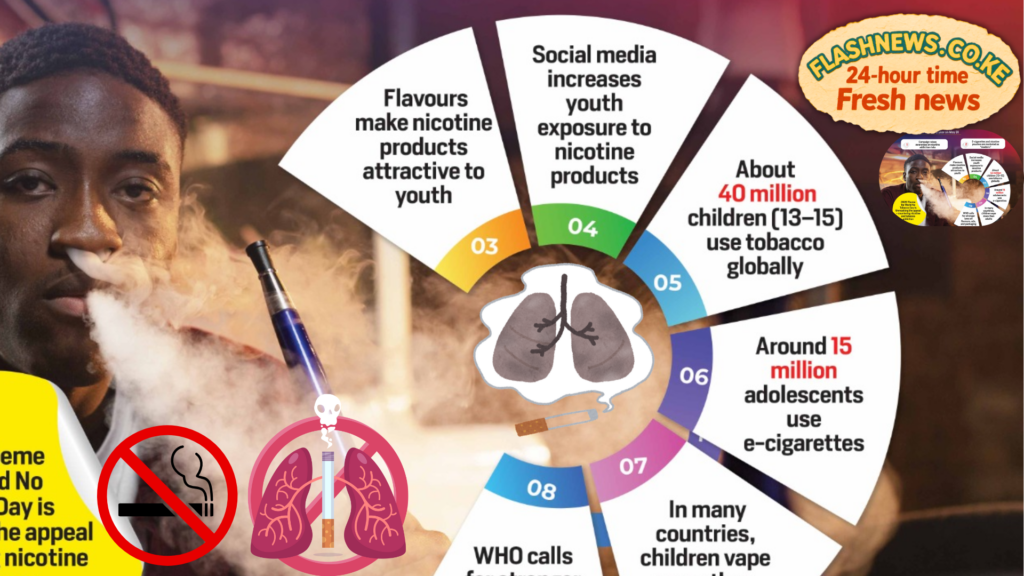
The latest WHO estimates indicate that approximately 40 million children aged between 13 and 15 years currently use tobacco products worldwide, while around 15 million adolescents are using e-cigarettes.
In some countries, vaping rates among children and teenagers have reportedly exceeded those recorded among adults, raising concerns about a new generation becoming addicted to nicotine.
Public health specialists argue that early nicotine addiction can have long-term consequences, including increased risks of cardiovascular disease, respiratory illnesses and dependence that may persist into adulthood.
As part of this year’s campaign, WHO is urging governments to introduce stricter controls on flavourings, advertising, sponsorships and product packaging. The organisation says stronger regulation is essential to protect young people from becoming lifelong nicotine users.
Health advocates further stress that preventing tobacco and nicotine uptake among youth remains one of the most effective ways to reduce future healthcare costs, improve public health outcomes and save lives.
World No Tobacco Day has been observed annually since 1988 and continues to serve as a global platform for raising awareness about one of the world’s leading preventable causes of death.
Also Read: Explained: Why Most Cars Have Their Fuel Tank Doors on the Passenger Side