






Chinese President Xi Jinping has urged African nations to retain control of their mineral resources, warning against turning the continent’s deposits into instruments of geopolitical rivalry as global powers compete for access to Kenya’s strategic minerals.

Chinese President Xi Jinping has called for African countries to maintain ownership of their mineral wealth and ensure that international mining partnerships deliver tangible benefits to local communities.
The warning comes as Kenya attracts interest from American, Chinese and Australian firms seeking to develop the mineral deposits at Mrima Hill in Kwale County, placing the country at the centre of growing competition for critical minerals.
In a four-point proposal on China-Africa mining cooperation announced on Tuesday, 13 October, Xi outlined principles focused on African ownership, mutual benefit, high-quality development and a fair investment environment, according to Chinese Foreign Ministry spokesperson Mao Ning.
“Africa’s resources should not become tools of geopolitical struggle,” Xi said, according to China’s state-run Xinhua News Agency.
He added that Beijing was ready to work with African countries to maintain a stable and predictable environment for mining cooperation.
Xi outlines four principles for mining partnerships
Xi’s proposal sets out four principles intended to guide cooperation between China and African nations in the mining sector.
The first calls for African countries to retain ownership of their natural resources, while the second emphasises partnerships that balance economic interests with long-standing relations to deliver mutual benefits.
The third principle advocates high-quality development, while the fourth calls for a fair and open investment environment for companies seeking opportunities in Africa.
The proposals come amid growing international competition for minerals used in advanced manufacturing, renewable energy, electronics and defence technologies.
Kenya’s Mrima Hill draws international attention
Kenya has emerged as a potential destination for investment in critical minerals, with the government seeking to expand local processing rather than rely solely on exporting raw materials.
The policy is intended to support job creation, encourage technology transfer and strengthen the country’s industrial base.
The government has also been holding discussions with the United States on a potential critical-minerals partnership that could lead to the establishment of refineries and processing facilities in Kenya.
Mining Cabinet Secretary Hassan Joho previously said the discussions involved several American government departments, including Commerce, Defence and State, as Nairobi explores ways to attract investment while retaining more economic value from its mineral resources.
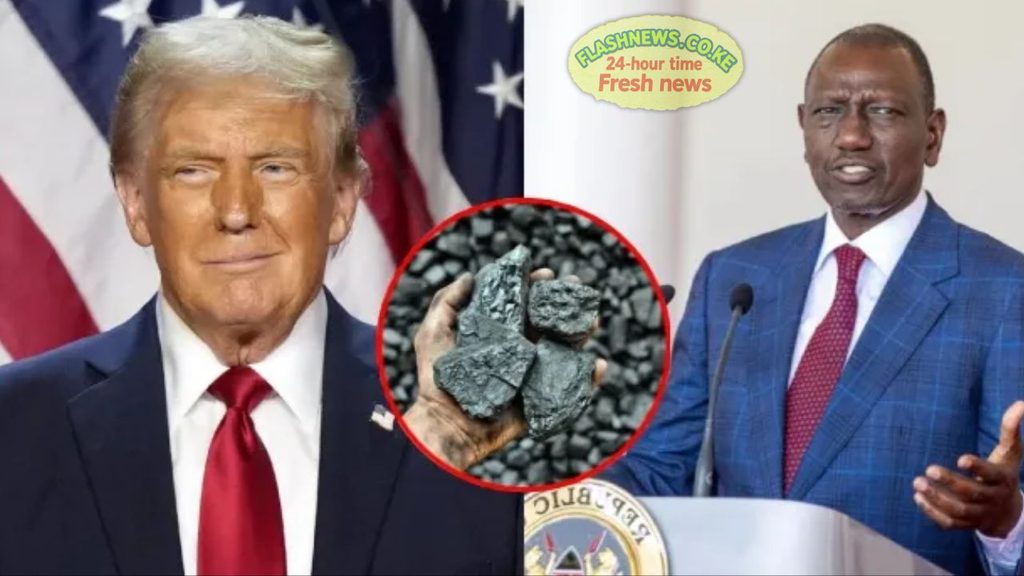
The talks are closely linked to the proposed development of Mrima Hill, where six companies from the United States, Australia and China are competing for rights to develop deposits containing niobium and rare earth elements, alongside other minerals identified in the area.
Why the minerals matter to global powers
Niobium is used in high-strength steel and specialised industrial applications, while rare earth elements are essential components in permanent magnets used in electric motors, electronics and other advanced technologies.
These minerals have become increasingly important as countries seek to strengthen supply chains for electric vehicles, modern manufacturing and defence systems.
China occupies a dominant position in the processing of several critical minerals, while the United States has been pursuing alternative supply chains to reduce its reliance on Chinese-controlled processing capacity.
That competition has increased the strategic importance of mineral-rich African countries, including Kenya, which is seeking to attract foreign investment without surrendering the benefits of developing its resources locally.
What Xi’s warning could mean for Kenya
Xi’s remarks highlight the wider debate over how African countries can benefit from growing demand for their natural resources while managing competition between major global powers.

For Kenya, the challenge will be to secure investment, negotiate favourable terms and develop local processing capacity while ensuring that mineral development delivers jobs, skills and long-term economic benefits.
As discussions over Mrima Hill continue, the proposed projects could become an important test of the government’s ambition to move beyond exporting raw minerals towards building a stronger domestic minerals-processing industry.
However, the final outcome will depend on the investment agreements, regulatory decisions and development conditions governing any future mining operations.
Also Read: HELB Warns Students: Changing Your Mobile Money Number Could Delay Loan Payments