

HELB, Universities Fund and TVET Fund Face Major Shake-Up as Ruto Backs New Super Agency in Sweeping Higher Education Reforms





Kenya’s higher education financing system is on the brink of its biggest transformation in decades after the government proposed abolishing three key funding institutions and replacing them with a single authority under a new law aimed at guaranteeing funding for all eligible students.
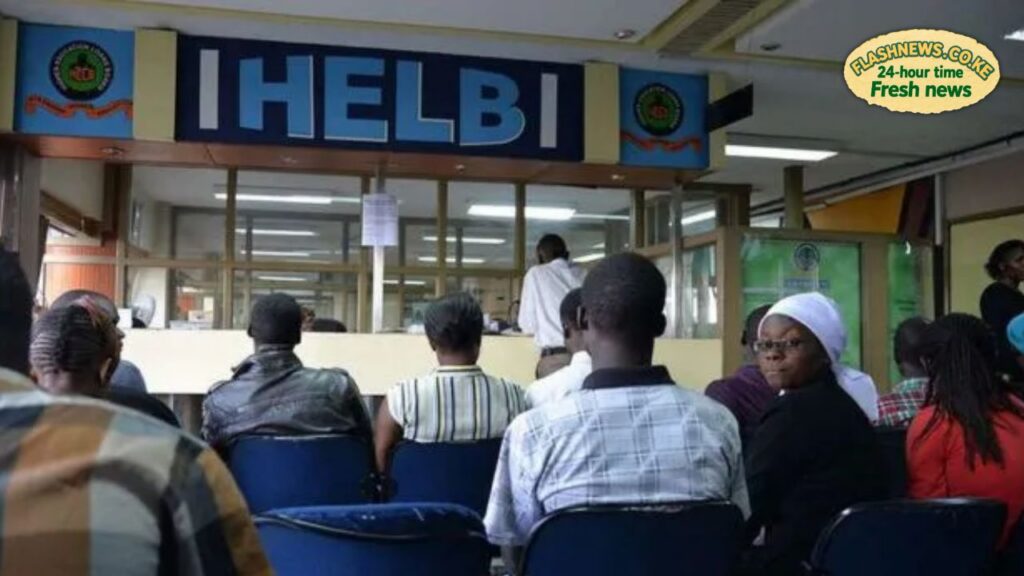
The proposed reforms, contained in the Tertiary Placement and Funding Bill, 2026, would merge the Higher Education Loans Board (HELB), the Universities Fund, and the TVET Fund into a new entity known as the Tertiary Education Funding Authority (TEFA).
If approved by Parliament, TEFA would become the sole government agency responsible for financing students admitted to public universities, Technical and Vocational Education and Training (TVET) institutions, and other public tertiary colleges, fundamentally reshaping how higher education is funded in Kenya.
The Bill, currently before lawmakers, is designed to simplify the country’s fragmented funding structure by placing student loans, scholarships, institutional funding and loan recovery under one umbrella.
Under the proposed framework, TEFA will assume several responsibilities currently carried out by HELB, including issuing student loans, managing scholarships and grants, and recovering loans from graduates. It will also absorb the funding roles currently undertaken by the Universities Fund and the TVET Fund Board.
The government says the move is intended to create a more efficient, transparent and financially sustainable system capable of supporting a growing number of students seeking higher education.
Ruto Announces Full Funding for Students
The proposed legislation comes just a day after President William Ruto announced a major policy shift, declaring that all students admitted to public universities and colleges would receive full government funding beginning in September 2026.
Speaking on Tuesday, July 21, the President said the government had abandoned the controversial differentiated funding model introduced in 2023 after it failed to adequately finance institutions and students.

“Going forward, any student, so long as they have passed their examinations and they have been placed in a college or university, will get full funding for their higher education. It will be the choice for parents if they want to pay,” Ruto said.
The Head of State admitted the previous model had left universities struggling financially despite government promises.
“We tried the differentiated model. I think the Vice-Chancellors here know it didn’t work because it made most of our universities almost close down. After all, while we promised 80 per cent funding, we went down to 40 per cent,” he added.
Universal Funding Model
The new Bill proposes replacing the income-based funding model introduced in 2023 with a universal government-funded system.
Under the proposal, every eligible student admitted to a public tertiary institution would qualify for government financial support regardless of household income classification.
The funding package is expected to cover tuition fees, accommodation and living expenses, although beneficiaries would still be required to repay the loan component after securing employment.
Government officials argue that the reforms will eliminate cases where students are forced to defer studies, abandon preferred courses or fail to enrol because of financial constraints.
At the same time, TEFA will be required to strengthen loan recovery mechanisms to ensure graduates repay their obligations, helping sustain the revolving fund for future generations of learners.

Parliament Yet to Decide
The Tertiary Placement and Funding Bill, 2026 is now awaiting debate and approval in Parliament before it can become law.
Should legislators approve the proposal, Kenya’s higher education sector would witness the dissolution of HELB, the Universities Fund and the TVET Fund, with all their functions transferred to TEFA ahead of the government’s planned rollout of the new funding model in September 2026.
The reforms would mark one of the most significant policy changes in tertiary education financing since HELB was established, signalling a new approach to funding university and TVET education while seeking to guarantee access for every qualified learner.
Also Read: Treasury Orders Comprehensive Review of SACCO Supervision Under World Bank Programme