

High Court Orders KSh8 Million Payout to JKUAT Student After Finding Police Violated His Constitutional Rights During Protest Arrest





A student at Jomo Kenyatta University of Agriculture and Technology (JKUAT) has been awarded KSh8 million in damages after the High Court found that police officers brutally assaulted, unlawfully arrested and detained him during student protests, in a landmark judgment reinforcing constitutional protections against police brutality.

In a ruling delivered by Justice Patricia Nyaundi, the High Court in Nairobi held that the student’s fundamental rights were violated after he was allegedly beaten by officers while walking near the university during unrest in November 2019.
The court directed that the compensation be paid by the Inspector General of the National Police Service and the Office of the Director of Public Prosecutions (ODPP).
According to the judgment obtained by Kenyans.co.ke, the court ruled:
“The Petitioner is awarded the sum of KSh8 million for the violation of his rights, payable by the 1st and 2nd Defendants.”
Student attacked without lawful justification
Court documents revealed that the petitioner was not actively participating in violent demonstrations when officers allegedly confronted him near the university.
The student told the court he was violently assaulted without explanation before being arrested and forced into a police vehicle, where the beating reportedly continued.
Justice Nyaundi found that the conduct of the officers amounted to a grave violation of constitutional guarantees protecting every Kenyan from torture, cruel, inhuman and degrading treatment.
In the judgment, the court declared:
“A declaration hereby issues that the violent assault and subsequent arrest and detention of the Petitioner by the officers of the 1st Respondent occasioned a violation of the right to human dignity, freedom from cruel, inhuman and degrading treatment contrary to Articles 28 and 29 of the Constitution of Kenya, 2010.”

Court faults police and prosecutors
The judgment went beyond the actions of the arresting officers, sharply criticising the handling of the matter by state agencies after investigations established what had occurred.
Evidence presented before the court showed the assault had been captured on video, prompting investigations by independent oversight agencies that confirmed the incident and identified the officers involved.
The court noted that the ODPP had acknowledged there was sufficient evidence to prosecute the officers but instead opted for a diversion process intended to resolve the matter outside conventional criminal proceedings.
However, the diversion process was never implemented.
Justice Nyaundi ruled that the failure to either prosecute the officers or complete the diversion process effectively denied the petitioner access to justice, leaving him without an effective legal remedy despite overwhelming evidence.
Injuries left lasting trauma
According to court records, the student endured repeated kicks, punches and degrading treatment before being transported to a police station.
Despite suffering visible injuries, he was allegedly detained under poor conditions, denied prompt medical attention and later released without being formally charged or properly booked into police custody.
Medical reports produced before the court documented physical injuries, while psychological assessments concluded that he continued to experience emotional trauma consistent with post-traumatic stress symptoms years after the incident.
The court found that the lasting effects of the assault justified a substantial award of damages.
Fresh spotlight on police accountability
The ruling comes at a time when Kenya continues to witness heightened public concern over allegations of police brutality, enforced disappearances, unlawful killings and excessive force during demonstrations.
Human rights organisations have repeatedly called for greater accountability within the security sector, arguing that constitutional protections must be upheld regardless of the circumstances surrounding public protests.
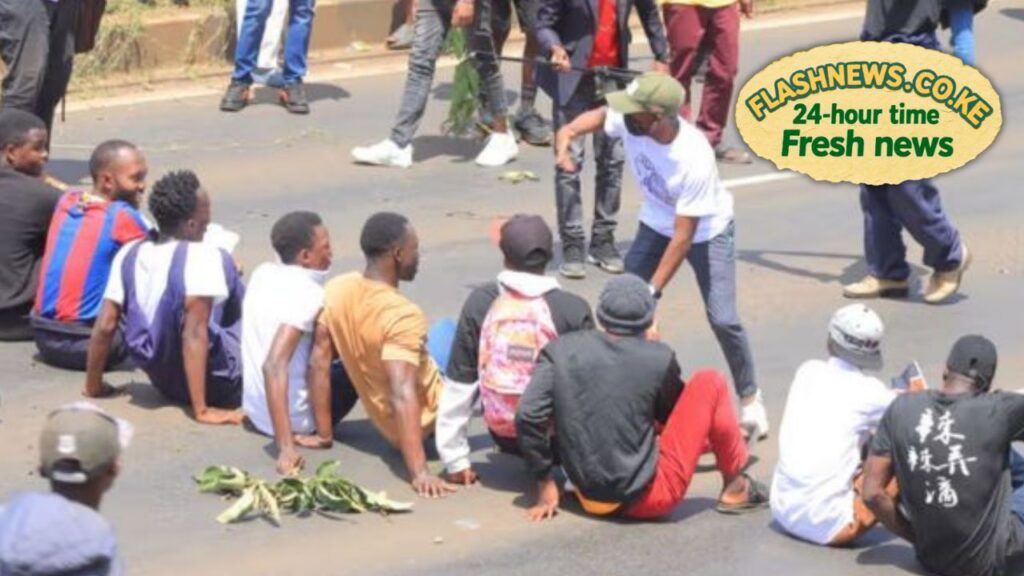
The High Court’s decision is expected to add momentum to those demands, reinforcing the principle that security agencies remain bound by the Constitution even while responding to public unrest.
Also Read: Ruto signs law allowing Senators to join Parliamentary Pension Scheme