

High Court Refuses to Halt Ruto’s Ksh5 Trillion Mega Fund but Orders Treasury to Reveal Every Shilling





The High Court has declined to suspend the government’s controversial Ksh5 trillion National Infrastructure Fund (NIF), handing President William Ruto’s administration a significant legal reprieve while ordering the National Treasury to disclose detailed financial records on how the fund has been managed.

In a ruling delivered on Thursday, July 23, Justice Patricia Nyaundi rejected an application that sought interim orders to freeze the implementation of the ambitious infrastructure financing programme pending the hearing of a constitutional petition.
The decision allows the government to continue rolling out the fund, which is expected to finance major infrastructure projects across transport, energy and water sectors, but subjects the Treasury to enhanced judicial scrutiny.
Despite refusing to suspend the programme, the court directed the National Treasury to file Auditor-General-certified accounts and comprehensive transaction reports within 30 days, setting an August 24 deadline for compliance.
The Treasury must provide details of all money received since the fund was established, indicate when deposits were made into Central Bank of Kenya or commercial bank accounts authorised under the law, and account for every allocation, expenditure and financial transaction undertaken.
Justice Nyaundi further ordered that the government continue filing updated transaction reports before the court every three months, beginning November 30, until the constitutional petition is fully heard and determined.
The case was filed by petitioners challenging the legality of the National Infrastructure Fund, arguing that its structure raises serious constitutional questions regarding accountability, transparency and the management of public resources.
According to the judge, the petition presents arguable constitutional issues that deserve full judicial examination.
However, the court found that granting temporary orders to suspend the fund before hearing the substantive case would not be appropriate.
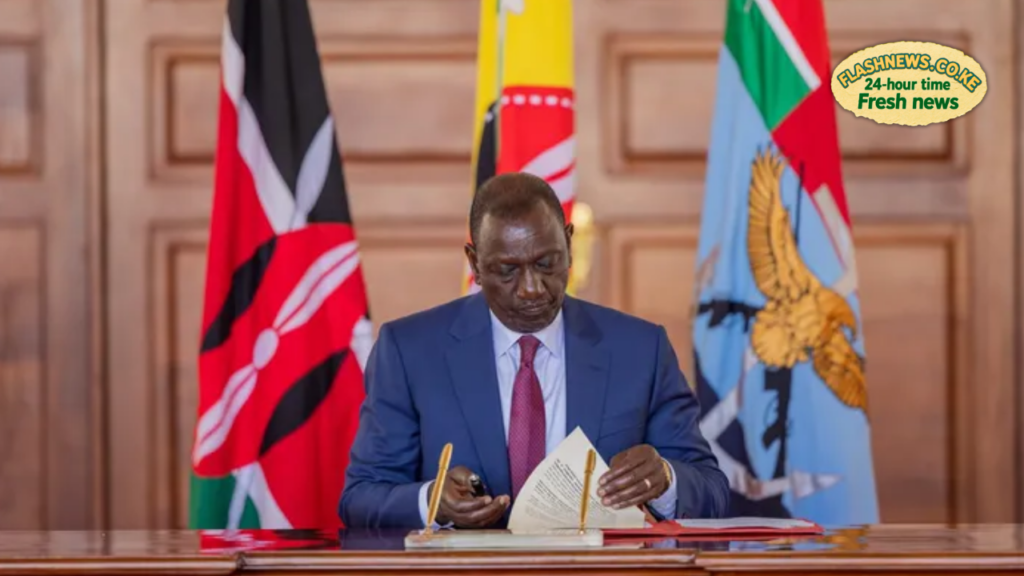
“The petition raises arguable constitutional questions concerning the legal framework establishing the fund,” Justice Nyaundi observed, while declining to issue conservatory orders stopping its implementation.
The National Infrastructure Fund was created under the National Infrastructure Fund Act, 2026, as the government’s flagship financing vehicle aimed at mobilising more than Ksh5 trillion over the next decade to accelerate large-scale infrastructure development.
The Ruto administration says the fund is intended to reduce Kenya’s dependence on external borrowing by raising capital through the sale of selected state assets and strategic government investments.
According to the government, the fund has already accumulated more than Ksh129 billion from the sale of part of the government’s stake in the Kenya Pipeline Company (KPC), with another Ksh244 billion expected following the planned disposal of government shares in a telecommunications company.
However, the fund has remained at the centre of legal and political controversy since its establishment, with critics questioning whether sufficient constitutional safeguards exist to guarantee transparency, parliamentary oversight and prudent management of billions of shillings in public assets.

The constitutional petition challenging the fund is expected to proceed to a full hearing, where the court will determine whether the National Infrastructure Fund complies with Kenya’s Constitution and public finance laws.
Also Read: Kenya’s Life Expectancy Rises to 66.8 Years as Treasury Highlights Health Gains