






IEBC Registers 2.3 Million New Voters in 30 Days – But Shuts Door on Extension Despite Missing Target
Kenya’s electoral body, the Independent Electoral and Boundaries Commission (IEBC), has announced that more than 2.3 million Kenyans were added to the voter register in just 30 days—falling short of its ambitious target, but still marking what officials describe as a “major milestone.”
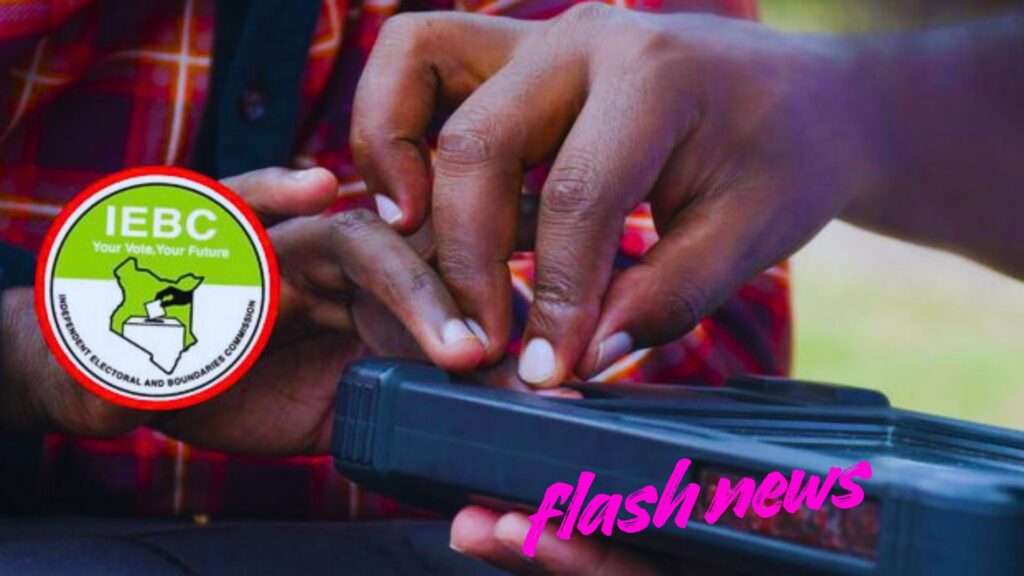
The mass registration exercise, conducted between March 30 and April 28 under the Enhanced Continuous Voter Registration (ECVR) programme, saw a total of 2,345,476 new voters successfully enlisted.
IEBC Chairperson Erastus Ethekon hailed the outcome as a significant achievement, pointing to a sharp improvement compared to previous efforts.
“Within the 30-day window, we managed to capture and register 2,345,476 new voters. This is a major milestone for us, and we would like to thank every Kenyan who supported this exercise,” Ethekon said.
Despite falling slightly below the 2.5 million target, the commission emphasized the progress made, noting that registration averaged over 500,000 voters per week—outpacing similar drives in previous years.
Historical comparisons underline the gains. In 2016, IEBC registered just 1.4 million voters during a similar 30-day push, far below a 4 million target. A subsequent exercise in 2021 also failed to meet expectations, reinforcing the significance of the latest figures.
Ethekon credited the improved performance to a series of operational reforms aimed at increasing accessibility and efficiency. Chief among them was the introduction of an “open kit” system, allowing eligible voters to register at any centre nationwide, regardless of their home constituency.
The commission also expanded registration beyond traditional ward-based centres, targeting universities, Technical and Vocational Education and Training (TVET) institutions, and colleges. This strategy aligned with youth-focused mobilisation campaigns such as the “Tuko Kadi” initiative, which encouraged first-time voters to sign up.
In a historic first, IEBC integrated voter registration services into Huduma Centres nationwide, placing registration desks in all 57 centres and significantly widening access.
Additionally, the use of national ID databases and real-time data tracking enabled the commission to monitor progress more effectively and adjust strategies during the exercise—an improvement from previous cycles that relied heavily on static census projections.

However, despite mounting calls from some stakeholders for more time, IEBC has ruled out extending the registration window beyond the initial 30 days.
Still, the commission clarified that voter registration remains ongoing at Huduma Centres and IEBC constituency offices, offering latecomers another opportunity to enlist ahead of future elections.
Also Read: Government Relaxes Fuel Rules for Six Months to Avert Shortage