

Kenya Faces US Trade Warning Over Alleged Chinese Goods Transshipment





Kenya has been named among countries that the White House says could be vulnerable to being used as transit points for Chinese goods seeking to evade US tariffs, raising fresh questions over the future of the country’s access to the American market.
The warning is contained in a new White House report titled The Great Transshipment Scam, which accuses a network of countries of facilitating the rerouting of Chinese exports through third countries before they enter the United States under different claimed origins.
The report places Kenya in Tier 3 of what it calls the “Shadow Transshipment Network”, describing the country as a “small, opportunistic Chinese target”.
The classification does not by itself establish that Kenya is knowingly facilitating tariff evasion. Rather, the report identifies countries that Washington considers vulnerable to being used for such activity because of their infrastructure, trade arrangements and manufacturing capabilities.

“Tier 3 consists of the Small, Opportunistic Chinese Targets,” the report states, citing factors including low-cost labour, free zones, port access and bonded warehousing.
Kenya is also described as an “African Peripheral Hub”, with the report identifying the country as an emerging port and free-zone way station for selected China-linked trade flows. Morocco is the only other African country highlighted alongside Kenya on the report’s functional map.
Why Kenya has attracted US attention
According to the report, Kenya’s strategic position, port infrastructure and preferential access to the US market could make it attractive to exporters seeking alternative routes into America.
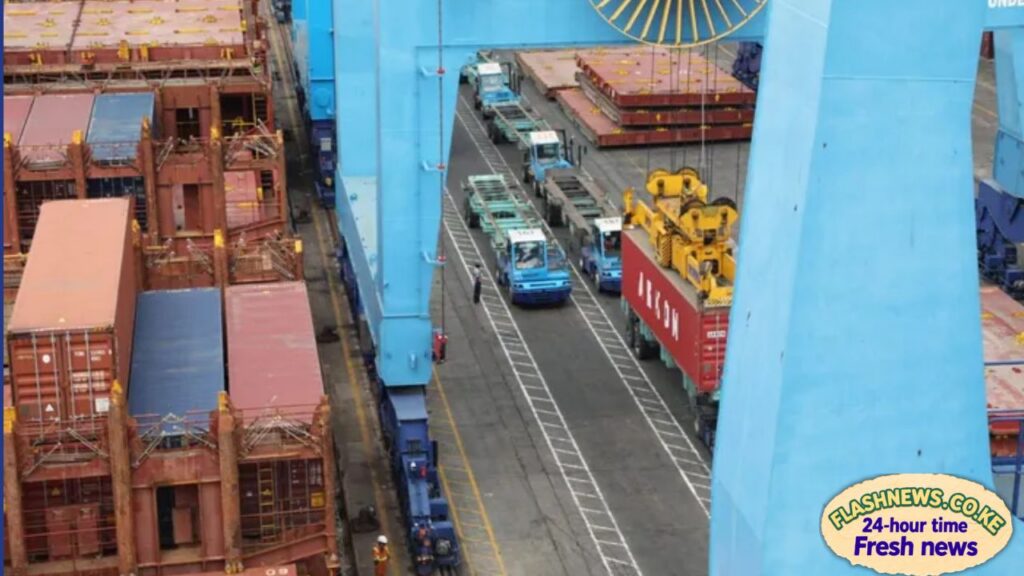
The report points to Kenya’s port facilities, bonded warehouses, free-zone regulations, relatively low labour costs and niche assembly capacity as factors that could potentially be exploited.
“China-linked exporters gravitate to them because each offers a specialised comparative advantage,” the report says.
The concern centres on transshipment, a practice in which goods are routed through another country before reaching their final destination. Washington fears that some exporters could use such routes to relabel, repackage or lightly process Chinese products and then declare them as originating from another country.
That could allow goods to avoid tariffs imposed on Chinese imports.
The White House has now signalled a tougher approach, warning that countries or companies found facilitating tariff evasion could face measures ranging from penalties and additional tariffs to sanctions and possible loss of market access.
AI technology to track suspicious shipments
The Trump administration is also turning to technology as part of its effort to identify suspicious trade routes.
According to the report, the US Customs and Border Protection system will use an AI-powered tool known as “Detective Border” alongside satellite imagery, trade data and supply-chain analysis to identify inconsistencies in the declared origin of goods.
The system is intended to examine whether exporters have the production capacity they claim to possess and whether the movement of goods through third countries makes commercial sense.
The move comes as Washington intensifies its scrutiny of China’s global supply chains. Recent reporting on the White House initiative says US officials believe transshipment may be costing the country billions of dollars in tariff revenue.
Potential risk for Kenyan exporters
The allegations could create an uncomfortable situation for Kenya, particularly for manufacturers and exporters that depend on the American market.
Kenya benefits from preferential trade access to the United States under the African Growth and Opportunity Act (AGOA), making the US an important destination for Kenyan exports.
Any increased scrutiny of Kenyan shipments could therefore have consequences beyond companies suspected of wrongdoing.
Legitimate Kenyan manufacturers could face additional documentation requirements, closer customs inspections or delays if American authorities become concerned about the possibility of Chinese goods being routed through Kenya.
The report warns that transshipment can become “smuggling disguised as trade” and “fraud cloaked in paperwork”, underscoring the seriousness with which Washington views the issue.
For Kenya, the challenge will be to demonstrate that goods exported from the country genuinely meet applicable rules of origin and are not simply Chinese products that have been relabelled or minimally processed.
Kenya caught between trade opportunities and US scrutiny
The development also highlights the delicate balance Kenya faces as it seeks to deepen economic ties with both China and the United States.
China remains a major source of imports, investment and infrastructure financing for Kenya, while the United States remains an important export destination.
The White House report therefore puts renewed attention on Kenya’s ports, special economic zones, bonded warehouses and manufacturing sector.
However, being listed as a potential transshipment location should not be interpreted as proof that the Kenyan government or Kenyan exporters are engaged in tariff evasion.
The immediate concern is whether individual companies or supply chains operating through Kenya could be exploited by exporters attempting to disguise the true origin of their products.
For Kenyan businesses, the warning could mean that maintaining meticulous records on sourcing, manufacturing, processing and country of origin becomes increasingly important.
As Washington expands its use of artificial intelligence and data analysis to scrutinise global trade, exporters operating through Kenya could face a much higher level of scrutiny.
The stakes are significant: if US authorities were ultimately to determine that Kenya was being systematically used to circumvent American tariffs, the country could face tougher trade enforcement measures and potentially jeopardise valuable access to the US market.
Also Read: HELB Issues Urgent Notice to Employers Ahead of August 15 Deadline