


The Kenya Medical Training College (KMTC) has appealed to the government to extend higher education loans and scholarships to its students, warning that thousands of qualified applicants are missing opportunities to pursue medical courses because of financial difficulties.
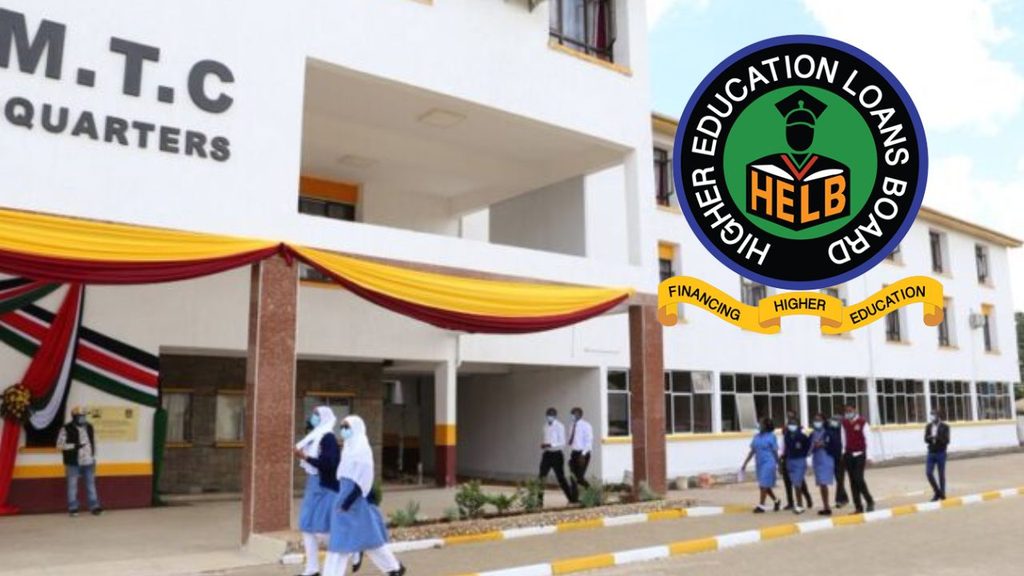
The institution says approximately 20,000 students placed through the Kenya Universities and Colleges Central Placement Service (KUCCPS) fail to take up their admission opportunities during each admission cycle because they cannot afford the cost of training.
The appeal has renewed debate about access to government student financing, particularly for learners joining specialised institutions operating under ministries other than the Ministry of Education.
KMTC Chief Executive Officer Dr Kelly Oluoch presented the concerns before the National Government Constituencies Development Fund Committee, urging Parliament to consider a funding arrangement that recognises the needs of medical trainees.
Why KMTC wants students included in HELB funding
According to KMTC, its students face a financing disadvantage because the institution operates under the Ministry of Health rather than the Ministry of Education.
The college argues that its administrative placement under the health sector should not prevent learners from accessing government-supported higher education funding.
Oluoch told MPs that KMTC trains more than 85 per cent of Kenya’s healthcare workforce, making its programmes important to the country’s medical training needs.
The institution currently has approximately 89,586 students, many of whom face challenges meeting tuition and other training expenses.
KMTC wants the government to recognise its trainees as post-secondary students who deserve equitable consideration under national student financing arrangements.
20,000 students reportedly miss admission every year
The figure presented by KMTC highlights the financial difficulties facing applicants who secure placement but cannot afford to report to college.
For many students, receiving a KUCCPS placement is an important achievement after completing secondary education.
However, admission does not automatically guarantee access to affordable training.
Students must still meet the financial obligations associated with their courses, including tuition and other institutional charges.
KMTC says the lack of access to government scholarships and loans leaves many qualified applicants unable to proceed with their studies.
The situation also affects the use of available admission places, as students who cannot report may leave opportunities that could otherwise have been taken up by other applicants.
MPs consider proposals to address the challenge
During the parliamentary engagement, Kitutu Masaba MP Clive Gisairo suggested that KMTC work more closely with KUCCPS to ensure applicants understand the financial requirements attached to their selected courses.
He proposed that students be informed about the funding arrangements before completing the placement process.
One suggestion involved introducing a declaration of ability to pay fees during applications and displaying a notification on the KUCCPS portal explaining the current financing position for KMTC programmes.
The proposal could help applicants make more informed decisions before accepting admission offers.
However, such measures would not directly solve the underlying affordability problem facing students who cannot raise the required fees.
KMTC proposes a coordinated tertiary education funding system
Oluoch also proposed that the planned Tertiary Education Funding Authority be placed under the National Treasury to coordinate student financing across specialised institutions.
The proposed arrangement could help address disparities affecting students enrolled in institutions operating under different government ministries.
Such a framework could potentially cover specialised training in healthcare, agriculture, tourism, water management and other technical fields.
KMTC maintains that institutions should be able to remain under their respective technical ministries while their students receive fair consideration under national financing programmes.
What the funding appeal means for KMTC applicants
For prospective KMTC students, the appeal is important, but it should not be interpreted as confirmation that HELB loans or government scholarships are already available to all KMTC trainees.
The institution has made a request for inclusion in the financing framework, and the matter requires further consideration by the government and Parliament.
Applicants should continue checking official KMTC and KUCCPS communication for admission requirements, fee structures and any approved financial assistance arrangements.
Students should also avoid making financial decisions based on unofficial social media announcements claiming that a new KMTC loan programme has already been introduced.
Government faces pressure to widen access to medical training
The funding debate raises a wider question about how Kenya supports students pursuing professional and technical education.
If qualified applicants continue to surrender admission opportunities because of financial constraints, the country risks limiting access to training in sectors that require skilled professionals.
KMTC’s appeal therefore goes beyond the institution’s internal funding needs. It places the question of equitable student financing before policymakers as Kenya considers how to strengthen its healthcare workforce.
The next step will depend on how the government and Parliament respond to the college’s proposal.
Also Read: Ministry Announces Major Changes to 2027 School Calendar as Learners Get Longer Half-Term Breaks