

Police Defend Nairobi Roadblocks as Thousands Mark Gen Z Protest Anniversary





Deputy Inspector General of Police Gilbert Masengeli has defended the heavy deployment of roadblocks across Nairobi and neighbouring counties, insisting the security measures were necessary to prevent violence and stop criminals from infiltrating ongoing demonstrations commemorating the second anniversary of the Gen Z protests.

Speaking on Thursday, June 25, Masengeli dismissed concerns that police had effectively shut down access to the capital, maintaining that Kenyans remained safe and were continuing with their daily activities despite the heightened security presence witnessed on major highways leading into Nairobi.
According to the senior police officer, security agencies had recorded a largely peaceful morning, with no major incidents of violence reported in areas affected by the demonstrations.
“Kenyans are safe and are going on with their duties as usual. We are glad that there has not been any violence since this morning. We have not seen anybody’s vehicle being burnt, and people are using the roads as usual,” Masengeli said.
The Deputy Inspector General further emphasized that while the Constitution guarantees citizens the right to assemble and protest, such freedoms must be exercised within the limits of the law and should not be used as a cover for criminal activities.
“Everybody has got a right, but the rights are limited. There are no roadblocks. We have not blocked anyone from using the roads. We are only blocking those who are attempting to cause violence. We are stopping vehicles to check whether some are carrying weapons and criminals. That is our work,” he added.

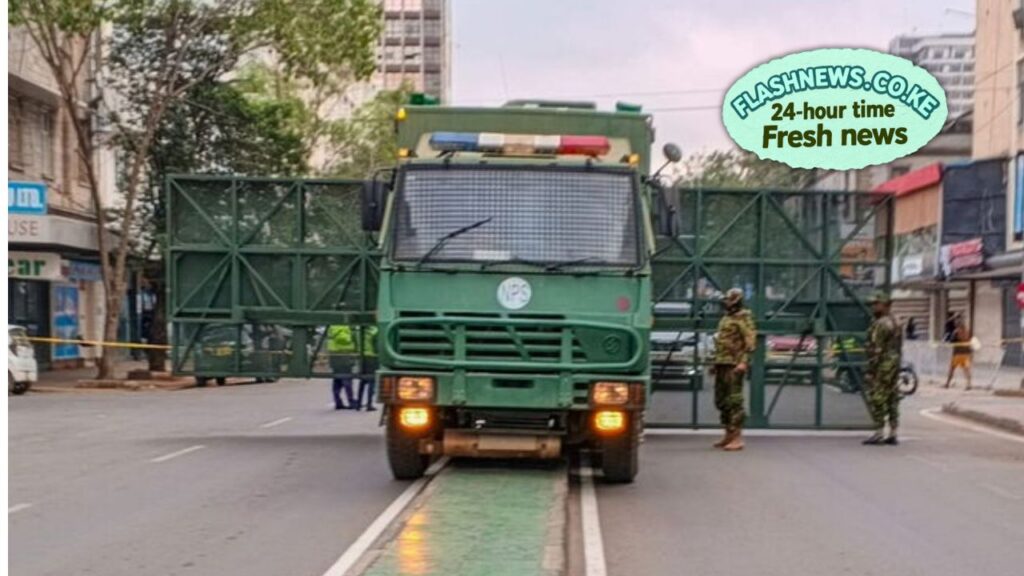
Masengeli’s remarks came amid widespread criticism after police mounted barriers and intensified security checks at several strategic entry points into Nairobi on Thursday morning, causing significant transport disruptions and leaving thousands of commuters stranded.
Roadblocks were reported along major routes including Mombasa Road, Thika Road and Lang’ata Road, while traffic movement between Nairobi, Athi River and Mlolongo was also heavily affected as authorities stepped up security operations across the metropolitan region.
The restrictions had a major impact on public transport services, with numerous matatus unable to access the Nairobi Central Business District during the morning rush hour.
A spot check conducted in the city centre revealed unusually low traffic volumes along Haile Selassie Avenue, where only a limited number of private vehicles and public service vehicles were seen accessing the CBD amid the heightened police deployment.
Along the busy Thika Superhighway, police checkpoints were established at several locations including Ruiru, Bypass, Allsops and Roysambu, resulting in lengthy delays for commuters attempting to enter Nairobi.
The disruptions forced many passengers to disembark and seek alternative means of transport, while others remained stranded at various stages after public service vehicles were unable to proceed beyond the security checkpoints.
The demonstrations were organized to mark the anniversary of the historic June 25, 2024, Gen Z protests, which culminated in protesters breaching Parliament buildings during nationwide demonstrations against the now-withdrawn Finance Bill 2024.
The anniversary protests have once again drawn large crowds across various parts of the country, prompting authorities to deploy additional security personnel as they seek to maintain order while allowing peaceful demonstrations to proceed.
Also Read: Trump Seeks Ksh103.7 Billion for Ebola Response Including Kenya Quarantine Centre