

PPB Hits Back After Explosive Claim That ‘90% of Nairobi Pharmacies Sell Illegal Drugs’ Sparks Public Alarm





The Pharmacy and Poisons Board (PPB) has forcefully dismissed reports suggesting that 90 per cent of pharmacies in Nairobi are selling illegal medicines, insisting the claims have misrepresented the findings of a scientific study and unnecessarily alarmed the public.

The regulator issued a statement on Saturday, July 4, distancing itself from a newspaper headline that declared “90% of Nairobi Pharmacies Found Selling Illegal Drugs,” arguing that it inaccurately portrayed the nature of medicines examined in the research.
According to the PPB, the study did not conclude that the medicines in question were illegal, counterfeit, substandard or unsafe for human use. Instead, it examined the presence of parallel-imported medicines within Kenya’s pharmaceutical market under a regulatory framework that existed between September 2023 and October 2024.
“The medicinal products assessed in the study were approved under this regulatory framework, manufactured by the original manufacturers in compliance with internationally recognised Good Manufacturing Practice standards, and were not found to be substandard, falsified or unsafe for patient use,” the Board said.
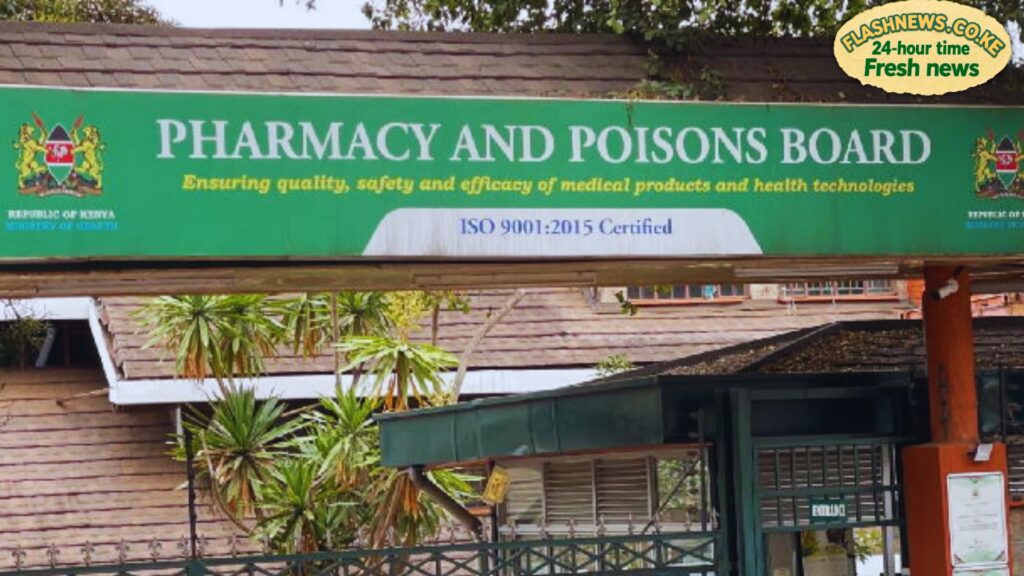
The clarification comes after a study published in a French pharmaceutical journal by researchers Valérie Faillat and Epaphrodite Twahirwa of Mount Kenya University reported that approximately 90 per cent of retail pharmaceutical outlets surveyed in Nairobi stocked at least one unauthorised parallel-imported medicine.
The researchers inspected 2,348 pharmaceutical outlets across the capital between September 2023 and October 2024, identifying 22 different parallel-imported medicines. Most of the products were used to treat chronic illnesses, including diabetes, cardiovascular diseases, urinary disorders and mental health conditions.
While the study highlighted widespread regulatory non-compliance, it did not state that the medicines were counterfeit or medically unsafe. Instead, it raised concerns about packaging and regulatory requirements, noting that many products carried labels written entirely in foreign languages, lacked mandatory Kenyan labelling information and, in some cases, displayed storage instructions designed for colder European climates rather than Kenya’s tropical environment.
The researchers also questioned the rationale behind importing several of the medicines, arguing that many were already off-patent and readily available in Kenya as lower-cost generic alternatives. Nearly half of the imported products, the study found, offered little or no meaningful price advantage over locally available equivalents.
Interestingly, the study found that the prevalence of the non-compliant medicines was highest in affluent Nairobi neighbourhoods such as Kilimani and Parklands, where demand for branded pharmaceutical products tends to be stronger. Lower-income areas recorded comparatively fewer of the products.
However, the Pharmacy and Poisons Board stressed that the existence of parallel-imported medicines should not automatically be interpreted as evidence of illegal or unsafe drugs being sold to Kenyans.
The regulator explained that parallel importation is a lawful mechanism established under the Pharmacy and Poisons (Parallel Imported Medicinal Substances) Rules, 2019, aimed at improving access to medicines while promoting affordability.
According to the Board, the medicines examined in the study had entered the Kenyan market under an approved regulatory framework that existed during the period under review.

The PPB further disclosed that, following reforms to strengthen medicine regulation and improve local access to pharmaceutical products, it has not approved any new applications for parallel-imported medicinal products since October 2025.
“The study reflects the regulatory environment that existed during the review period and should not be interpreted to mean that the medicines assessed were illegal or posed a risk to patient safety,” the Board maintained.
The regulator reaffirmed its commitment to safeguarding public health by ensuring that all medicines available in Kenya meet the required standards of quality, safety and efficacy, while cautioning against reporting that could undermine public confidence in the country’s healthcare system.
Also Read: Three Arrested as DCI Investigates Violent Attack on Linda Mwananchi Convoy in Kisii