


By Calvince Okumu | Aspiring Member of Parliament, Westlands Constituency, 2027
Westlands is one of Nairobi’s most prominent constituencies, known for its thriving businesses, modern buildings, international institutions and affluent residential neighbourhoods. Yet behind this image of prosperity lies another reality: thousands of ordinary residents continue to struggle with insecurity, poverty, unemployment, drug and substance abuse, inadequate sanitation and limited access to essential public services.
From Kangemi to Deep Sea, Gichagi, Githogoro, Kibagare, Ndumbuini and other informal settlements, many families face daily challenges that rarely receive the attention they deserve.
For years, the contrast between wealthy neighbourhoods and struggling informal settlements has raised important questions about equality, representation and inclusive development. While Westlands continues to grow economically, development must also reach the people who clean its offices, operate its businesses, provide transport services and keep the local economy moving.
For Calvince Okumu, an aspiring Member of Parliament for Westlands in the 2027 General Election, addressing these challenges is central to the leadership agenda he says he wants to pursue.
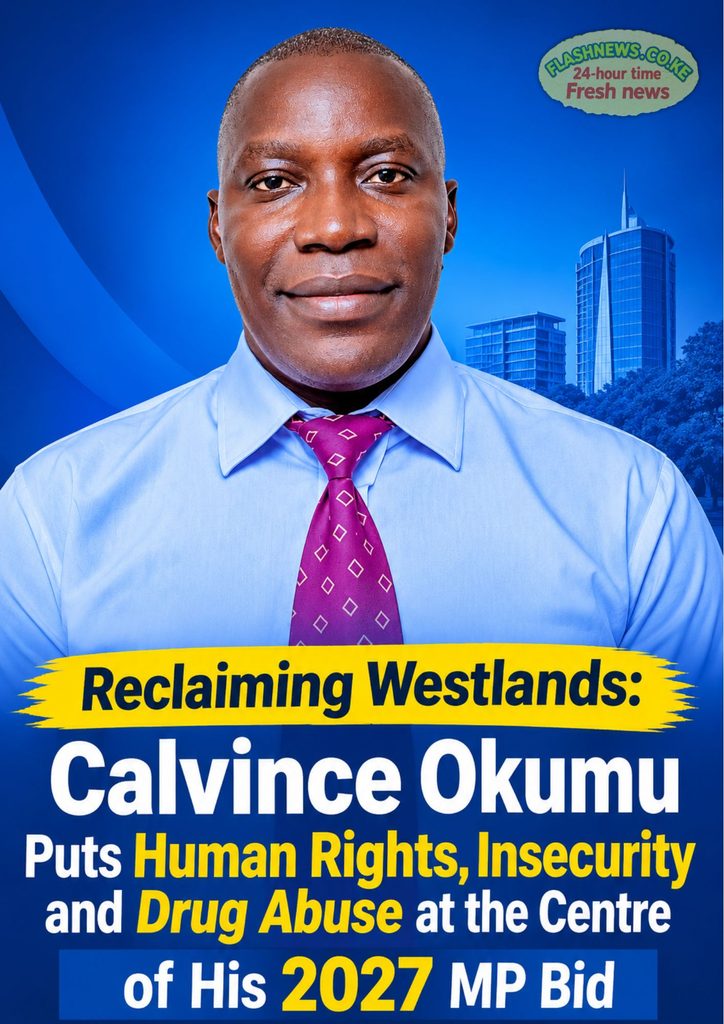
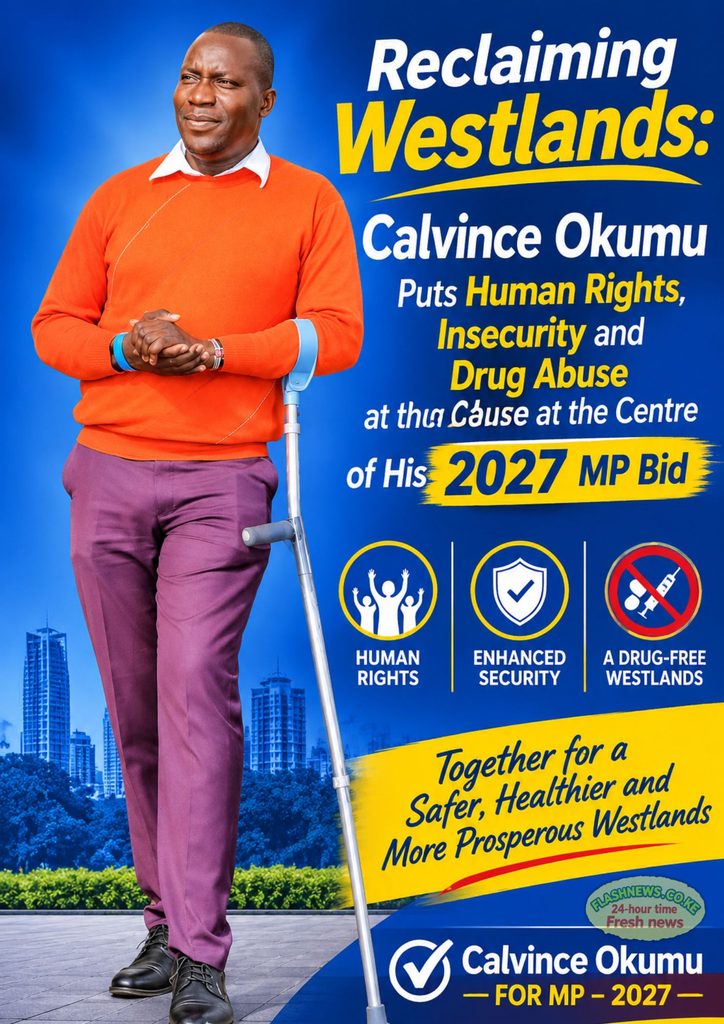
HReclaiming Westlands: Calvince Okumu Puts Human Rights, Insecurity and Drug Abuse at the Centre of His 2027 MP Bid
By Calvince Okumu | Aspiring Member of Parliament, Westlands Constituency, 2027
Westlands is widely recognised as one of Nairobi’s most economically vibrant constituencies, hosting international organisations, major businesses, shopping centres, modern residential developments and some of the city’s wealthiest neighbourhoods. However, beneath this image of prosperity lies a different reality for thousands of residents struggling with insecurity, poverty, unemployment, drug and substance abuse, poor sanitation and inadequate access to essential services.
From Kangemi to Deep Sea, Gichagi, Githogoro, Kibagare and Ndumbuini, many families continue to face challenges that demand urgent attention from leaders and government institutions.
For Calvince Okumu, an aspiring Member of Parliament for Westlands in the 2027 General Election, the constituency’s development cannot be measured by the number of modern buildings, businesses or wealthy residential estates. It must also be measured by the quality of life enjoyed by ordinary residents, particularly those living in informal settlements.
Okumu says his ambition is driven by a desire to champion human rights, strengthen community security, fight drug and substance abuse, empower unemployed young people and ensure that no community is excluded from development.
His proposed agenda seeks to address the challenges affecting ordinary households while promoting a safer, more inclusive and economically empowered Westlands.
Westlands’ Two Realities: The Growing Gap Between Wealth and Poverty
Westlands presents one of the most visible examples of economic inequality within Nairobi.
While parts of the constituency enjoy modern infrastructure, shopping malls, corporate offices and expensive residential developments, other neighbourhoods continue to struggle with overcrowding, inadequate sanitation, unreliable water supplies and poor housing conditions.
Residents of informal settlements often face difficulties accessing basic services despite living within a constituency that contributes significantly to Nairobi’s commercial and economic activities.
For many families, the daily struggle involves finding money for food, rent, school fees, transport and healthcare.
Young people complete their education but remain unemployed. Parents struggle to provide decent living conditions for their children, while informal workers depend on unstable daily earnings.
Okumu believes that these challenges require leadership that understands the experiences of ordinary people.
His position is that Westlands must become a constituency where economic development benefits everyone, regardless of their income, social status or neighbourhood.
1. Insecurity and Phone Snatching: Restoring Safety on Westlands Streets
Insecurity is among the major concerns requiring attention across Westlands.
Phone snatching, street robberies, burglary and other criminal activities can affect residents, business owners, workers and visitors.
For an ordinary worker, losing a mobile phone is not simply losing a communication device. It can mean losing access to mobile banking, business contacts, employment opportunities and important personal information.
The situation is particularly worrying for people who leave home early in the morning or return late in the evening.
Residents of informal settlements also face security concerns involving robbery, violence, gang activity and poorly lit access roads.
Okumu wants to champion a stronger community-based approach to security.
His proposed interventions include:
- Advocating for increased police patrols in identified security hotspots.
- Improving street lighting through cooperation with Nairobi City County and other responsible agencies.
- Strengthening community policing and neighbourhood security networks.
- Encouraging residents to report criminal activities through accessible and safe reporting channels.
- Promoting cooperation between business owners, transport operators, landlords and security agencies.
- Advocating for CCTV surveillance in appropriate public areas.
He also insists that the fight against crime must respect constitutional rights.
Security operations should not become an excuse for unlawful arrests, harassment, discrimination or violence against innocent residents.
Every person deserves to walk through Westlands without fear, whether they live in an expensive apartment or a modest home in an informal settlement.
2. Drug and Substance Abuse: Saving Young People From Addiction
Drug and substance abuse is another challenge that Okumu wants to confront through community intervention and prevention programmes.
In economically disadvantaged communities, young people may become vulnerable to substance misuse due to unemployment, poverty, peer pressure, school dropout and limited access to positive recreational opportunities.
The consequences can be devastating.
Families experience emotional distress, young people lose opportunities, and communities face increased social instability.
Okumu believes that the response must go beyond arresting drug users.
He proposes stronger partnerships with NACADA, healthcare professionals, rehabilitation centres, religious organisations, schools and community-based organisations.
His proposed approach includes:
- Community awareness campaigns targeting young people and parents.
- Supporting access to professional rehabilitation and counselling.
- Promoting school-based drug prevention programmes.
- Encouraging sports, talent development and creative activities.
- Advocating for stronger action against drug trafficking networks.
- Supporting the reintegration of recovering young people into society.
The objective is to ensure that addiction does not become a permanent sentence for young people who still have the potential to rebuild their lives.
Okumu wants Westlands to invest in prevention, treatment and rehabilitation while ensuring that those involved in illegal drug trafficking are held accountable through the law.
3. Human Rights and the Dignity of Informal Settlement Residents
Human rights are central to Okumu’s proposed leadership agenda.

He believes that residents of informal settlements deserve equal treatment, protection and access to public services.
Poverty should never be used as a justification for denying people their constitutional rights.
In communities such as Deep Sea, Kangemi and Githogoro, residents can face difficult questions involving housing, land ownership, evictions, access to public services and economic security.
The rights of vulnerable families must be respected whenever public authorities undertake demolitions, evictions or other interventions affecting homes and livelihoods.
Okumu wants to champion greater legal awareness and stronger community representation.
His priorities include:
- Promoting awareness of constitutional rights.
- Supporting residents facing challenges accessing justice.
- Advocating for fair and lawful treatment during evictions and demolitions.
- Encouraging public participation in decisions affecting local communities.
- Supporting vulnerable households, women, children and persons with disabilities.
- Demanding accountability from institutions responsible for protecting citizens.
He believes that a resident should not need political connections or financial influence to have their concerns addressed.
For Okumu, human dignity must remain a fundamental principle of leadership.
4. Youth Unemployment: Creating Opportunities Beyond Political Promises
Youth unemployment remains a major concern for many households.
Westlands has a strong commercial environment, with opportunities in hospitality, retail, construction, technology, transport, professional services and the creative economy.
However, many young people living in surrounding informal settlements struggle to access these opportunities.
Some lack professional qualifications, practical skills, business capital or connections to potential employers.
Okumu wants to promote partnerships between local businesses, vocational training institutions, government agencies and youth organisations.
His proposed interventions include:
- Supporting vocational and technical skills training.
- Promoting digital skills and online employment opportunities.
- Connecting young people with available employment opportunities.
- Encouraging entrepreneurship and small-business development.
- Advocating for transparent access to youth empowerment programmes.
- Supporting mentorship and career development initiatives.
Having interacted with ordinary workers and the boda boda transport sector, Okumu says he understands the economic difficulties facing people who depend on daily earnings.
He wants informal workers to be recognised as important contributors to the local economy.
5. Poor Sanitation and Access to Clean Water
Sanitation remains another important concern in densely populated neighbourhoods.
Some informal settlement residents struggle with inadequate drainage, waste collection, clean water and access to decent sanitation facilities.
Poor sanitation can expose families to preventable illnesses, particularly children and elderly residents.
During heavy rainfall, inadequate drainage can also increase the risk of flooding and damage to homes and property.
Okumu proposes working with Nairobi City County, water and sanitation agencies and community organisations to advocate for improved services.
His priorities include better waste management, improved drainage, access to clean water and community participation in environmental programmes.
He believes that residents should be actively involved in identifying the infrastructure projects that matter most to their neighbourhoods.
6. Persons With Disabilities and Vulnerable Families Must Be Included
Inclusive development must also address the needs of persons living with disabilities.
Many face difficulties accessing public facilities, employment opportunities, education and essential services.
Okumu wants their concerns included in local development discussions.
He proposes advocating for accessible public infrastructure, improved access to information, equal opportunities and stronger representation of vulnerable groups.
He also wants support programmes to reach families experiencing extreme economic hardship.
His vision is a Westlands where no resident is treated as less important because of disability, poverty or social background.
7. A Personal Journey Behind His Leadership Ambition
Okumu says his commitment to ordinary residents comes from personal experiences with hardship.
He describes growing up in a humble background where education was important but sometimes difficult to afford.
He recalls planting onions and sugarcane to help raise money for school fees.
His mother taught him the importance of prayer, faith, compassion and sharing whatever little was available.
He also remembers the devastating experience of losing his family’s home to fire in Deep Sea.
That experience, he says, gave him a deeper understanding of the uncertainty faced by families living in vulnerable conditions.
His involvement in community leadership and the boda boda transport sector has further exposed him to the challenges facing young people, informal workers and struggling households.
He believes leadership should be about understanding people’s problems and finding practical ways to address them.
8. How Okumu Wants to Turn His Agenda Into Action
Okumu acknowledges that addressing Westlands’ challenges requires more than political statements.
As an aspiring MP, he would need to work within the constitutional responsibilities of Parliament and cooperate with other government institutions.
His proposed approach involves parliamentary representation, legislation, oversight, constituency development funding and partnerships with relevant agencies.
He wants to advocate for stronger government attention to security, education, youth empowerment and the welfare of vulnerable communities.
He also proposes regular engagement with residents through public meetings, community forums and consultations across the constituency’s five wards.
These include Kangemi, Karura, Kitisuru, Mountain View and Parklands/Highridge.
His emphasis is on accountability, transparency and measurable development priorities.
Security, for example, requires cooperation with national government security agencies, while sanitation, water and many local services require engagement with Nairobi City County.
The role of an MP is therefore to represent residents, legislate, oversee government programmes and ensure that public resources are used responsibly.
9. Reclaiming Westlands: A Call for Inclusive Leadership
The future of Westlands should not be determined exclusively by the interests of wealthy neighbourhoods or influential individuals.
It must also reflect the aspirations of workers, small-scale traders, young people, women, persons with disabilities and families living in informal settlements.
Calvince Okumu says his 2027 ambition is built around this understanding.
He wants a constituency where security is treated as a right, young people have opportunities beyond unemployment, drug dependency receives a humane response and vulnerable families can access justice.
His challenge will be to translate these priorities into practical, properly funded and accountable programmes.
As the 2027 General Election approaches, residents will have an opportunity to examine the proposals of those seeking to represent them.
For Okumu, the message is straightforward: Westlands deserves development that reaches every household.
Reclaiming Westlands means restoring dignity, strengthening security, protecting human rights and creating opportunities for everyone.
How to Contact Calvince Okumu
Residents, community leaders, youth groups, business owners and other stakeholders who wish to engage with Calvince Okumu, share their concerns or learn more about his proposed 2027 agenda can reach him through his social media platforms.
Facebook: https://www.facebook.com/share/18bmZc1shA/
X (formerly Twitter): https://x.com/calvince_okumu
X handle: @calvince_okumu
Residents are encouraged to follow his platforms, engage with his public updates and share the issues affecting their communities.
Calvince Okumu – Reclaiming Westlands through security, human rights, dignity and inclusive development.