

SHA Issues Stark Warning to Hospitals Over Emergency Treatment as Facilities Face Contract Loss





Kenya’s Social Health Authority (SHA) has issued a stern warning to hospitals and healthcare providers across the country, ordering them not to deny or delay emergency treatment to patients because they cannot immediately pay.
The authority said healthcare facilities that turn away patients, demand deposits or delay lifesaving treatment on financial grounds could face serious contractual consequences, including removal from the SHA network.
In a notice issued on Friday, August 1, SHA reminded all contracted healthcare providers that emergency medical treatment is a constitutional right and must be provided regardless of a patient’s financial circumstances.
The authority made clear that inability to pay, lack of benefit confirmation or failure to produce a deposit or financial guarantee cannot be used as a reason to withhold emergency care.

“No patient requiring emergency medical treatment shall be denied, delayed, referred or transferred solely because of inability to pay, lack of benefit confirmation, or failure to provide a deposit, advance payment or financial guarantee,” SHA stated.
The directive places hospitals and their emergency departments under renewed scrutiny as the government continues implementing Kenya’s new health insurance framework.
Hospitals warned over emergency care
SHA said eligible emergency treatment provided during the first 24 hours will be financed through the Emergency, Critical and Chronic Illness Fund (ECCIF).
After the initial 24-hour period, eligible services will be handled through the Social Health Insurance Fund (SHIF) or another applicable payment arrangement.
The authority also addressed situations where a hospital may not have the capacity to continue treating a patient.

Such facilities must first stabilise the patient before arranging a transfer to an appropriate contracted healthcare provider, in accordance with Ministry of Health referral guidelines.
SHA warned that hospitals cannot simply transfer patients because of payment disputes while they remain in an unstable or life-threatening condition.
Healthcare providers found to have denied, delayed or withheld emergency treatment for financial reasons could face de-empanelment and other enforcement measures.
In serious cases, SHA said this could include termination of a facility’s contract with the authority.
The warning has been directed at chief executive officers, medical superintendents, facility administrators and emergency department personnel.
They have been instructed to ensure the directive is immediately communicated to clinical, admissions and finance teams.
Separate warning over unpaid SHA contributions
The emergency-care directive comes alongside a separate warning to Kenyans in the informal sector over delayed health insurance contributions.
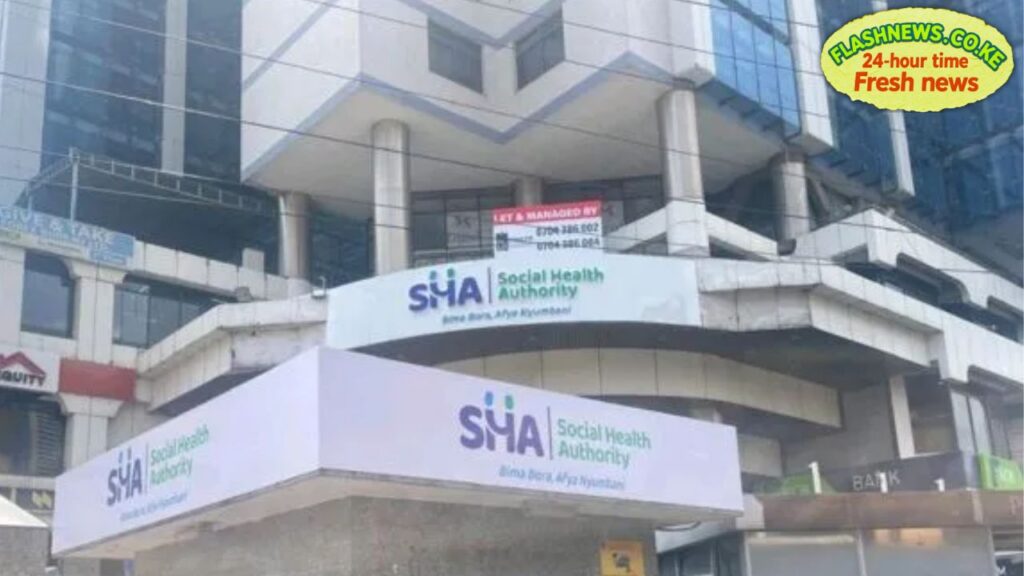
SHA has warned that members who fail to make their mandatory contributions on time will face a financial penalty equivalent to 2 per cent of the outstanding amount for every period the balance remains unpaid, in accordance with Section 27(6) of the Social Health Insurance Act, 2023.
The warning affects non-salaried households and workers who contribute through the SHA system, including farmers, traders, boda boda riders, domestic workers, casual labourers and other self-employed Kenyans.
Eligible members can pay their annual contributions in full or use the Lipa Pole Pole instalment option after registration and means testing.
However, SHA warned that unpaid contributions can continue accumulating penalties.
The authority further stated that members with outstanding contributions and accrued penalties will not regain access to healthcare services until the amounts owed have been fully settled.
The contrasting directives highlight the authority’s position that while hospitals must provide emergency care without demanding payment upfront, members are also expected to meet their statutory contribution obligations.
For patients arriving at healthcare facilities in critical condition, SHA’s latest order seeks to remove financial barriers at the point when immediate medical intervention could mean the difference between life and death.
Also Read: Obado’s Son Hospitalised After Serious Road Accident