

Explained: What the High Court Election Ruling Means for President Ruto’s Presidency





A recent High Court ruling in Malindi has triggered fresh debate over when Kenya’s next General Election should be held — and whether the decision could affect President William Ruto’s tenure.
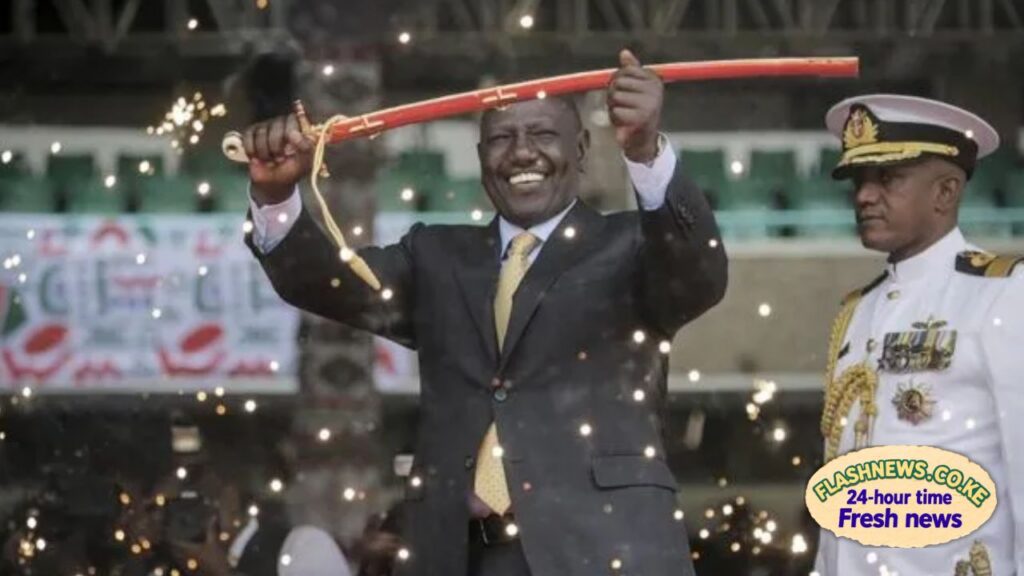
The ruling has raised questions among Kenyans about whether the President could be required to leave office before the next presidential election or whether he remains in office until a successor is elected and sworn in.
However, the ruling does not automatically end President Ruto’s tenure or create an immediate vacancy in the presidency.
The High Court suspended the implementation of its declaration, meaning the decision does not, at this stage, trigger an immediate election or require a transfer of presidential power.
The constitutional dispute is therefore more complicated than simply asking whether an election date has passed.
It centres on how Kenya’s Constitution defines the presidential term, when the office of President becomes vacant and the circumstances under which a successor assumes power.
What does the Constitution say about presidential elections?
Article 136(2)(a) of the Constitution provides that a presidential election is held on the same day as the General Election of Members of Parliament, on the second Tuesday in August in every fifth year.
That provision formed a central part of the legal arguments surrounding the Malindi case.
The court’s interpretation has consequently generated debate over whether the constitutional timetable for the 2027 election has already been affected by the ruling.
However, the Constitution contains another important provision governing the length of a President’s tenure.

When does a President’s term actually end?
Article 142 provides that the President’s term begins when the President is sworn into office.
Crucially, it states that the term ends when the person next elected President under Article 136(2)(a) is sworn into office.
This distinction is significant.
It means that the Constitution does not simply provide for the sitting President to leave office because the date designated for a presidential election has passed.
Instead, the constitutional end of the President’s term is linked to the swearing-in of the person elected as the next President.
President Ruto was sworn into office on September 13, 2022, following the 2022 presidential election.
Unless another constitutional process intervenes, his tenure therefore continues until the next elected President is sworn in.
Does the Malindi ruling create a presidential vacancy?
The ruling, by itself, does not create a vacancy in the presidency.
Article 146 sets out the circumstances in which the office of President becomes vacant. These include the death or resignation of the President, as well as removal from office through the constitutional procedures provided for such a situation.
A court declaration concerning the timing of an election is therefore not, on its own, one of the circumstances that automatically removes a sitting President from office.
President Ruto consequently remains the sitting Head of State while the court order remains suspended and the wider legal process continues.
Would Deputy President Kindiki automatically take over?
Another question raised by the controversy is whether Deputy President Kithure Kindiki would immediately assume the presidency if the court determines that an election should have taken place earlier.
The answer is no.
The Deputy President does not automatically become President merely because a court has issued a ruling concerning the timing of an election.
Under Article 146, succession becomes relevant when the office of President actually becomes vacant in accordance with the Constitution.
If such a vacancy occurred, the Constitution provides mechanisms for the Deputy President to assume the office of President for the remainder of the term, subject to the applicable constitutional requirements.
That situation has not been created simply by the Malindi ruling.
What about restrictions on presidential powers?
Article 134 also becomes important during the period surrounding a presidential election.
The provision places specific restrictions on the exercise of presidential powers from the date of the first vote in a presidential election until the newly elected President assumes office.
Those restrictions cover certain appointments and other specified presidential decisions.
However, Article 134 does not mean that a President automatically loses executive authority merely because a court has ruled that an election was constitutionally due.
The restrictions become operative within the circumstances and timeframe specified by the Constitution once the presidential election process reaches the relevant stage.
What happens next?
The Malindi ruling could still have significant implications depending on what happens during the subsequent legal proceedings.
The suspension of the order means that the ruling does not immediately alter the country’s electoral timetable or create a constitutional vacancy in State House.
The dispute could, however, continue through further litigation, including possible appeals or applications concerning the implementation of the judgment.
For now, the constitutional framework governing President Ruto’s tenure remains distinct from the question of when the General Election should be conducted.
The next General Election is currently scheduled for August 10, 2027, in line with the timetable announced by the Independent Electoral and Boundaries Commission (IEBC).
Unless a competent court ultimately makes an enforceable order changing that position, or another constitutional process intervenes, there is no immediate constitutional basis arising from the Malindi ruling alone for President Ruto to vacate State House.

The bottom line
The High Court decision has reignited a major constitutional debate, but it does not mean President Ruto is automatically required to leave office this year.
The key constitutional distinction is between the date on which an election is supposed to be held and the point at which the incumbent President’s constitutional term actually ends.
Under Article 142, the presidential term ends when the person elected as the next President is sworn into office.
That means the legal battle over the election timetable and the question of presidential succession are related — but they are not the same constitutional issue.
Also Read: Mau Mau Veterans Demand Action From Ruto Over Rising Insecurity