






CBK Forecasts Continued Stability for Kenyan Shilling as Dollar Holds at KSh129.41
The Central Bank of Kenya (CBK) has expressed confidence that the Kenyan Shilling will remain stable against the U.S. Dollar in the coming months, pointing to improved liquidity conditions in the banking sector and the successful alignment of key monetary policy indicators.
Speaking during the release of the latest Monetary Policy Committee (MPC) decisions, CBK Governor Kamau Thugge said the Kenya Shilling Overnight Interbank Average (KESONIA) has remained firmly aligned with the Central Bank Rate (CBR), a development the regulator views as critical in supporting exchange rate stability.
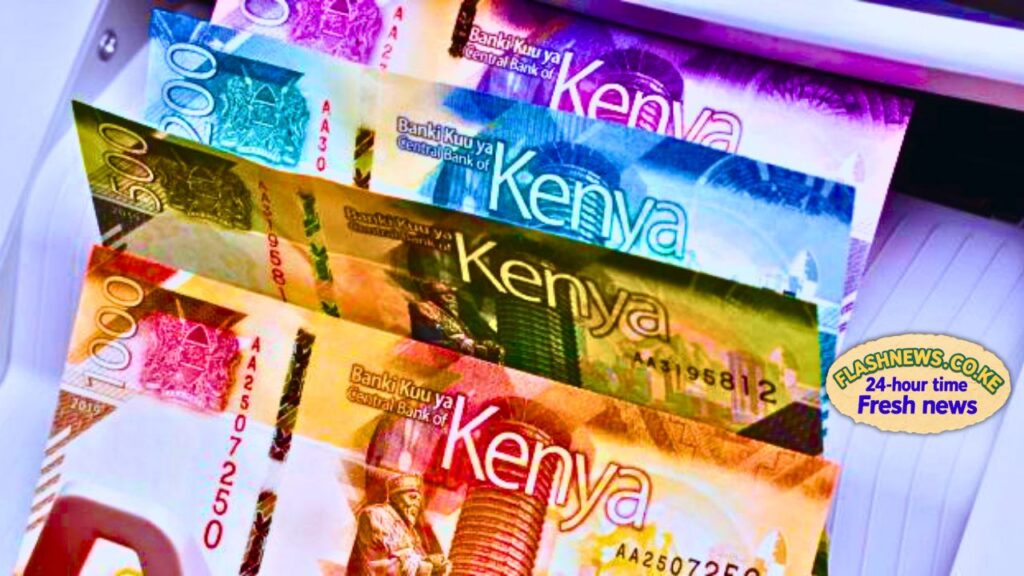
The Kenyan currency is currently trading at approximately KSh129.41 against the U.S. Dollar, a level that CBK says reflects growing investor confidence in Kenya’s monetary framework despite mounting global economic uncertainties.
Governor Thugge explained that KESONIA, which measures the average overnight lending rate between commercial banks, has remained closely aligned with the benchmark lending rate of 8.75 per cent.
“This framework has continued to support the stability of the Kenya Shilling overnight interbank average, and this has now been aligned very closely to the CBR,” Thugge said.
He added: “This alignment should enhance monetary policy transmission, and as you can see, even in the last few months, KESONIA is actually very close to the CBR. As of June 2026, the CBR was at 8.75 per cent and the interbank rate, the KESONIA, was also at the same level of 8.75 per cent.”
Why the Alignment Matters
Economists view the close relationship between KESONIA and the CBR as a key indicator of financial stability.
When commercial banks can borrow from one another at rates that closely mirror the Central Bank’s target rate, it signals that liquidity within the financial system remains adequate and that financial institutions are not facing funding pressures.
Such stability often reassures investors and reduces the likelihood of sudden demand for foreign currencies, particularly the U.S. Dollar, which can place downward pressure on the Kenyan Shilling.
Historically, liquidity shortages within the banking system have triggered heightened demand for dollars by businesses and investors seeking to hedge against uncertainty, resulting in sharp currency depreciation.

CBK Retains Lending Rate
The optimistic outlook for the Shilling comes days after the Monetary Policy Committee resolved to retain the benchmark lending rate at 8.75 per cent.
CBK cited rising global inflationary pressures, particularly those linked to the ongoing conflict in the Middle East, as one of the factors influencing the decision.
The regulator noted that maintaining the current rate would help keep inflation expectations anchored while safeguarding the gains made in stabilising prices and supporting economic growth.
Economic Growth Forecast Revised Downward
Despite the positive outlook for the currency, CBK lowered Kenya’s economic growth forecast for 2026 to 4.9 per cent from an earlier projection of 5.3 per cent.
The downgrade reflects growing concerns over external risks, including geopolitical tensions, rising energy prices, and weaker global economic activity.
At the same time, the bank warned that inflationary pressures are likely to increase in the coming months.
According to CBK data, overall inflation rose to 6.7 per cent in May from 5.6 per cent in April, driven largely by higher fuel and cooking gas prices, which have gradually filtered through to households and businesses.

The Central Bank, however, maintains that inflation will remain manageable within its target range, while the stability of the Kenyan Shilling is expected to continue providing a crucial buffer against imported inflation.
Also Read: IG Kanja Appoints Johana Kiplangat as New GSU Commandant in Leadership Changes