


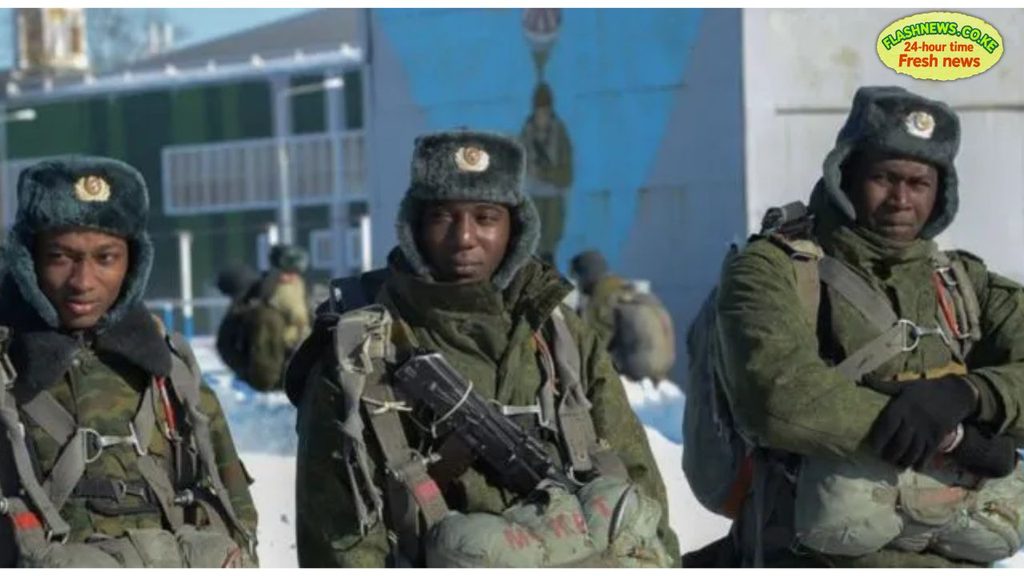
A Kenyan man who travelled to Russia believing he had secured a well-paying civilian job has recounted how he allegedly ended up fighting on the frontline of the Russia-Ukraine war, where he says several of his fellow recruits were killed.

Vincent Odhiambo says he was promised employment as a shopkeeper, with a monthly salary of between 240,000 and 320,000 Russian roubles. However, according to his account, the opportunity turned into a frightening experience involving confiscated passports, unfamiliar military contracts, limited training and deployment to an active combat zone.
His account highlights the dangers Kenyan jobseekers may face when pursuing overseas employment opportunities that have not been properly verified.
How the Kenyan Was Recruited to Russia
Odhiambo reportedly travelled to Russia on 13 July 2025 after being offered what he believed was a civilian job.
He says the proposed position was in a shop, with an attractive salary that appeared capable of improving his financial circumstances. The offer reportedly gave him confidence that he was travelling abroad for legitimate employment rather than military service.
According to his recollection, he travelled alongside five other Kenyans who had also been recruited through the same arrangement.
However, the situation allegedly changed after they arrived in Russia.
Odhiambo claims that their passports were taken away, leaving them with limited control over their movements and ability to leave the country. He further alleges that they were presented with documents written in Russian and asked to sign them without receiving a proper translation or explanation.
He says he later discovered that the documents were connected to military service.
Alleged Pressure to Sign Military Contracts
One of the most troubling aspects of Odhiambo’s account concerns the circumstances under which he says he was made to accept military obligations.

He alleges that the recruits were not given a meaningful opportunity to understand the documents they were signing. Language barriers reportedly made it difficult for them to establish the full terms of the agreements.
Odhiambo further claims that he was threatened with a repayment demand of approximately 3.4 million Russian roubles if he refused to continue.
The alleged financial penalty placed him in an extremely difficult position, particularly because he had travelled expecting civilian employment and says he had limited freedom to make decisions.
His account suggests that what initially appeared to be a promising overseas job opportunity had become a situation in which refusing military service carried serious consequences.
From Civilian Jobseeker to Military Recruit
Odhiambo says he and other recruits were taken through military preparation before being deployed.

However, he claims the training period lasted approximately one week, which he considered insufficient preparation for the dangers of frontline combat.
The alleged lack of adequate preparation became particularly frightening when he was reportedly assigned to a combat area near Vovchansk, in Ukraine’s Kharkiv region.
For someone who says he had travelled to Russia to work in a shop, the transition to military life was a dramatic and unexpected change.
He describes being exposed to the realities of a war zone, where gunfire, explosions and the threat of death became part of daily life.
Kenyan Says Fellow Recruits Were Killed
In his account, Odhiambo recalls the terrifying experience of being sent into a dangerous frontline area.

He says the group faced a deadly crossing during which several people were killed. The experience reportedly left him fearing that he would not survive.
The headline of his account, ‘I Was the Only One Left’, reflects his description of being left alone after the deadly ordeal.
His recollections provide a disturbing picture of the risks faced by foreign recruits who find themselves in active combat despite having initially travelled abroad for civilian employment.
The account also raises concerns about the information given to Kenyan jobseekers before they accept overseas opportunities, particularly when the actual nature of the work may be different from what was advertised.
Injuries, Escape and Hospital Treatment
Odhiambo says he sustained injuries during the ordeal and later managed to escape the dangerous situation.
He reportedly received medical attention at a hospital in Moscow after reaching a safer location.
However, his problems did not end with his escape from the frontline. He also claims that money in his bank account was emptied, adding to the financial difficulties he was already facing.
He says he contacted the Kenyan Embassy for assistance as he sought help following the traumatic experience.
According to the account, he still requires further medical attention, including surgery.
His reported experience demonstrates that escaping a conflict zone does not necessarily mean that a victim has recovered physically, financially or emotionally. Injuries, medical expenses and the difficulty of returning home can create additional challenges.
Kenya Raises Concern Over Citizens Recruited Into the Russia-Ukraine War

Odhiambo’s account comes amid wider concerns about Kenyans reportedly being recruited into the Russia-Ukraine conflict.
The material accompanying his account refers to concerns from Kenya’s National Intelligence Service that more than 1,000 Kenyans may have been drawn into the conflict.
The reported figure underscores the need for greater public awareness about overseas recruitment, particularly where jobseekers are promised attractive salaries without clear information about the employer, duties, contracts and working conditions.
For many Kenyans facing unemployment and financial pressure, international job opportunities can appear attractive. However, recruitment offers involving foreign travel require careful verification before any money is paid or travel arrangements are made.
Warning Signs Kenyans Should Watch for When Seeking Overseas Jobs
Odhiambo’s reported experience highlights several warning signs that jobseekers should take seriously when considering employment abroad.
1. Unclear job descriptions
Applicants should establish exactly what their duties will involve. A recruiter should provide a clear written description of the position rather than relying on vague promises of employment.
2. Unverified recruitment agencies
Jobseekers should confirm whether an agency is properly licensed and whether the foreign employer genuinely exists. Independent verification is essential before accepting an offer.
3. Contracts written in unfamiliar languages
Applicants should never sign documents they cannot understand. Any contract written in a foreign language should be translated and explained by a qualified, independent person before signing.
4. Pressure to surrender passports
A passport is an important personal travel document. Jobseekers should be cautious if a recruiter or employer demands to retain their passport without a clear and lawful reason.
5. Unexpected changes in employment terms
If the work offered changes after arrival, applicants should seek independent legal and consular assistance rather than accepting new obligations under pressure.
6. Threats and financial penalties
Unusually large repayment demands, threats or restrictions on movement should be treated as serious warning signs. Jobseekers should seek help from the relevant authorities and their country’s diplomatic mission.
What Kenyans Should Do Before Travelling Abroad for Work
Before accepting an overseas job, Kenyans should independently verify the recruitment agency, employer, employment contract and immigration arrangements.
They should also share their travel plans and employer details with trusted relatives and retain copies of important documents, including passports, visas, contracts and recruitment communications.
Anyone who suspects that they are being deceived, threatened, trafficked or forced into work should seek assistance from Kenyan authorities and the nearest Kenyan diplomatic mission.
Where possible, jobseekers should avoid travelling through informal arrangements that cannot be independently verified.
A Disturbing Account That Raises Questions About Overseas Recruitment
Vincent Odhiambo’s account offers a sobering reminder of how an overseas employment opportunity can allegedly turn into a life-threatening experience.
He says he left Kenya expecting to earn a living through civilian work but ended up facing military deployment, injuries and the loss of fellow recruits.
His recollections also raise important questions about the methods used to recruit foreign nationals, the information provided to applicants and the safeguards available to Kenyans seeking employment outside the country.
As more Kenyans explore opportunities abroad, verifying job offers before travelling remains essential. A high salary should never replace proper checks on the employer, contract and nature of the work.
For Odhiambo, what began as a search for a better livelihood reportedly became a struggle to survive.
Editorial note: This article is based on the account supplied about Vincent Odhiambo. Allegations concerning recruitment, confiscation of passports, military contracts, threats, deaths and financial losses should remain attributed to him unless independently verified. Confirm the original interview and relevant official statements before publication.