

KNCHR Unveils Sweeping Protest Law Proposal That Could Transform Demonstrations and Police Powers in Kenya





The Kenya National Commission on Human Rights (KNCHR) has unveiled a far-reaching legislative proposal that could fundamentally reshape how demonstrations, picketing, and public assemblies are conducted and policed across the country.

The proposed Facilitation of Assembly and Demonstrations Bill seeks to provide Kenya with its first comprehensive legal framework dedicated to implementing Article 37 of the Constitution, which guarantees every person the right to assemble, demonstrate, picket, and present petitions peacefully and unarmed.
The draft legislation was jointly developed by the KNCHR, the Office of the Attorney General (OAG), the Independent Policing Oversight Authority (IPOA), the Law Society of Kenya (LSK), and other stakeholders following a landmark High Court ruling that directed the government to establish clear legal and operational rules governing public protests and police conduct.
Court Ordered Government to Develop Protest Rules
The proposal stems from Constitutional Petition E015 of 2024, in which the High Court sitting in Kisumu, on March 19, 2026, ordered the government to develop and publish comprehensive regulations governing public assemblies, demonstrations, picketing, and the use of force by law enforcement officers within 90 days.
In a statement issued on Tuesday, July 21, KNCHR confirmed that it had informed the court that the directive had been complied with through the development of the draft legislation, which will now undergo nationwide public participation before being submitted to Parliament.
“In furtherance of the Court’s judgment and in fulfilment of its Constitutional mandate, the Kenya National Commission on Human Rights (KNCHR), in collaboration with the Office of the Attorney General (OAG), the Independent Policing Oversight Authority (IPOA), the Law Society of Kenya (LSK), and other key stakeholders, have developed a legislative proposal on Facilitation of Assembly and Demonstrations,” the commission said.
KNCHR added that the proposed law is intended to create a clear, rights-based legal framework governing the exercise and facilitation of constitutional freedoms.
“The proposal seeks to give full legislative effect to Article 37 of the Constitution by establishing a clear, rights-based framework for the exercise and facilitation of the rights to assemble, demonstrate, picket, and present petitions peacefully and unarmed.”
New Rules on Protest Notifications
One of the most significant proposals in the draft Bill introduces formal procedures for notifying authorities before holding demonstrations.
Under the proposed law, protest organisers would be required to submit written notification to the regulating officer either physically or through an official electronic address.
Where neither option is available, the notice may be affixed at the regulating officer’s official premises or in a nearby public location.
However, the legislation also makes it clear that demonstrations held without prior notification would not automatically lose constitutional protection.
Instead, regulating officers would still be legally required to protect demonstrators, journalists, healthcare workers, human rights observers, monitors, and both public and private property during such protests.
Police Powers Clearly Defined
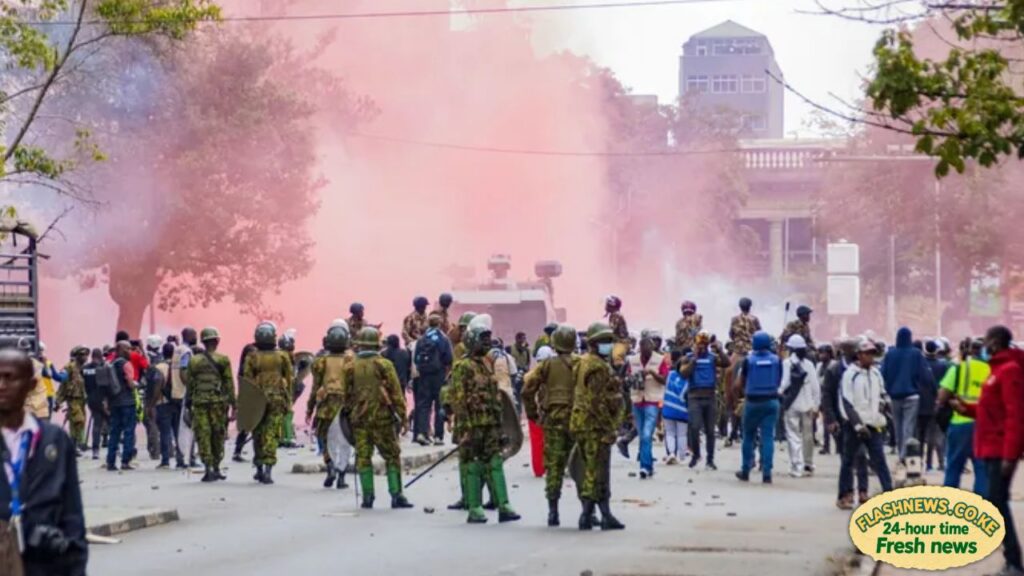
The draft law also seeks to establish strict legal standards governing when authorities may prohibit public demonstrations.
According to the proposal, a regulating officer may only ban an assembly where there exists credible, specific, and imminent risk of death, serious violence, serious injury, or extensive destruction of property.
The legislation further introduces rules governing the deployment of undercover police officers during demonstrations.
It states that plain-clothed officers may only be deployed for intelligence gathering and monitoring suspected criminals believed to have infiltrated or intend to infiltrate lawful assemblies.
The proposal comes against the backdrop of heightened national debate over the policing of protests following repeated confrontations between demonstrators and law enforcement officers in recent years.
Police have frequently accused protesters of violating public order laws, damaging property, and engaging in violence, while human rights organisations have consistently raised concerns over allegations of excessive force, unlawful arrests, and the misuse of police powers during demonstrations.
Public Invited to Shape Final Law
KNCHR has now invited Kenyans and stakeholders across the country to submit their views on the proposed legislation through SMS, email, WhatsApp, and a toll-free telephone line as part of the mandatory public participation process.
If approved by Parliament, the legislation would establish Kenya’s first dedicated statutory framework governing demonstrations and public assemblies, potentially redefining the balance between constitutional freedoms, public order, and police accountability.