






‘One Term’ Slogan Puts Samidoh’s Police Career in Jeopardy
Samuel Muchoki, popularly known by his stage name Samidoh, is under disciplinary investigation by the National Police Service (NPS) following a viral video of his musical performance that appeared to contain politically sensitive content. The incident, which occurred on Friday, May 16, has resulted in the artist’s transfer to the Anti-Stock Theft Unit (ASTU) in Gilgil and could potentially lead to further sanctions, including dismissal from the police force.
Samuel Muchoki, a celebrated Mugithi artist and a serving officer in Kenya’s Administration Police, finds himself at the centre of controversy after a video surfaced online showing him leading a crowd in a chant interpreted as a political slogan. The footage, taken during a live musical performance at an undisclosed entertainment venue, captures Samidoh encouraging a crowd of revellers to chant “Wantam” — a colloquial distortion of “one term,” widely associated with opposition sentiments aimed at unseating President William Ruto in the upcoming 2027 elections.
The slogan “Wantam” has gained traction among President Ruto’s political adversaries, particularly those aligned with former Deputy President Rigathi Gachagua. Mr Gachagua was impeached by Parliament in October 2024 following a public fallout with President Ruto. The slogan has since become emblematic of the opposition’s campaign narrative.
The viral nature of the video triggered immediate attention from senior police officials. By Monday, May 18, the matter had reached the top echelons of the NPS headquartered at Jogoo House. According to confidential sources within the service, senior commanders convened and unanimously agreed to initiate disciplinary action. One of the immediate steps taken was to reassign Samidoh from the Central Region police headquarters to the ASTU in Gilgil.
A senior police official, who spoke to the Nation on condition of anonymity, confirmed that the transfer was punitive in nature. The officer emphasized that Samidoh’s participation in what was perceived as a politically charged gathering contravenes the Police Service Standing Orders, which strictly prohibit officers from engaging in political activity or displaying partisan behaviour.
“Police officers are expected to remain neutral and apolitical in the discharge of their duties,” the officer stated. “What Mr Samidoh did was considered a breach of these fundamental expectations.”
In addition to the transfer, Samidoh now faces internal disciplinary proceedings. Depending on the outcome of these investigations, consequences could range from formal warnings and fines to demotion or even dismissal from service. These outcomes will be determined based on the findings of the inquiry and subsequently reviewed by the Deputy Inspector General (DIG) of the Administration Police before being forwarded to the Inspector General (IG) of Police, Douglas Kanja, for ratification. If the IG approves the proposed disciplinary measures, they will be communicated to the National Police Service Commission for implementation.
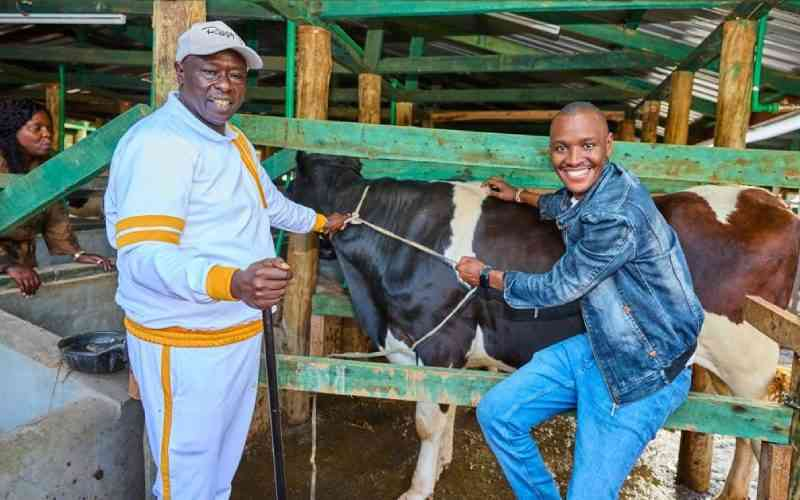
When contacted for a statement regarding the disciplinary proceedings, Mr Samidoh declined to comment, citing his inability to speak at the moment. “I’m in a place I can’t speak now. We will talk later,” he said in a brief phone call with the Nation. Further attempts to reach him were unsuccessful.
Efforts to obtain a comment from Deputy Inspector General Gilbert Masengeli, who directly oversees the ASTU and is Samidoh’s superior officer, also proved futile, as calls and text messages went unanswered. Similarly, Inspector General Kanja did not respond to inquiries made by the Nation regarding the matter.
The incident has reignited debates over the role of uniformed officers in public and political life, especially when they maintain public profiles in parallel careers. Samidoh, whose music career has earned him widespread popularity, has long walked a delicate line between his artistic persona and his duties as a police officer.
Despite the unfolding disciplinary process, Samidoh was seen in public again on Friday, May 23, when he joined over a dozen musicians from the Mt Kenya region in a meeting with Deputy President Kithure Kindiki at his official residence in Karen. The gathering, attended by both secular and gospel artists, was framed as an initiative to explore greater government support for the creative industry.
Prominent attendees included Karangu Muraya, Ben Githae, Jose Gatutura, DJ Fatxo, Sammy Irungu, Martin Wajanet, and Ngaruiya Junior. According to official sources, the meeting focused on dismantling exploitative cartels within the creative sector and securing better compensation and structural support for artists.
However, the musicians’ engagement with the Deputy President sparked a backlash from political factions allied with former Deputy President Gachagua. Speaking on Sunday, May 25, Mr Gachagua condemned the artists, accusing them of betraying the Mt Kenya community and aligning themselves with political forces perceived to be hostile to his interests.
“Those musicians have sold out the community. They should not be welcomed back,” Gachagua declared during a public address. He further called on entertainment venues to blacklist the musicians and urged fans to boycott their music and social media platforms.
Defending the artists, Deputy President Kindiki refuted the allegations, stating that the meeting was solely focused on addressing long-standing grievances in the creative industry. “Musicians and others in the creative space are seeking government intervention to ensure exploitative cartels are removed and their talent is more rewarding,” he explained.
Dennis Itumbi, who serves as Head of Presidential Special Projects and Creative Economy Coordinator, also criticized Mr Gachagua’s remarks. In a strongly worded statement, Itumbi said, “Kenyan musicians are not your personal choir, Mr Gachagua. You do not own their voices, their choices, or their convictions.”
He further noted that under the Ruto administration, the creative sector now enjoys unprecedented support through a dedicated state department and structured policies aimed at elevating artists’ contributions to national development. “For the first time in our nation’s history, the creative sector has a dedicated state department, structured policy backing, and government programmes designed to secure artists’ rights, amplify their earnings, and anchor the creative economy in national development,” said Itumbi.
As disciplinary proceedings against Samidoh progress, the case highlights the tension between personal expression and professional duty for civil servants, particularly those in disciplined forces. The outcome of this investigation could set a precedent for how similar cases are handled in the future, especially as public figures increasingly straddle the line between entertainment and public service. Meanwhile, the broader debate over the intersection of politics and the creative industry continues to unfold, with implications for policy, freedom of expression, and the evolving role of art in political discourse.
Also Read: DCI Arrests Subaru Owner Linked to Alleged Abduction of Juja MP Koimburi
‘One Term’ Slogan Puts Samidoh’s Police Career in Jeopardy