






U.S. Authorises Experimental Ebola Treatment as Quarantine Facility Plan Sparks Resistance in Kenya
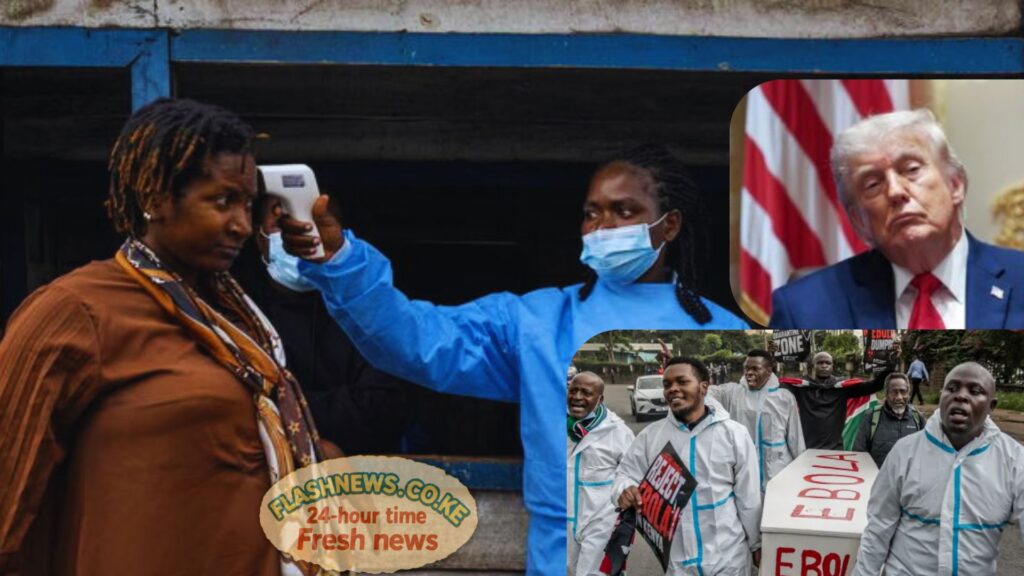
The United States government has authorised the emergency use of an experimental Ebola antibody treatment for people deemed to have had high-risk exposure to the deadly virus, as controversy continues to grow over plans linked to a proposed quarantine facility in Kenya.
The U.S. Department of Health and Human Services (HHS) announced that eligible Americans exposed to Ebola during the ongoing outbreak in Central Africa will be allowed access to the investigational therapy MBP-134 under emergency protocols designed for public health crises.
The treatment, developed by U.S.-based biotechnology company Mapp Biopharmaceuticals, is a cocktail of monoclonal antibodies that has demonstrated promising results in laboratory and animal studies. However, it has not yet completed the full clinical trial process required for widespread approval in humans.
Health authorities said the treatment will be administered through special emergency investigational pathways permitted by the U.S. Food and Drug Administration (FDA), allowing access to potentially life-saving therapies during disease outbreaks when approved alternatives are limited or unavailable.
The decision comes as international health agencies intensify efforts to contain Ebola cases linked to outbreaks reported in the Democratic Republic of Congo and neighbouring Uganda, regions that have previously experienced some of the world’s deadliest Ebola epidemics.
Officials have declined to reveal how many doses of MBP-134 are currently available, citing distribution agreements and ownership arrangements overseen by the Biomedical Advanced Research and Development Authority (BARDA).
A spokesperson familiar with the programme said the treatment could play a critical role in preventing severe illness among individuals with confirmed high-risk exposure.
“Rapid access to effective countermeasures remains essential during Ebola outbreaks,” the official said. “Emergency authorisations allow health authorities to respond quickly while additional clinical data continues to be gathered.”
Kenya quarantine facility sparks backlash
The announcement has coincided with growing public debate surrounding a proposed 50-bed bio-isolation and quarantine facility planned for Laikipia County, Kenya.
The project, which forms part of wider regional disease preparedness efforts, has triggered resistance from some residents and local leaders who have questioned the safety measures, transparency, and consultation process surrounding the facility.
Demonstrations have reportedly taken place in parts of Laikipia, with critics expressing fears that the centre could expose nearby communities to infectious diseases despite assurances from health authorities.
Kenyan officials and their U.S. counterparts have strongly rejected those concerns, insisting that the facility is designed to strengthen disease surveillance, containment, and emergency response capabilities rather than introduce additional risks.
The U.S. Embassy in Nairobi said the facility would operate under strict international biosafety standards and forms part of a broader health security partnership between Washington and Nairobi.
“The proposed centre is intended to enhance preparedness and rapid response capacity,” embassy officials said. “It does not pose a threat to surrounding communities.”
According to U.S. officials, Washington has invested more than Ksh20 billion in Ebola preparedness and response efforts across Africa, alongside additional support delivered through international humanitarian and health organisations.
Experts cautiously optimistic
Medical experts have described MBP-134 as one of the most promising Ebola treatments currently under development.
While cautioning that further human data is still required, researchers say the therapy’s strong performance in pre-clinical studies has generated optimism among scientists seeking more effective ways to combat future outbreaks.
“Ebola remains one of the world’s most dangerous infectious diseases,” one infectious disease specialist said. “Every outbreak provides valuable opportunities to evaluate new treatments that could ultimately save thousands of lives.”
As health authorities continue monitoring the evolving situation in Central Africa, both the experimental treatment programme and the proposed Kenyan quarantine facility are expected to remain under close public and political scrutiny in the coming weeks.
Also Read: US Activates Ebola Response Centres as Kenya Quarantine Facility Faces Court Challenge