






The United States has commended Kenya for its continued partnership in efforts to contain the spread of the Ebola virus, while pledging sustained support to regional response measures amid growing controversy over the construction of a proposed Ebola quarantine facility in the country.
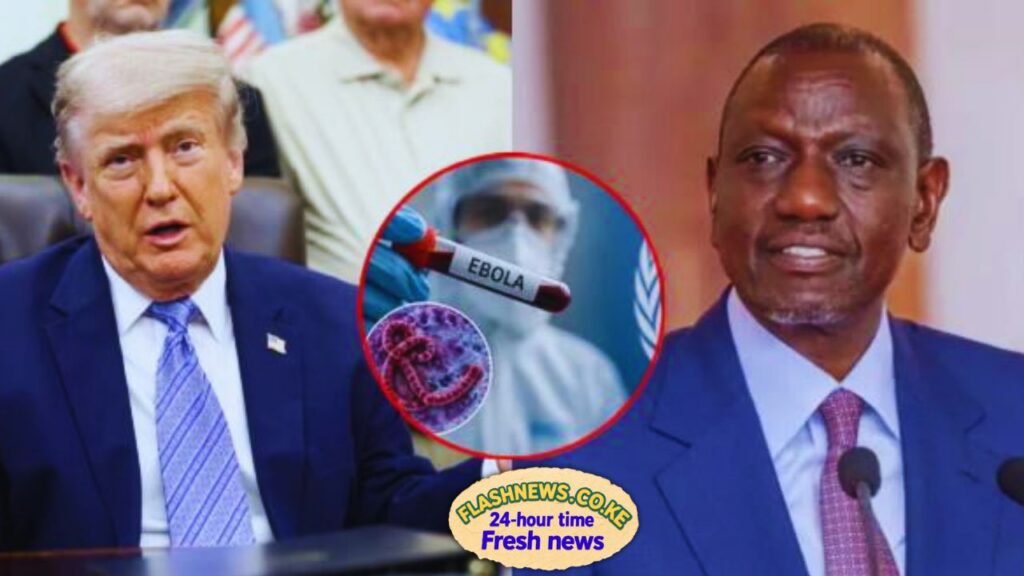
The praise came during a high-level meeting between President William Ruto and senior U.S. adviser for Arab and African Affairs, Massad Boulos, held in Oslo, Norway, on Tuesday, June 9.
Following the meeting, Boulos expressed gratitude to President Ruto for Kenya’s commitment to combating Ebola and highlighted the importance of cooperation between the two countries in addressing the public health threat.
“We discussed U.S.-Kenyan cooperation to respond to Ebola, and I thanked President Ruto for his steadfast partnership,” Boulos said in a statement issued after the talks.
“Both of our nations have vital roles to play in fighting this outbreak and protecting our populations,” he added.
The U.S. official further disclosed that the Trump administration had provided more than KSh25.8 billion (USD 200 million) in direct support towards Ebola response initiatives.
According to Boulos, the funding is separate from an additional KSh45.2 billion (USD 350 million) allocated to Ebola response efforts and humanitarian assistance programmes in the Democratic Republic of Congo, South Sudan and Uganda.
The support forms part of a wider KSh232 billion (USD 1.8 billion) contribution to the United Nations Office for the Coordination of Humanitarian Affairs (OCHA), aimed at strengthening emergency response mechanisms across Africa and other regions facing humanitarian crises.
However, the discussions took place against the backdrop of mounting tensions in Kenya over plans to establish an Ebola quarantine facility reportedly backed by the United States government.
The project has sparked fierce opposition from residents in Laikipia County, with protesters expressing concerns over public safety, transparency and the potential implications of hosting such a facility.
On Tuesday, demonstrations erupted in Nanyuki, where thousands of residents took to the streets demanding the suspension of the project.
The protests turned chaotic after confrontations between demonstrators and security officers, resulting in the death of one person and the arrest of more than 50 others.
The controversy has intensified following reports that construction work on the facility had commenced despite a court order barring the project from proceeding pending the determination of legal challenges.
Critics have questioned whether the executive arm of government and foreign partners are disregarding judicial directives, raising concerns about the rule of law and institutional independence.
Neither the Kenyan government nor U.S. officials directly addressed the dispute during Tuesday’s meeting.
Beyond the Ebola response, President Ruto and Boulos also discussed pressing regional security matters, particularly the ongoing conflict in Sudan.
The two leaders emphasized the urgent need for a humanitarian truce to allow aid delivery and civilian protection before pursuing a lasting political solution.
“We also covered the critical importance of achieving a humanitarian truce in Sudan, followed by a permanent ceasefire,” Boulos said.
“We emphasized that external actors must cease fueling the conflict through military support to the warring parties.”
The meeting underscores Kenya’s growing role as a key regional partner for the United States on matters of public health, humanitarian assistance and conflict resolution, even as domestic concerns continue to emerge over some of the initiatives linked to that cooperation.
Also Read: Gachagua Retreats to Wamunyoro for 45 Days to Lead Opposition Unity Talks