

President Ruto’s Official Website Restored After Cyberattack as Questions Mount Over Security Breach





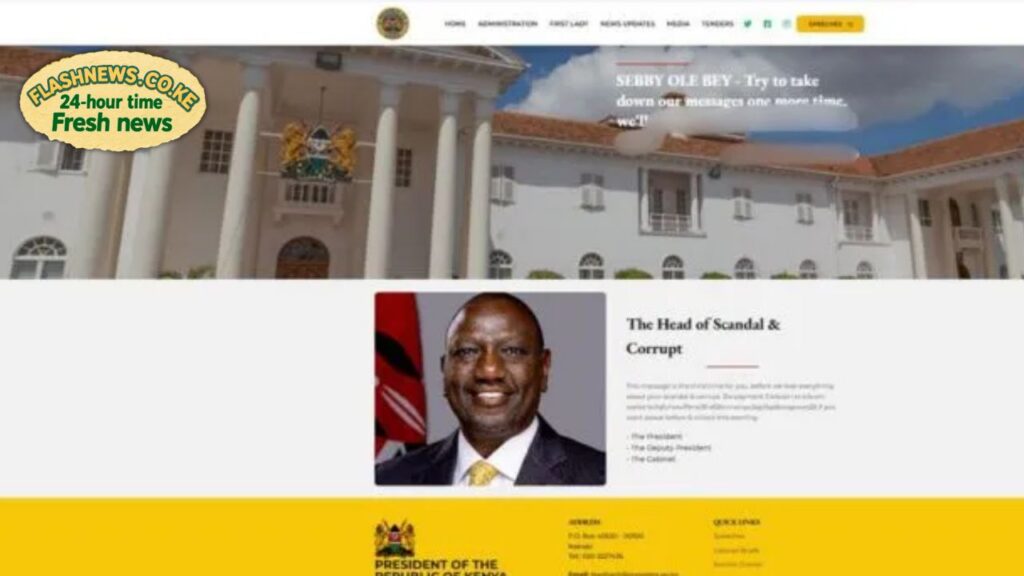
President William Ruto’s official website has been restored after being offline for several hours following a reported cyberattack that saw hackers allegedly deface the platform and demand millions of shillings in cryptocurrency.

A spot check on Sunday confirmed that the Presidency’s website, president.go.ke, was once again accessible and functioning normally after technical teams worked to restore the service.
The restoration comes barely a day after the website was taken offline in what has emerged as one of the most high-profile cyber incidents to target a Kenyan government digital platform in recent years.
Visitors accessing the website on Sunday found the portal operating as usual, with its homepage, official statements, presidential speeches, Cabinet updates and other government information fully restored. No obvious signs of the alleged attack remained visible.
However, while access to the platform has resumed, major questions remain unanswered over the extent of the breach and whether government systems were compromised beyond the website’s public-facing pages.
Authorities have yet to reveal whether forensic investigations established if hackers gained access to internal databases or sensitive government infrastructure, or whether the attack was limited to a front-end website defacement.
As of the time of publication, neither the Office of the President nor State House had issued an official statement confirming the restoration of the website or providing details of the findings from the ongoing investigation.
Hackers Demanded Bitcoin Ransom
The Presidency’s website was reportedly compromised on Saturday, July 18, when unknown attackers replaced the homepage with messages targeting President William Ruto and demanding payment in cryptocurrency.
The hackers allegedly demanded 5 Bitcoins—estimated at approximately Ksh41.3 million at the time—and published a cryptocurrency wallet address, threatening to release unspecified information if the ransom was not paid.
The nature of the information the attackers claimed to possess has not been verified independently, and government officials have not confirmed whether any sensitive data was accessed during the incident.
Following the breach, State House’s ICT team immediately disabled public access to the website, replacing it with a maintenance notice as cybersecurity specialists worked to contain the incident.

Cabinet Secretary for Information, Communications and the Digital Economy William Kabogo later stated that preliminary assessments had found no evidence of data exfiltration, indicating there was no immediate proof that confidential government information had been stolen during the attack.
The ICT Authority also confirmed that national cybersecurity response protocols had been activated to investigate the incident, isolate the affected systems and restore normal operations.
Critical Government Platform
The President’s official website serves as the central online platform for Kenya’s Presidency, acting as the government’s primary digital communication channel with the public.
It hosts presidential speeches, press releases, executive orders, Cabinet briefings, policy announcements and updates on the President’s official engagements, while also providing information on ministries, government programmes and the structure of the Executive.
Because of its importance to government communication and public access to official information, cybersecurity experts say any successful compromise of such a platform raises wider concerns about the resilience of critical national digital infrastructure.
Although the website has now been restored, the incident is expected to intensify scrutiny over cybersecurity preparedness across government institutions and the safeguards protecting Kenya’s digital public services.
Also Read: Police Recover 45 Stolen Cattle After Repelling Armed Bandit Attack in Turkana